Australian birds
Pardalote Parade – Australia’s Smallest Birds
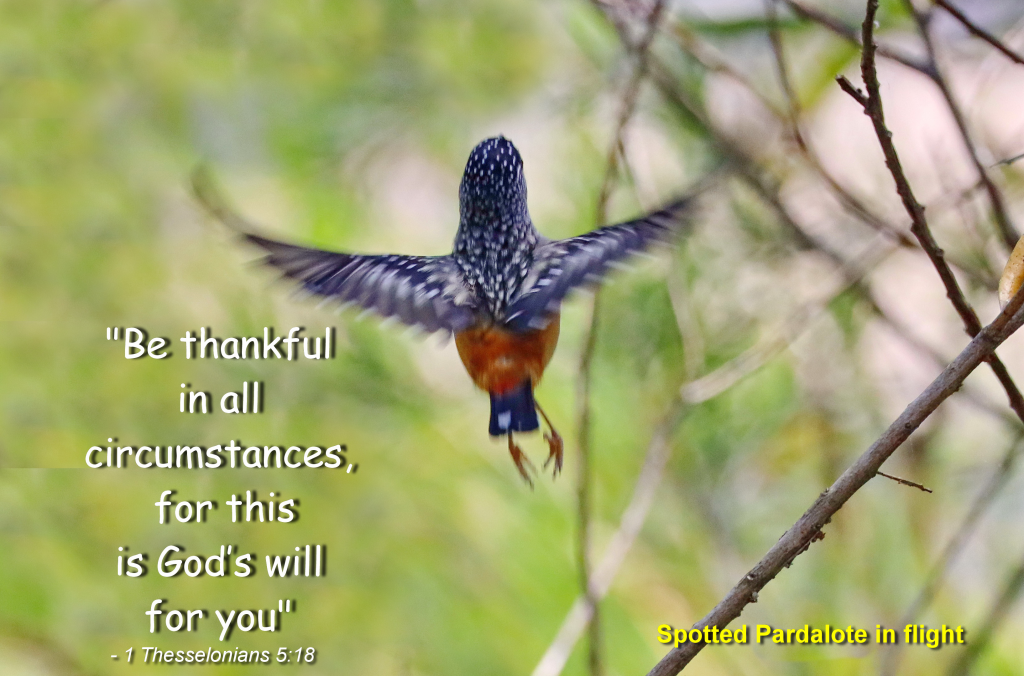
The Spotted Pardalote is Australia’s smallest bird with a body length of only 8-10 cm (3.1-3.9 ins) and is one of the most difficult birds to observe since it feeds […]
Welcome to our website for the study and appreciation of Australian birds and their interesting behaviours.
The Spotted Pardalote is Australia’s smallest bird with a body length of only 8-10 cm (3.1-3.9 ins) and is one of the most difficult birds to observe since it feeds […]
The Spotted Pardalote is Australia’s smallest bird with a body length of only 8-10 cm (3.1-3.9 ins) and is one of the most difficult birds to observe since it feeds high inside the dark canopy of eucalyptus trees. Since its body is the shape and size of a eucalypt (gum) leaf it is able to camouflage itself from predation by larger birds, as it also sadly experiences a high predation rate. Because it nests in soil embankments this further endangers their survival, as they often do so in piles of earth at construction sites which are later removed causing their demise and nest failure.
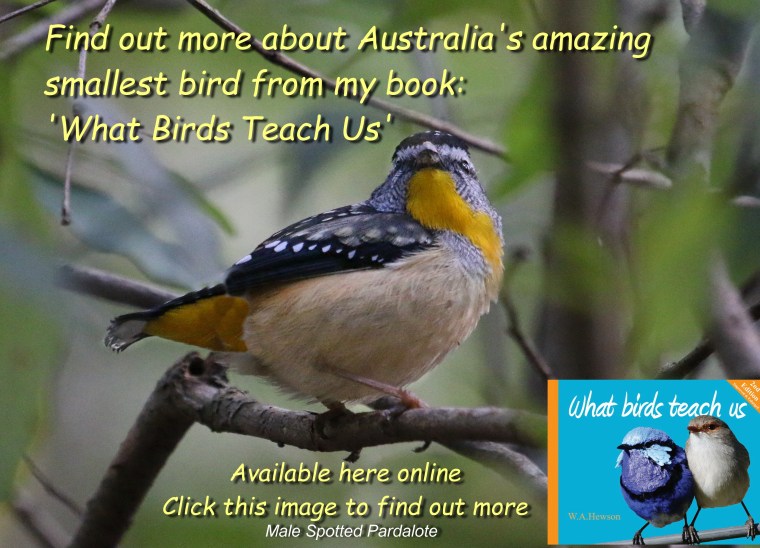
Australia has four species of Pardalote: the Spotted, Striated, Red-browed and Forty Spotted Pardalote. The Striated Pardalote also have six sub species (races). All four species are endemic to Australia with the critically endangered Forty Spotted Pardalote being only now found on Bruny Island and far southern parts of Tasmania. I posted last winter the visit my wife and I did to Inala Nature Reserve on Bruny Island which you may recap by clicking HERE. I prepared the video below to feature three of the four pardalotes for your enjoyment. Enjoy !
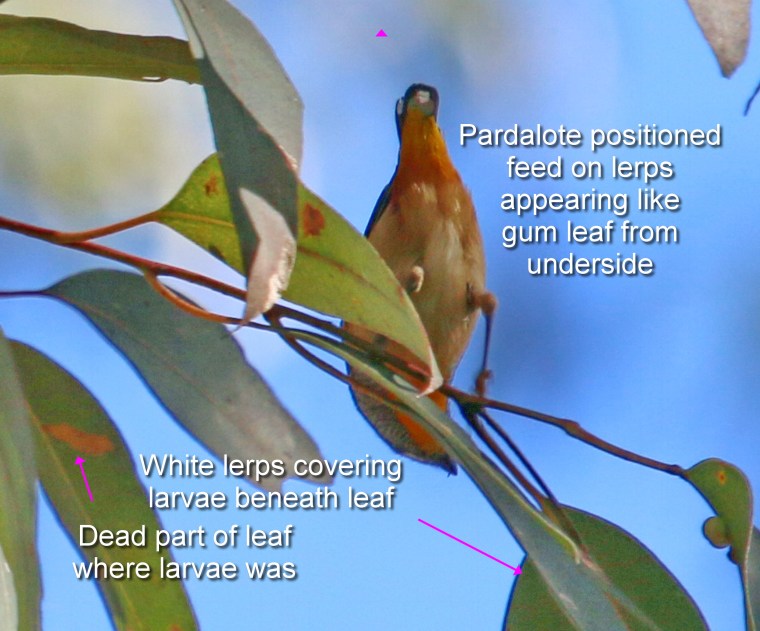
The Spotted and Striated Pardalote primarily feed from a sugary substance called lerps which is the coating of the Psyllids larvae which the tree leaf lice lays on the back side of the eucalypt leaf. The Pardalote eats both the lerps coating, which many honeyeater species also enjoy for an energy boost) as well as the actual larvae. The brazen aggressive Miner species actually try to prevent this bird from entering their territory, even killing it because they farm and harvest the lerps having learnt to lick it off without removing the larvae.
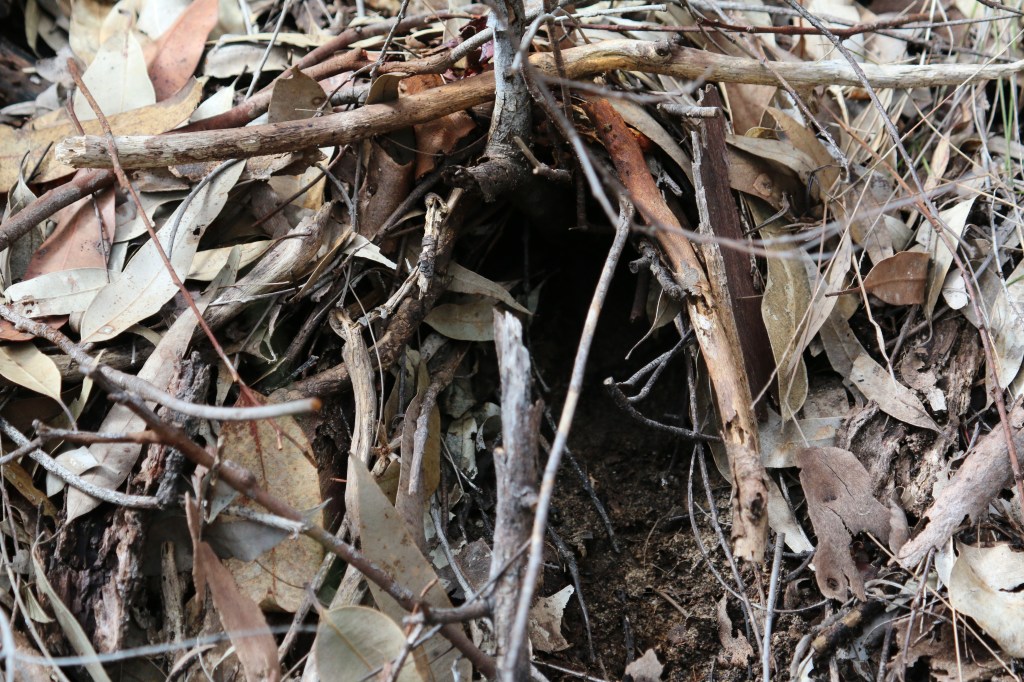
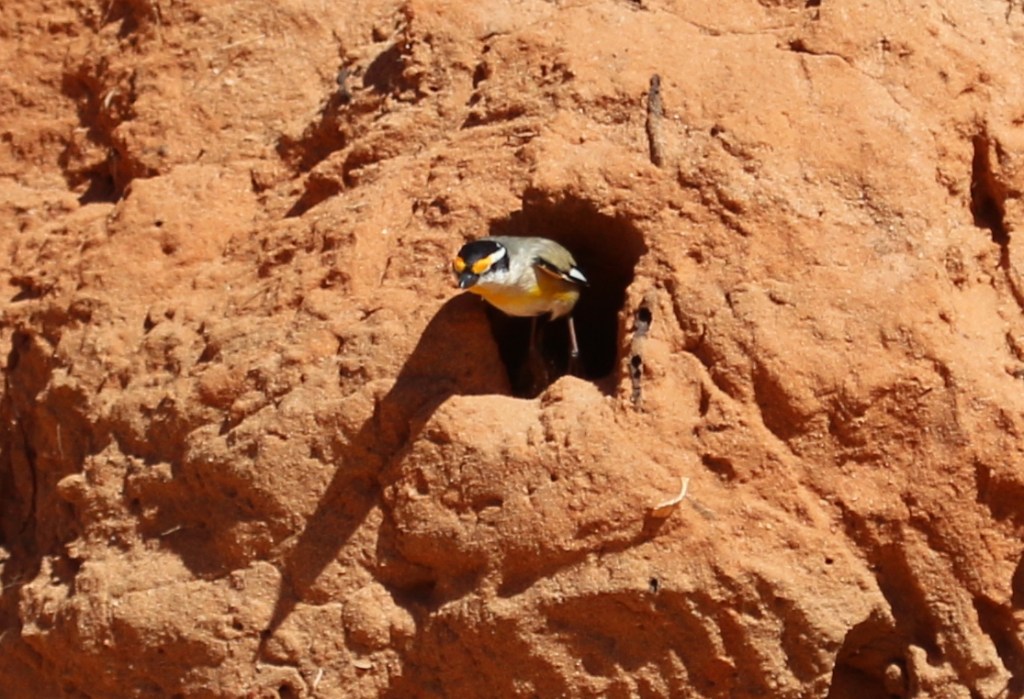
Because Spotted and Striated Pardalotes nest in soil embankments this further endangers their survival as they often do so in piles of earth at construction sites which are later removed causing their demise and nest failure. The amazing speed and accuracy of the bird to fly like lightning into the tiny nesting hole and crawl down it is astounding. I would often have my wife with binoculars telling me when to fire a burst of takes to capture it entering and leaving the nesting hole
Enjoy your week and stay well ! Get out and enjoy your natural heritage and have a quiet mindful moment with the birds in the bush. The breeze through tall trees and the faint hum of bees on the nectar rich wild flowers my senses well pleased. The shade cool and refreshing as birds call addressing with appreciation, as I share their peace and joy and elation, refreshed, de stressed with rejuvenation.

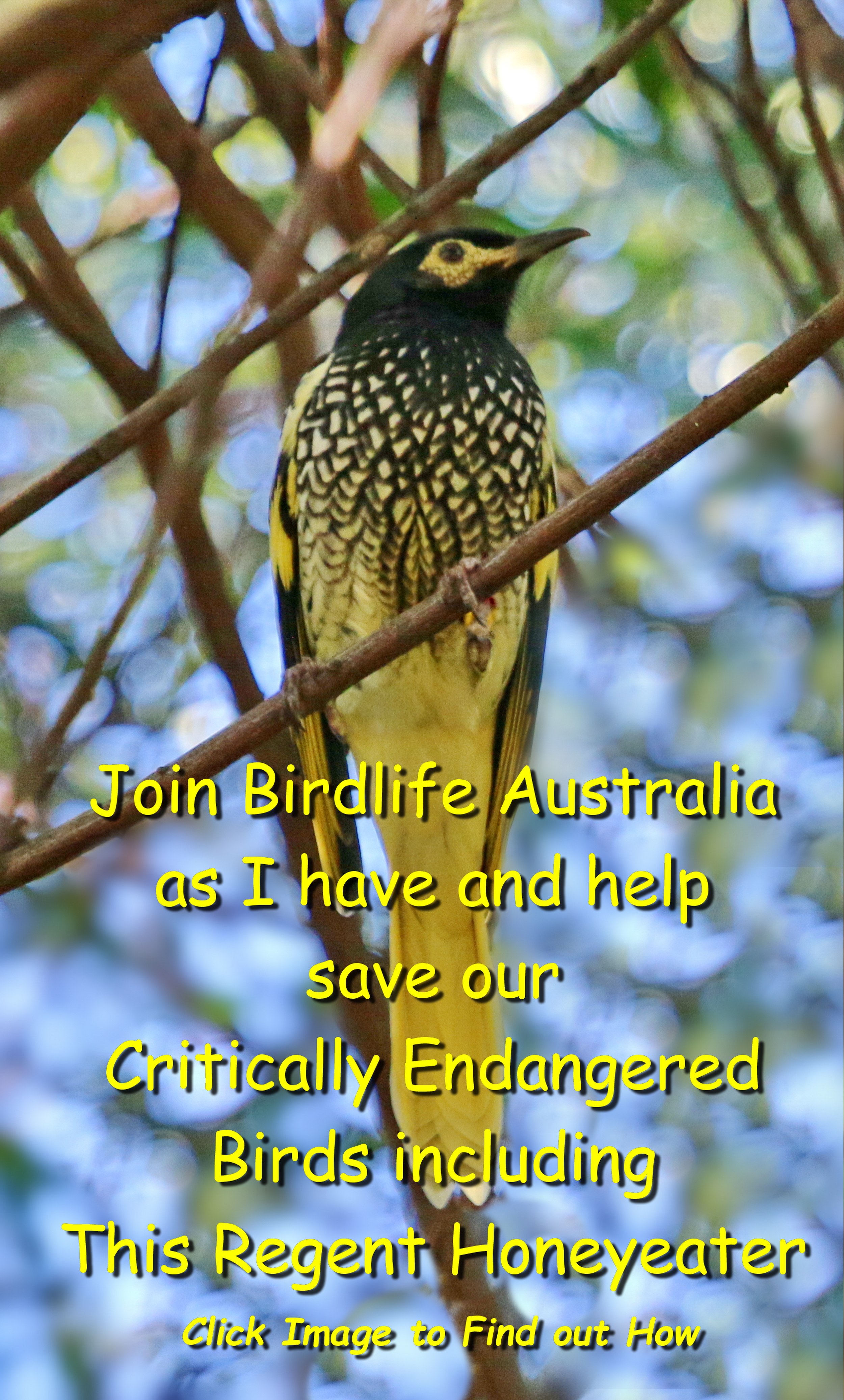
Liz from Birdlife Australia summarises what Luke has called ‘informal mindfulness‘: “Turning our attention to birds and nature for self-care. It’s being present without judgment in order to allow an experience of what will be, and not disappointed by what happens or what doesn’t happen. Just enjoy what you’re seeing at that time. Informal mindfulness is when we are mindful and present in everyday activities and experiences, without the need for formal meditation sessions. This assists in switching off the stress fired fight and flight adrenalin system and focusing with the five senses on the pleasant surroundings, reducing stress, anxiety, blood pressure and depression. So birding is a healthy pastime. Click on Benefits of Birding pic to discover more.
Sadly many today walk about their streets and parks with their heads bent over their mobile phones, flicking through media and viewing stressful negative news events, totally missing out on informal mindfulness by not experiencing the soothing pleasures of their immediate surroundings. This behaviour only affords an increase in anxiety, stress and tension levels as we were never meant to take on the world’s problems, but just those in our immediate the present.
Choosing to live a joyful, peaceful, appreciative and thankful lifestyle is a recipe for a long, healthy life as it strengthens our immune system, helps protect from diseases, makes a person more popular to be around, endears friendship and helps us to enjoy and love others and especially God and life itself.
“Rejoice always, pray continually, give thanks in all circumstances; for this is God’s will for you in Christ Jesus.” – 1 Thessalonians 5:16-18 (NIV)

Adv. Dip. in Counselling and Family Therapy.
Member of Birdlife Australia
To introduce people to our unique Australian birds,
And learn from them how to live a healthy and happy life.
NOTE: All photos, videos and music used on this website are photographed, composed, performed by the site owner and remains his copyrighted property, unless otherwise stated. The use of any material that is not original material of the site owner is duly acknowledged as such. © W. A. Hewson 2015, 2016, 2017, 2018, 2019, 2020, 2021, 2022, 2023, 2024, 2025, 2026

My wife and I share a love of bird observing and bird photography which takes us all over Australia. We love sharing our experiences. Birds live in the beautiful parts of our country. We always get blessed with beautiful gifts of new birds and unexpected experiences each time we go out birding or just walking in the parks and reserves in our wonderful land. We love Australia, and the variety that each state and region offers in its wildlife and nature aspects. Join us in sharing our love. We have always found other birders enthusiastic and friendly people who appreciate the good things in life.
 Introduce your child to our amazing
and interesting birds.
Over 100 beautiful photos with
facts on how they do life, from
which we learn helpful life skills.
Click image above to Find out more and Buy the Beautiful Bird Book
Introduce your child to our amazing
and interesting birds.
Over 100 beautiful photos with
facts on how they do life, from
which we learn helpful life skills.
Click image above to Find out more and Buy the Beautiful Bird Book

Flight of a Fledgling similar to my first book uses the interesting lives of birds to teach valuable life skills.It is written expressly for teens and young adults as they prepare to leave the Nest. It helps them to better understand themselves and improve their personal relationships and better prepare for lifes challenges. Click on the above cover to find out more and purchase online.
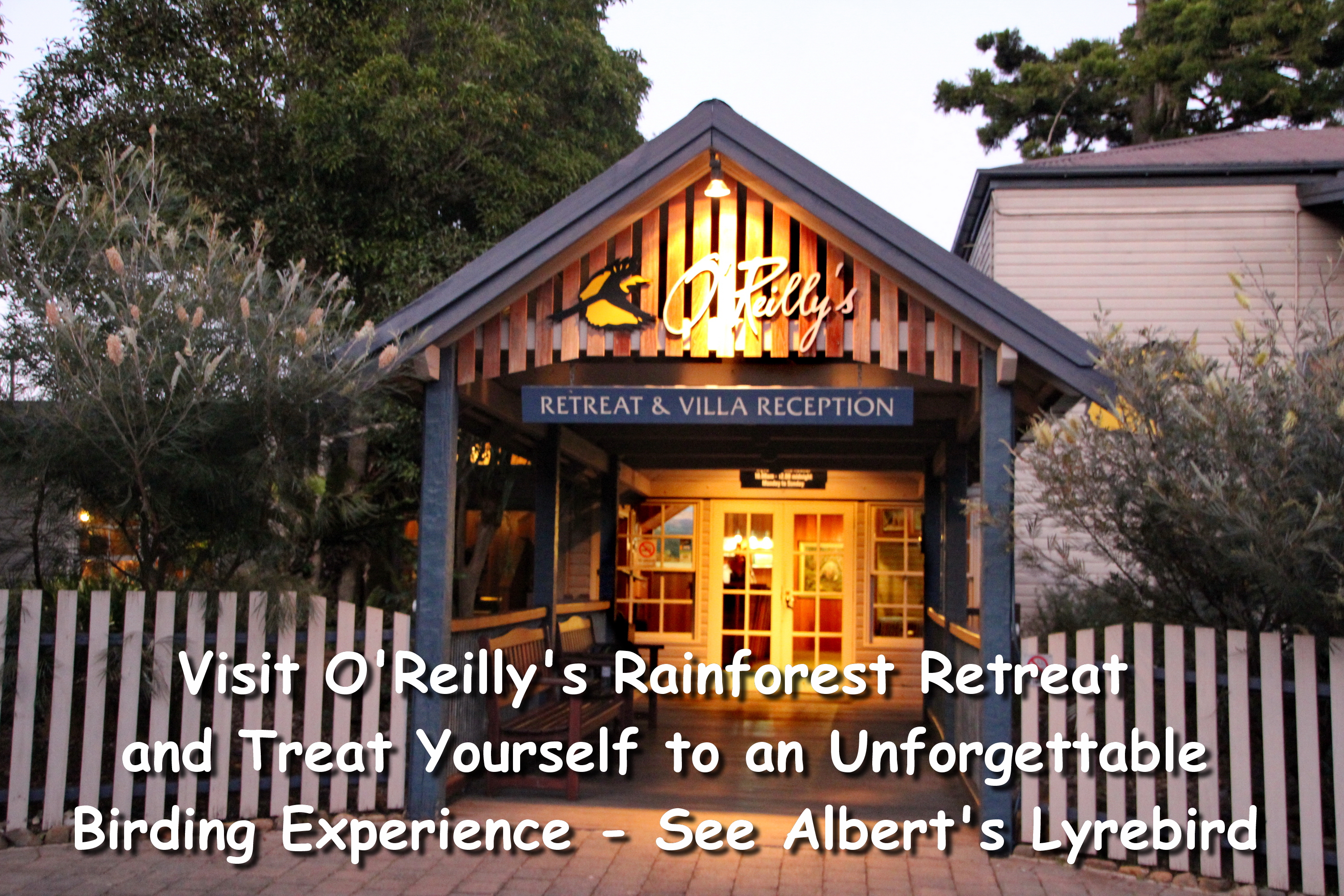



 If you are a birder visiting the Sydney region for the first time, check out the many National Parks (NP) that surround it for the great variety of birds found there. The Visitor Information centres at The Royal NP, Botany Bay NP, Fitzroy Falls and Minnamurra NPs have information and also sell my Beautiful Bird Books. If you follow this blog, make a date with Aussiebirder before you arrive for info tips or a visit.
 aussiebirder
Hello Ash,
What a beautiful bird! I loved learning more about the Spotted Pardalote. The video was great as well, thank you for sharing so generously☺️ Always in our thoughts dear friends.
LikeLiked by 1 person
Thanks Takami, the Spotted Pardalote has a special place in our hearts. My wife gets very excited when she sees is them, which is not very often, especially of late when numbers have fallen drastically. Likewise you are both constantly in our thoughts and prayers dear friends.
LikeLiked by 1 person
They’re beautiful little birds. Your video was lovely.
LikeLiked by 1 person
Thanks Deborah, yes they are adorable, and the Spotted so beautifully adorned being so tiny. The interesting fact I draw out in my book is that the underside of their body is very plain and yellow like a leaf but the top primary feathers are so beautifully adorned.
LikeLike
Hi Ashley,
A brilliant look at these beautiful little birds. They are indeed so tiny. I once found a dead on on a bike track, it must have been struck as a group of bike folk went past. It didn’t even cover the palm of my hand.
Great to be able to get them coming out of the hole, a feat I’ve never accomplished.
Mindfulness is such a great asset for both photography and bird watching.
LikeLiked by 1 person
Thanks David, Yes these are amazing little birds and the Spotted is so beautifully patterned on its tiny primaries. I am yet to see the Red-browed species to complete our set, not sure we will as it is much rarer. We have seen a notable decline in Pardalote numbers locally and they are reported by Birdlife also. Many are killed by larger birds including Noisy Miners as they share the same diet of lerps, other are food for most of the large birds and the rest are lost due to choosing the wrong pile of dirt to nest in, instead of using a fixed embankment. It is amazing how fast and accurate the Spotted and Striated are flying directly into their tunnel holes, it has to be seen to be believed. The weather has improved today a beautiful summers day, but did not snap one pic on the local reserve track as I could not find or hear one bird which was somewhat concerning, all I heard was the rattle of cicadas which may have temporarily moved them on. Yes Mindfulness is just appreciating and being present in the present which is one of the best presents we can give ourselves for staying sane and well in this crazy fast and stressful age.
LikeLike
Adorable little birds, their nesting behavior seems so extreme for their vulnerability, yet that’s their instinct, amazing.
LikeLiked by 2 people
Thanks Donna, yes it is amazing that they choose to hide in a tunnel near the ground when they spend all day high in the canopy of tall eucalypt trees, though the tunnel does afford them more protection from predation as long as a snake or lizard does not invade the tunnel, or they have dug it into a pile of dirt on a construction site.
LikeLiked by 2 people