Australia
Birds of Western NSW (Part 3) – The Budgerigar
In our final part of the series from outback NSW we feature a bird that was on my wife’s Bucket List, the Budgerigar. This tiny Parrot is only found in […]
Welcome to our website for the study and appreciation of Australian birds and their interesting behaviours.
In our final part of the series from outback NSW we feature a bird that was on my wife’s Bucket List, the Budgerigar. This tiny Parrot is only found in […]
In our final part of the series from outback NSW we feature a bird that was on my wife’s Bucket List, the Budgerigar. This tiny Parrot is only found in the dry hot arid inland regions of the Australian mainland. This was a popular bird for the European settlers to sell as a caged pet both here and abroad, and since then many different plumage colours have been bred into this species.
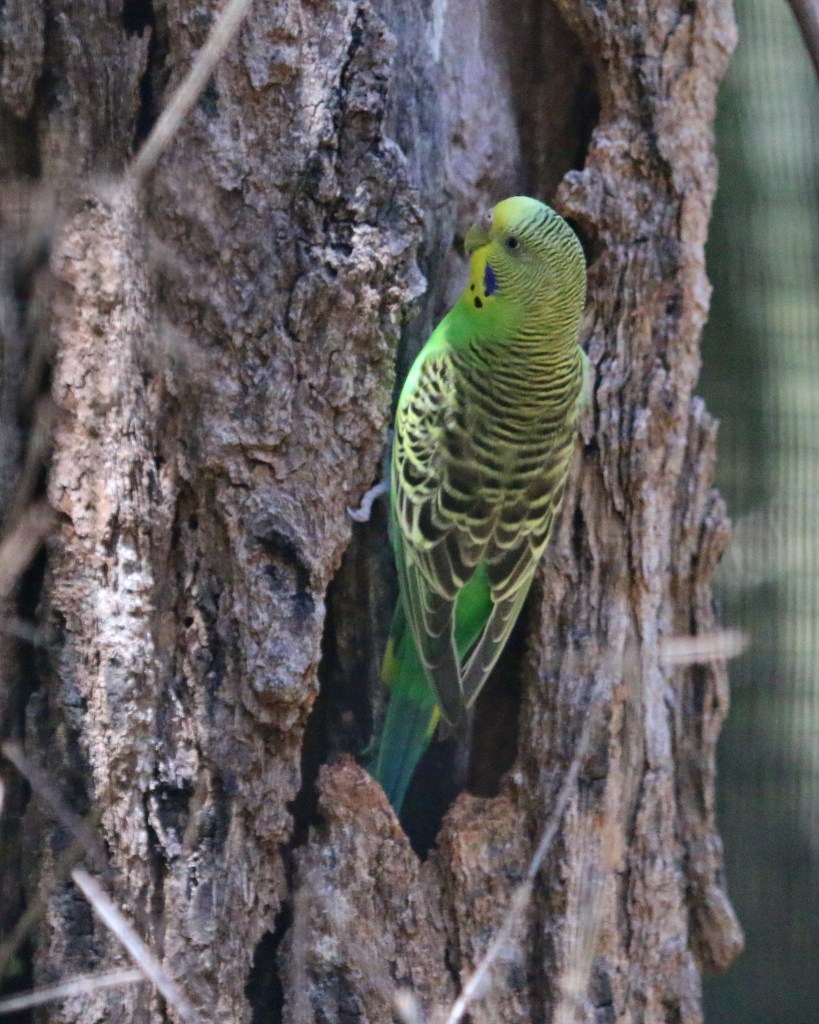
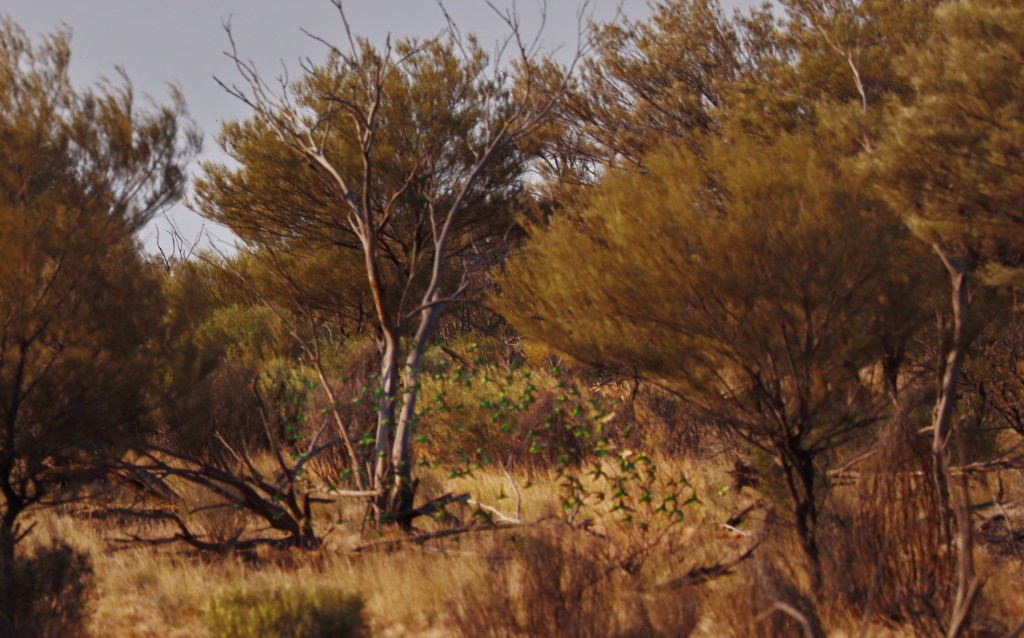
Many may not be aware that the true original and only colour of the Budgerigar is lime green. It was difficult to catch these fast moving birds on camera from such a long distance away at almost sunset. I captured this image at another time and have included it to show you what this bird looks like. Similar to the Zebra Finch, they are mainly small seed eaters, feeding mainly from the many grasses. The tiny heavily wired brain of the Budgie allows it to think and move so much faster than we can, thus enabling it to move seamlessly with the flock without collision. Click on images to enlarge them.
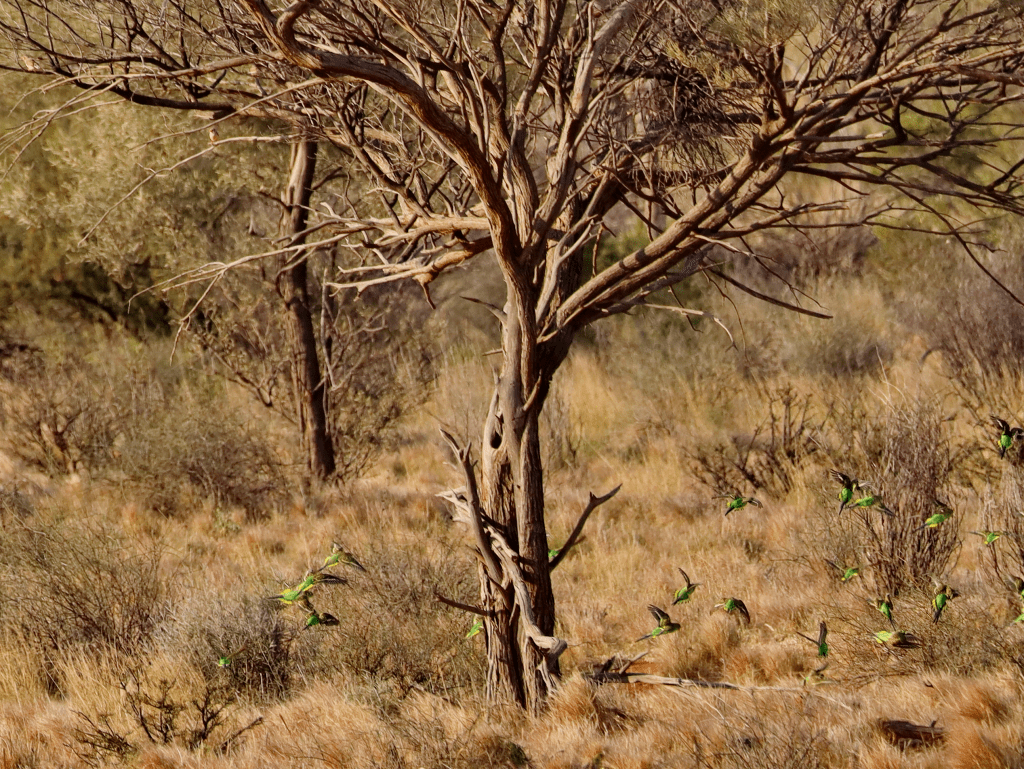

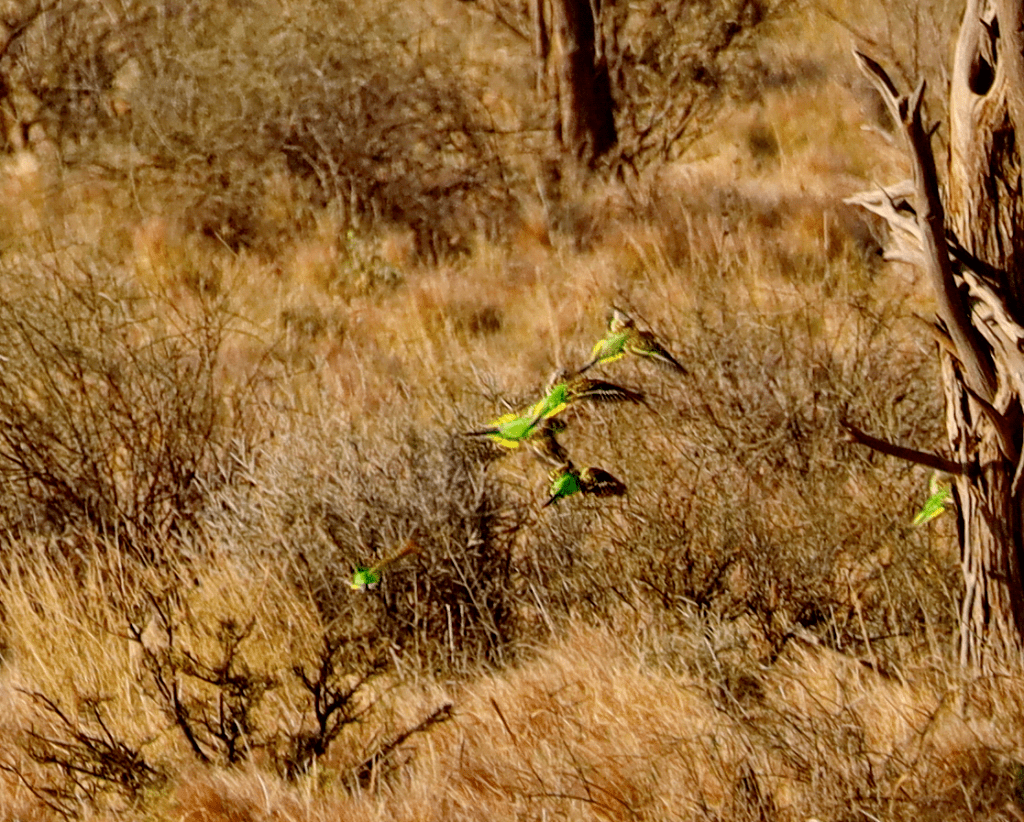

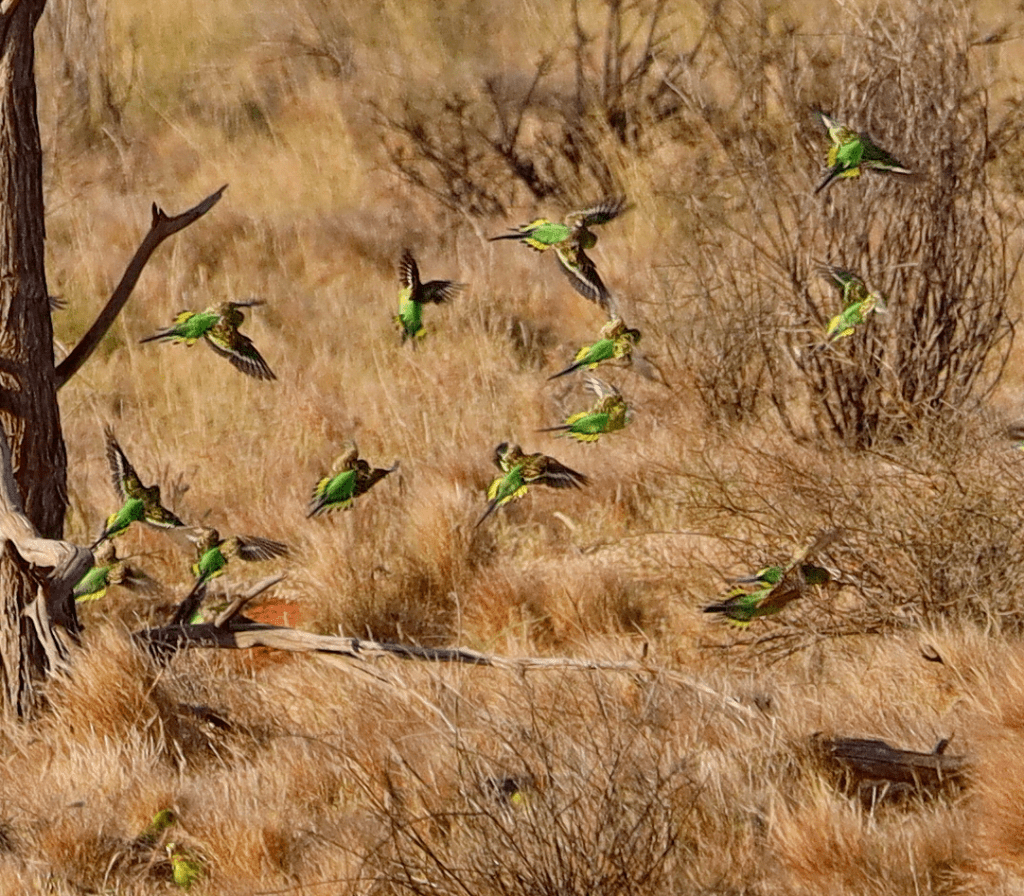
It was a magical experience watching the way the swarming flock moved together rapidly with precision and no collisions. This was to deter, frustrate and confuse predators from picking them off.


Here are images of the flock swarm at sunset.


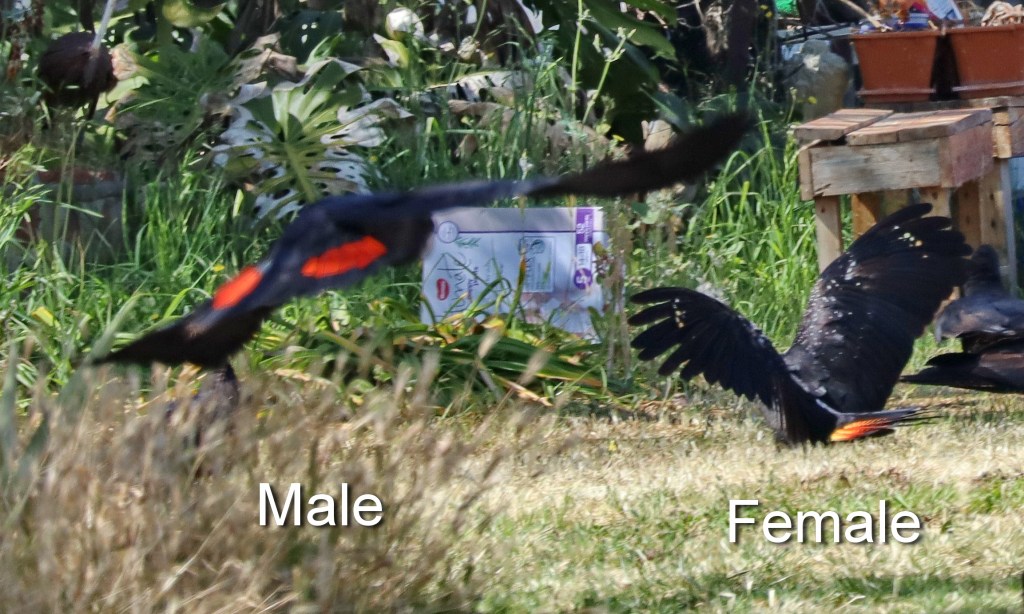
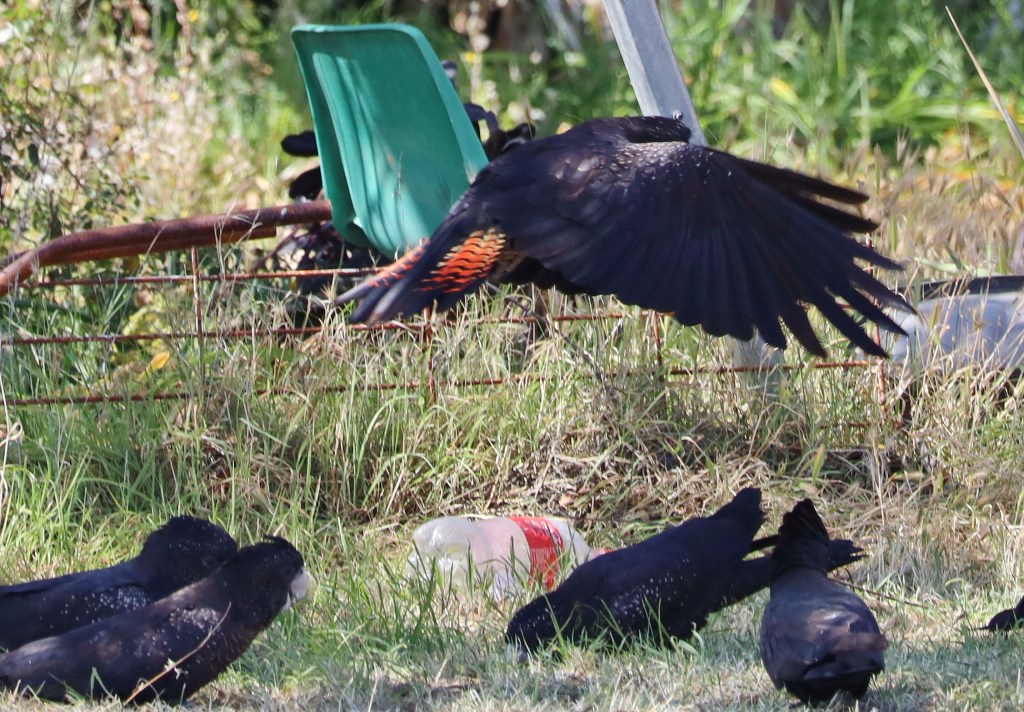
While lunching in the town of Wilcannia we saw a flock of Red-tailed Black Cockatoo feeding on grass seed in the front yard of a local resident’s home. The males have a darker beak than the females, and the females have white spots around shoulders as well as striped orange-yellow–red colouring in tails feathers.





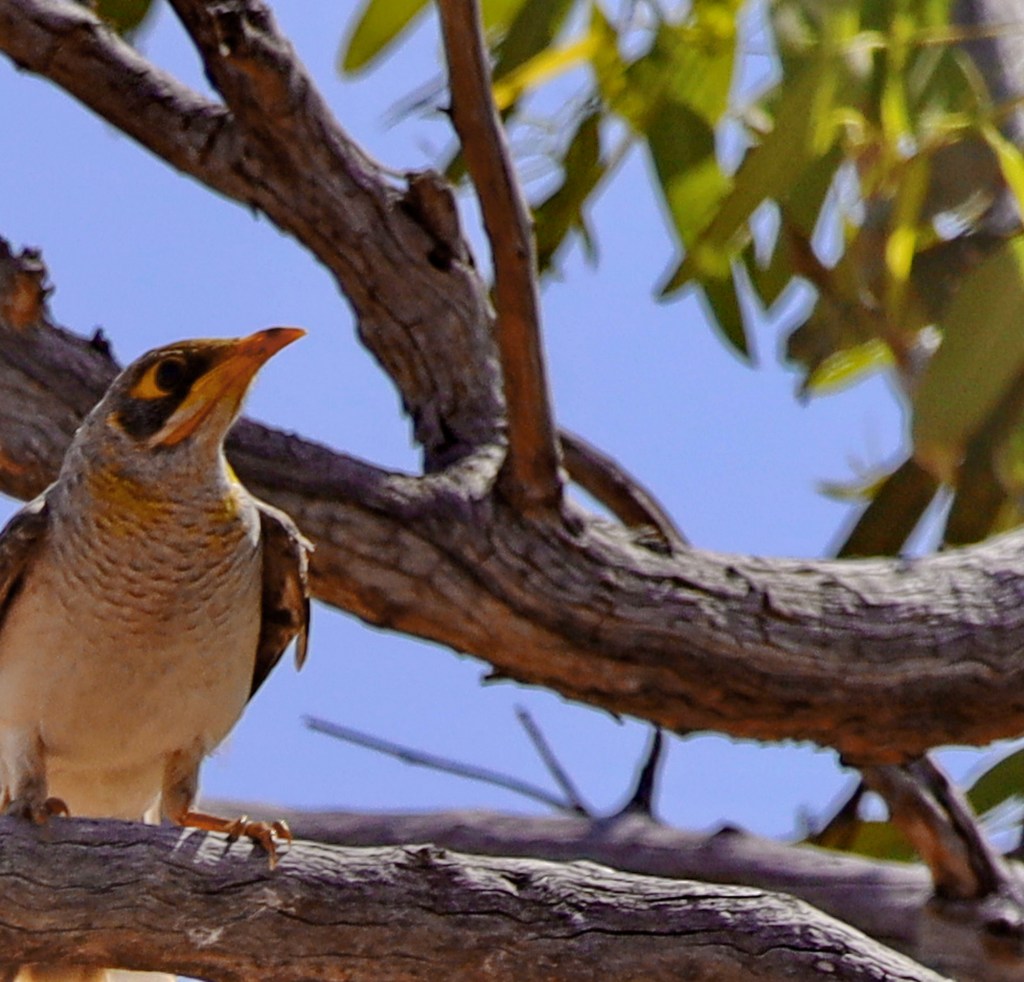
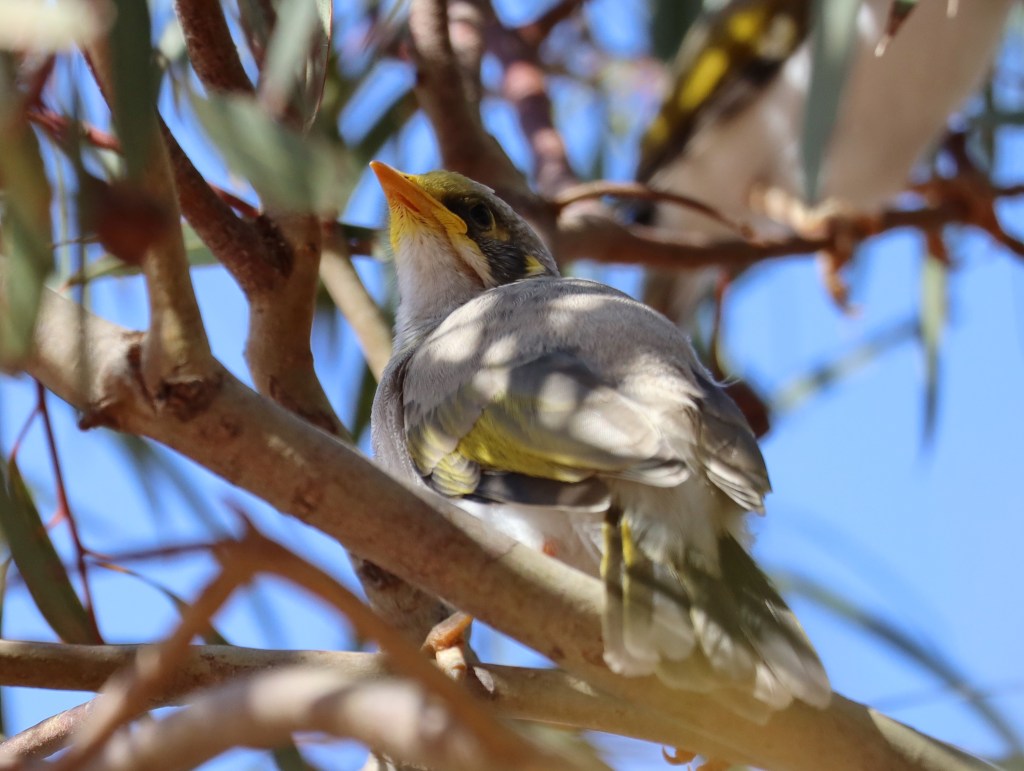
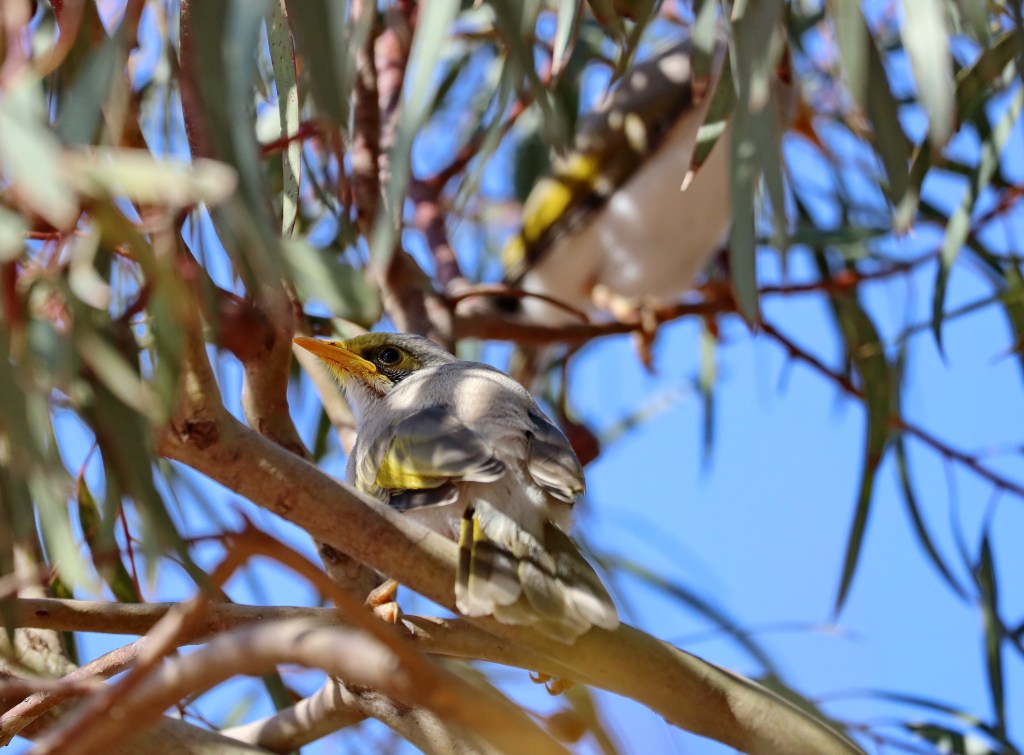
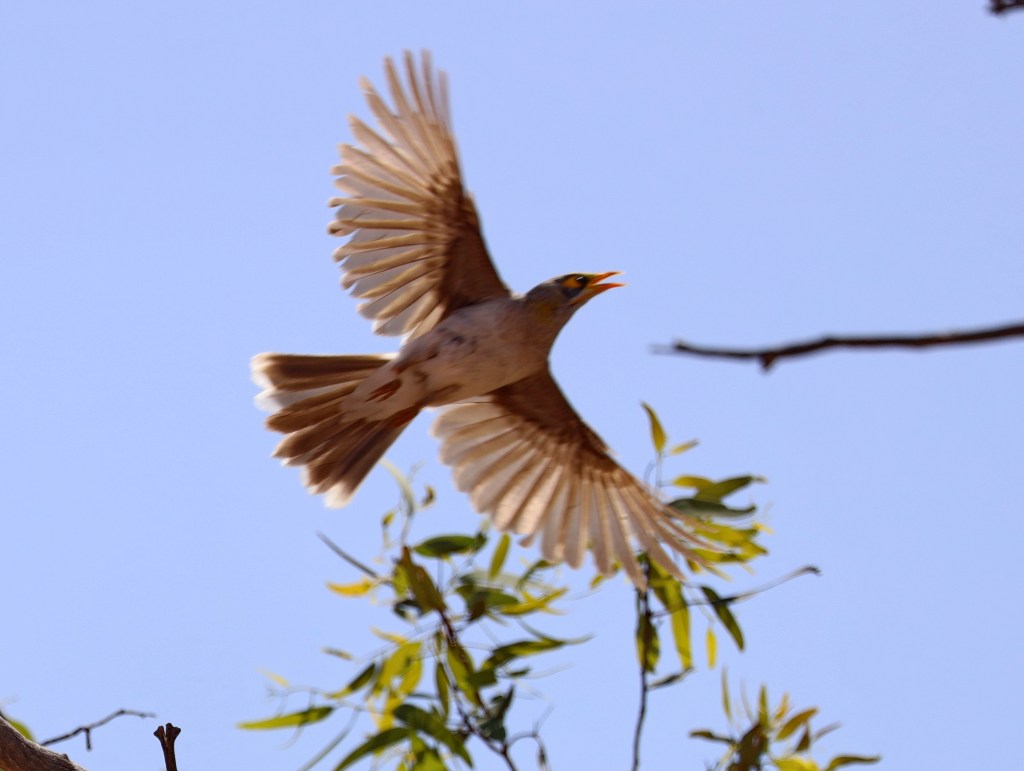
We saw the inland cousin to our Noisy Miners on the coast, the Yellow-throated Miner in the trees of the Road Houses.

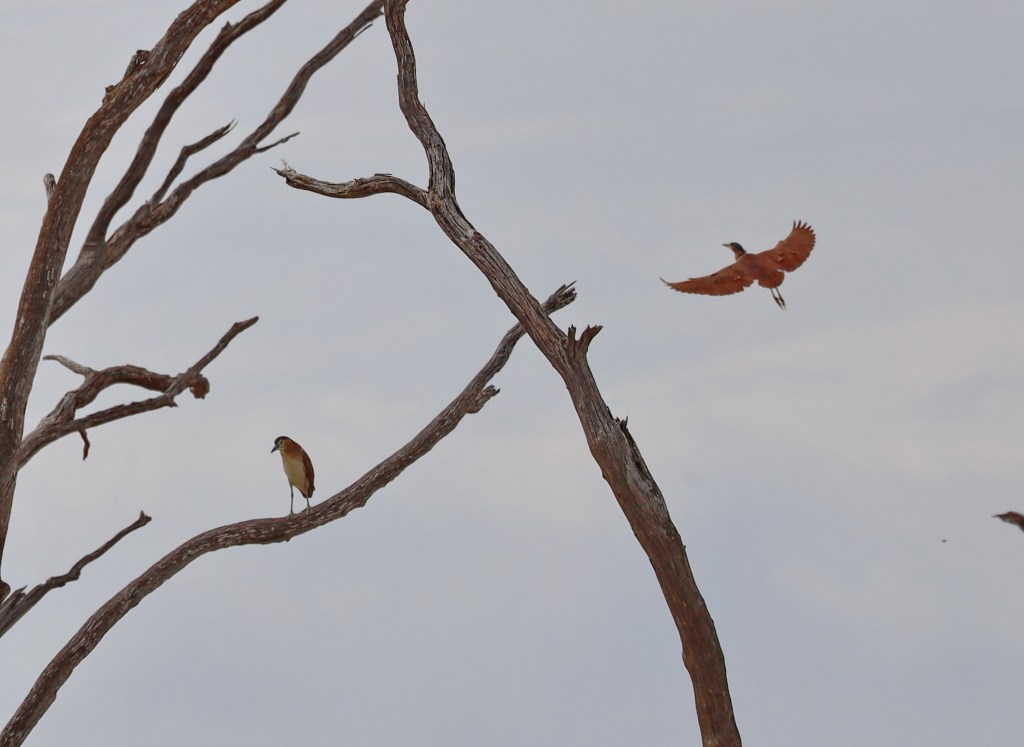
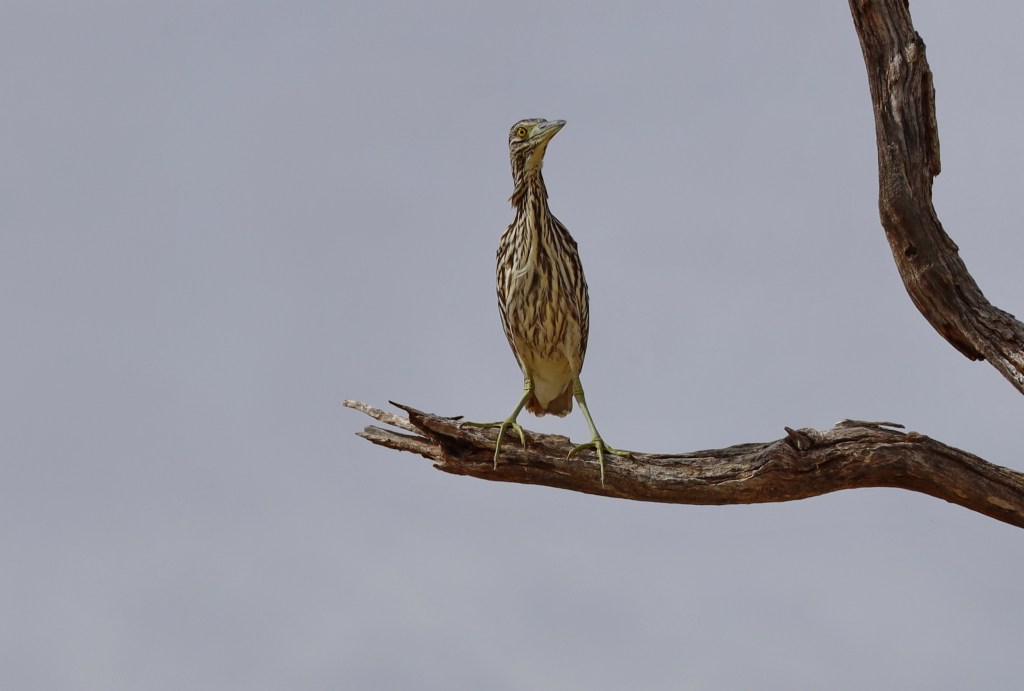
While we were on a cruise of the Menindee Lakes we saw many water birds but the many Nankeen Night Heron at different stages of development we saw was an amazing sighting for us as they rested watching us pass by, after a busy night of fishing.



The Whistling Kite were nesting along the Darling River which fed the lakes, and can easily be identified when compared with the Black Kites and Australian Kestrel by its classic whistling call and the white bands in the wings of its primaries. The river and lakes provided excellent nesting areas with fresh water and plenty of sitting ducks for food. These were the main raptors we saw. Sadly we did not see a Wedgie.

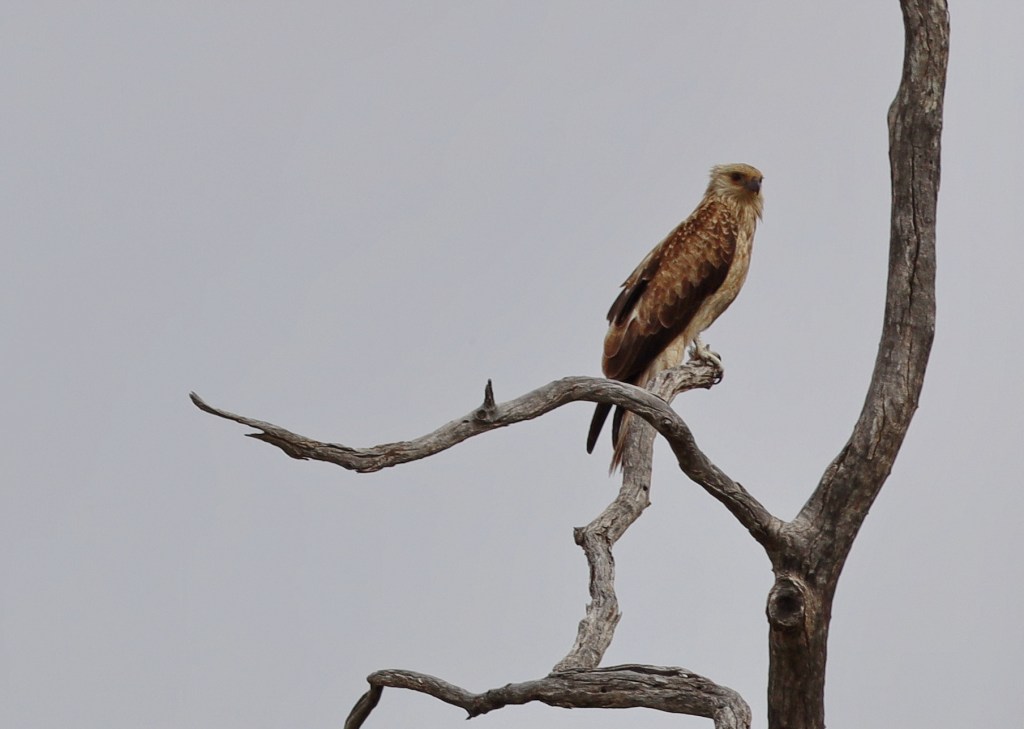

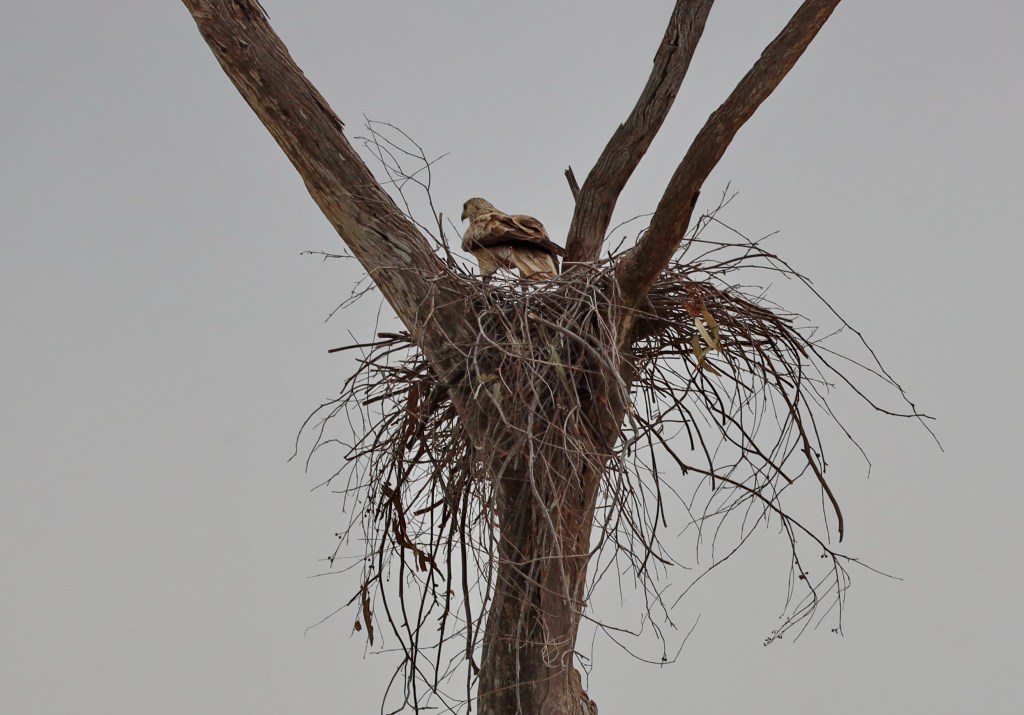

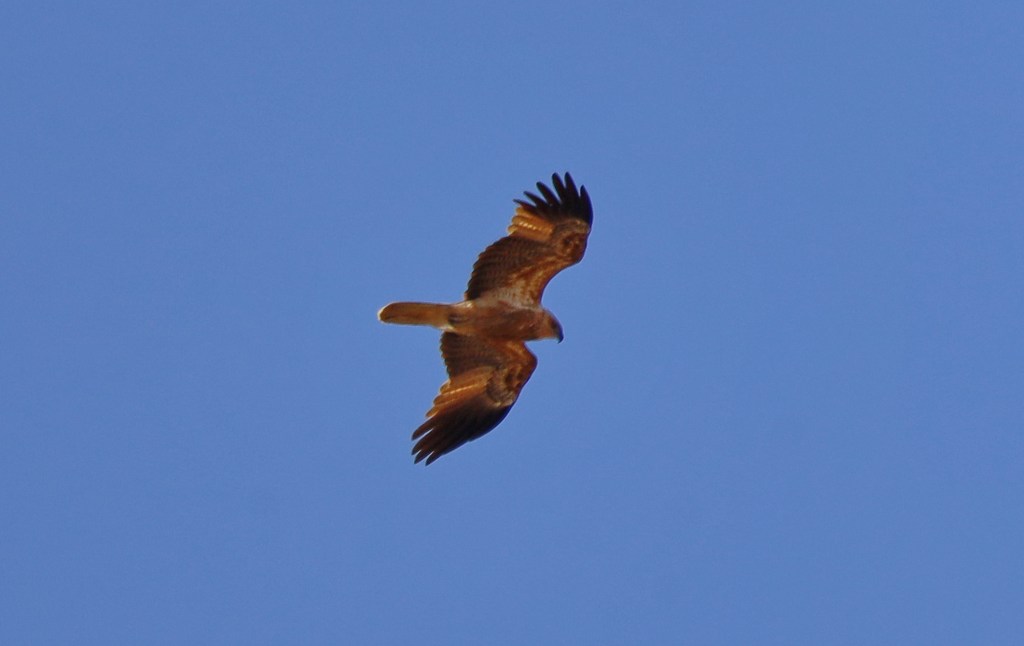
Here are some shots of the Whistling Kite flying over us to check us out. Note the distinct white wing bands and cream head that easily identify it in flight.

Besides Kangaroos and Emus running in front of trains, buses and cars, wild goats are another animal we saw many times in great number roaming the plains. We were told that there is a lucrative business with one farmer whereby he captures the goats and sells them overseas as a live export of Free Range Goats, since they lack the diseases of overseas herds.


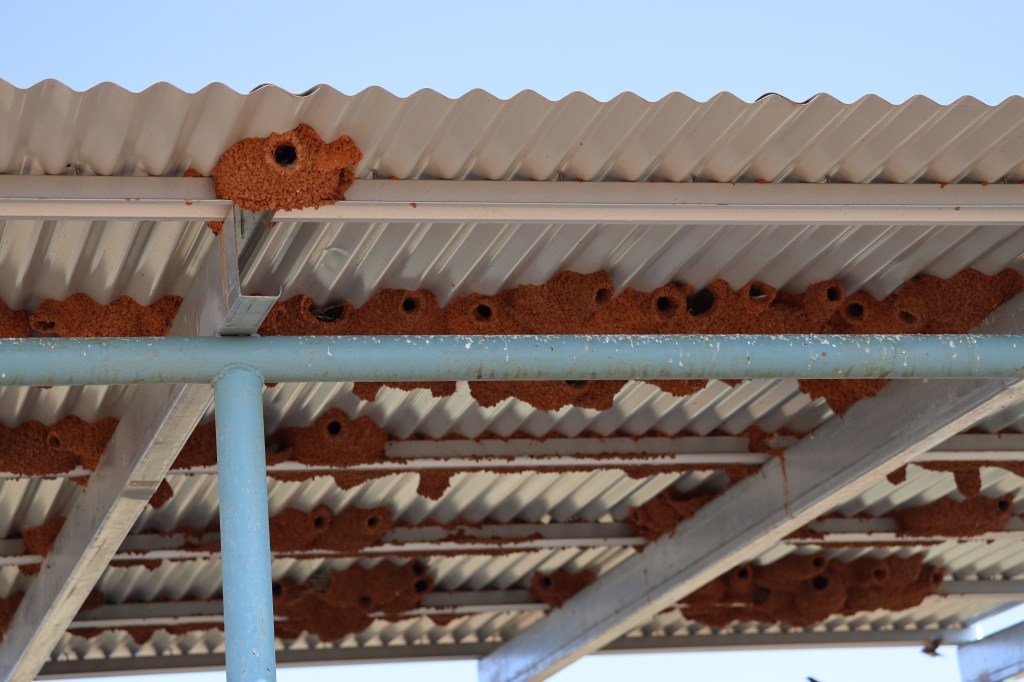
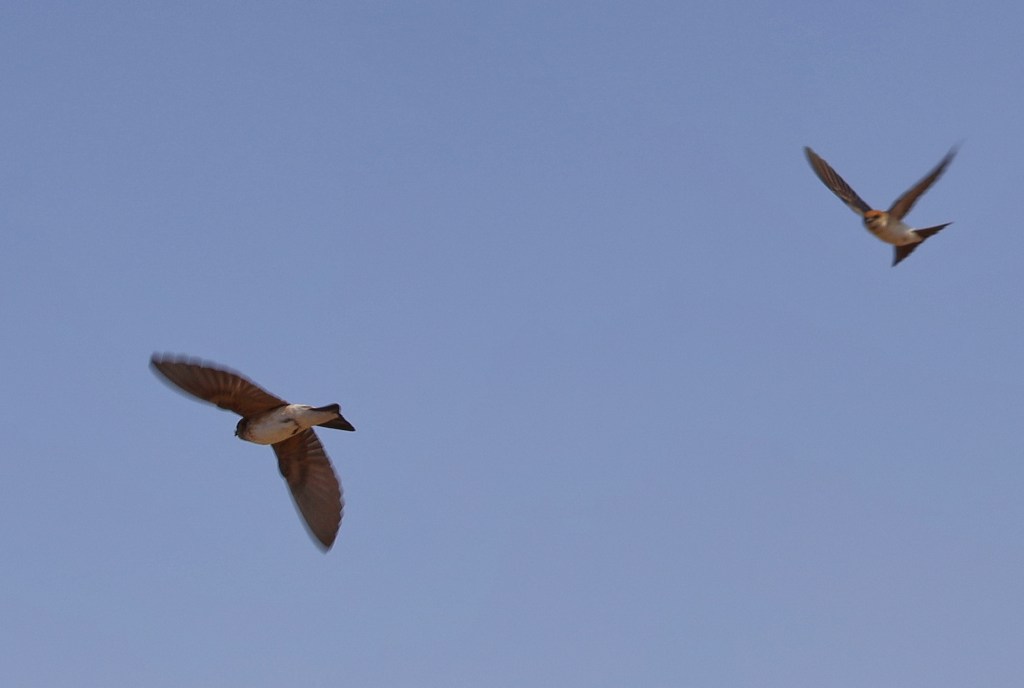
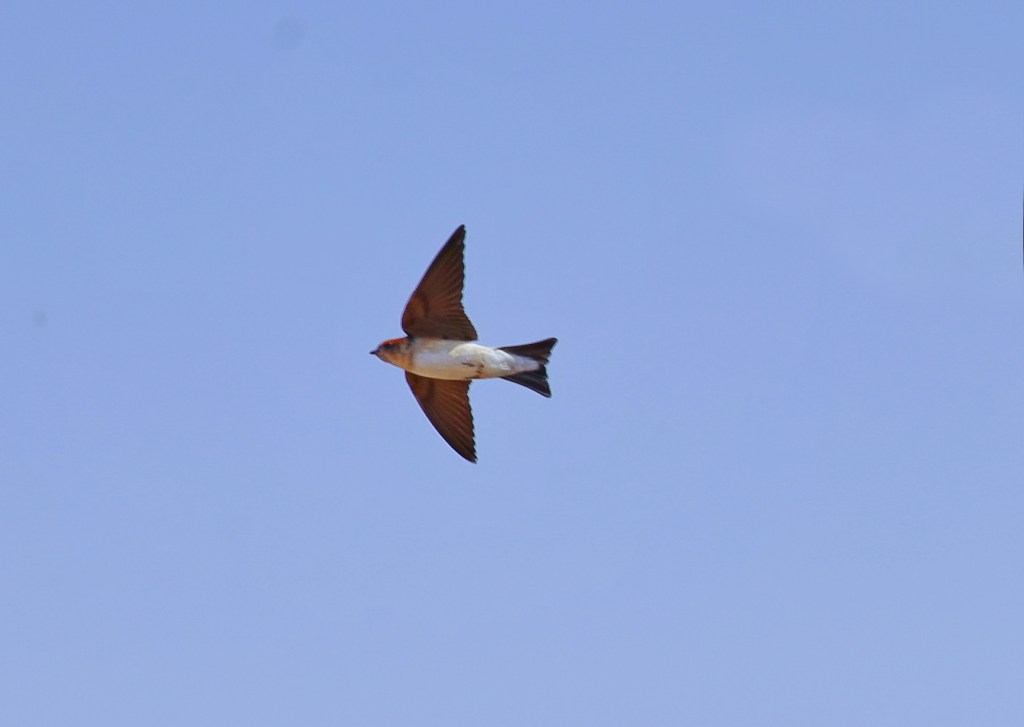
Lastly, we noticed this hive of Fairy Martin nests out in the Conservation area near the Dingo Fence. These tiny birds feed on the fly, mostly insects, which the desert provides plenty of, especially flies. We were using our fly nets over out faces out there most of the time, even at the end of Winter.



Have a wonderful week ! We hope you enjoyed our outback birds. Next week we return to Wagga Wagga for some Riverina birds.
The arid dry Gibber and desert regions of our continent make up most of the central land mass, of what once was an inland sea. The following text reassures us of a time of restoration not just for deserts but for the desert lives of the many broken and hurting and displaced people:

The wonderful news is that our very great Loving Creator God has already done all this for us through his Son Jesus whom he sent to earth as a man over 2000 years ago to offer his own righteous life in place of each one of us and pay the penalty for our selfish rebellion against God’s loving rule in our lives. He accomplished completely Salvation for all who will repent of their selfish way and submit and return to God as the true Father, Lord and King of their life. The word Greek name Jesus is derived from the original Hebrew Yeshua which means Saviour, and that is what Jesus truly is, this broken world full of broken people’s only hope for salvation, peace and restoration. Check it out for yourself in the New testament of the Bible.
You can find out more about living a spiritually good life from birds from my Birder Sanctuary page.
“For God made Christ, who never sinned, to be the offering for our sin, so that we could be made right with God through Christ.” – 2 Corinthians 5:21 (NLT)

Adv. Dip. in Counselling and Family Therapy.
Member of Birdlife Australia
To introduce people to our unique Australian birds,
And learn from them how to live a healthy and happy life.
NOTE: All photos, videos and music used on this website are photographed, composed, performed by the site owner and remains his copyrighted property, unless otherwise stated. The use of any material that is not original material of the site owner is duly acknowledged as such. © W. A. Hewson 2015, 2016, 2017, 2018, 2019, 2020, 2021, 2022, 2023, 2024, 2025.

My wife and I share a love of bird observing and bird photography which takes us all over Australia. We love sharing our experiences. Birds live in the beautiful parts of our country. We always get blessed with beautiful gifts of new birds and unexpected experiences each time we go out birding or just walking in the parks and reserves in our wonderful land. We love Australia, and the variety that each state and region offers in its wildlife and nature aspects. Join us in sharing our love. We have always found other birders enthusiastic and friendly people who appreciate the good things in life.
 Introduce your child to our amazing
and interesting birds.
Over 100 beautiful photos with
facts on how they do life, from
which we learn helpful life skills.
Click image above to Find out more and Buy the Beautiful Bird Book
Introduce your child to our amazing
and interesting birds.
Over 100 beautiful photos with
facts on how they do life, from
which we learn helpful life skills.
Click image above to Find out more and Buy the Beautiful Bird Book

Flight of a Fledgling similar to my first book uses the interesting lives of birds to teach valuable life skills.It is written expressly for teens and young adults as they prepare to leave the Nest. It helps them to better understand themselves and improve their personal relationships and better prepare for lifes challenges. Click on the above cover to find out more and purchase online.


 When in Sydney, take a visit to BirdLife Australia's Discovery Centre and learn more about our birds at Newington Armory, 1 Jamieson St, Sydney Olympic Park NSW 2127.The Discovery Centre is open on Sundays from 10 AM to 3 PM, with free Bird Walks the last Sunday of each month @ 10:00 AM (no need to book!). For more info Phone: (02) 96471033.
  If you are a birder visiting the Sydney region for the first time, check out the many National Parks (NP) that surround it for the great variety of birds found there. The Visitor Information centres at The Royal NP, Botany Bay NP, Fitzroy Falls and Minnamurra NPs have information and also sell my Beautiful Bird Books. If you follow this blog, make a date with Aussiebirder before you arrive for info tips or a visit.
 aussiebirder
Amazing flight shots of so many!
LikeLiked by 1 person
Thanks Donna 🙂
LikeLiked by 1 person
Looks like a great time to be on the plains.
That ability to swarm with precision by the Budgies is really impessive, and I’ve seen Black Falcons range through a flock and still manage to pick out one. The Black is a truly impressive raptor, and one that I don’t think gets anywhere near the attention it deserves.
Also the young Nankeen Night Herons do look a atreat.
It’s fascinating to think how many trips it takes each Martin to collect the mud for the nests and how efficient they seem to be at it. We were sitting by a mud puddle the other day for well over an hour and they just kept coming and going.
Feral goats and pigs are a bit of a curse aren’t they. Something I guess we’ll never get under control
Good to see the results of your trip, and probably ready to plan the next one no doubt.
LikeLiked by 1 person
Thanks David, Yes it was a treat to finally get to Broken Hill and explore the Corner Country on the Gibber. We did see many Black Kite among the Whistlers but it was difficult photographing from a moving bus, though I got a few good shots but did not post them. We were likewise amazed at the nests of the Martins and how many hours of labouring it must have been for them, even to find water and then transfer the mud as you noted. The goats, roos and emus were hit by the train on many occasions as they tried to beat the train across the tracks, and almost were hit by our bus on occasion. The numbers of goats was astounding, they seem to thrive on the saltbush and all the shrubs and trees are pruned as far up as a goat can reach. Overall we enjoyed our time and the rare birds we saw with one lifer and have been planning for the coming year, while we are still able. Hope you are both well and enjoying life now it is warming up.
LikeLike
What a wonderful outback experience you have had Ashley. It would be amazing to see such large numbers of budgies flying around. And those red tailed black cockatoos are magnificent! I remember seeing a few of them that visited my property on the Gold Coast years ago, they were after the seeds on the one and only casuarina tree I had. I was actually able to get right next to the tree and watch them, they had no fear of me at all.
LikeLiked by 1 person
Thanks Sue, it is always a delight to see Red Tails out west, we only see Yellow Tails on the coast during the cooler months as they breed in the mountains during Spring and Summer. The Budgies were a bonus, just wish I could have caught them in flight swarming as a tight flock, but it was sunset and the light was poor and they were a long way off from the road.
LikeLiked by 1 person
I often see the whistling kite flying above me in Kingscliffe NSW and I am always so happy when I do! Thank you for educating me on the names and the animal life Ashley 🙏🏻☘️
LikeLiked by 1 person
Thanks Karen, It is always a thrill to see and hear the ‘Whistlers’ as we call them, though we never see them in Sydney, mainly the Sea Eagle and Australian Kestrel. The Whistling Kites also attempt at fishing when they can, though generally the Eastern Osprey are the master fishers up your way. Kingscliffe is a lovely part of the state on the north coast. There is some great birding just over the border from there on Green Mountain in the Lamington Mountain NP, we love visiting O’Reilly’s Rainforest Retreat when we can, they are also one of my best book sellers. Enjoy your weekend my friend 🙂
LikeLiked by 1 person
So wonderful to see them in the wild! I had a parakeet as a child whom I loved.
LikeLiked by 1 person
Thanks Cindy, yes it is so exciting seeing them in the wild. My wife couldn’t get out of the bus fast enough to watch the Budgies swarming in a tight packed flock, it is so beautiful and mesmerising. Our parrot species have become pets all over the world. As a child my mum had a blue Budgie she trained to say ‘Joey’s a Pretty Boy’ I think. I am amazed at how they have bred the many different colours into them.
LikeLike