Australia
Birds of Western NSW (Part 2) – The Mallee Ringneck
Continuing our recent western NSW tour of the Corner Country I will present some more of the birds unique to this region of Australia. The three main bushes that populate […]
Welcome to our website for the study and appreciation of Australian birds and their interesting behaviours.
Continuing our recent western NSW tour of the Corner Country I will present some more of the birds unique to this region of Australia. The three main bushes that populate […]
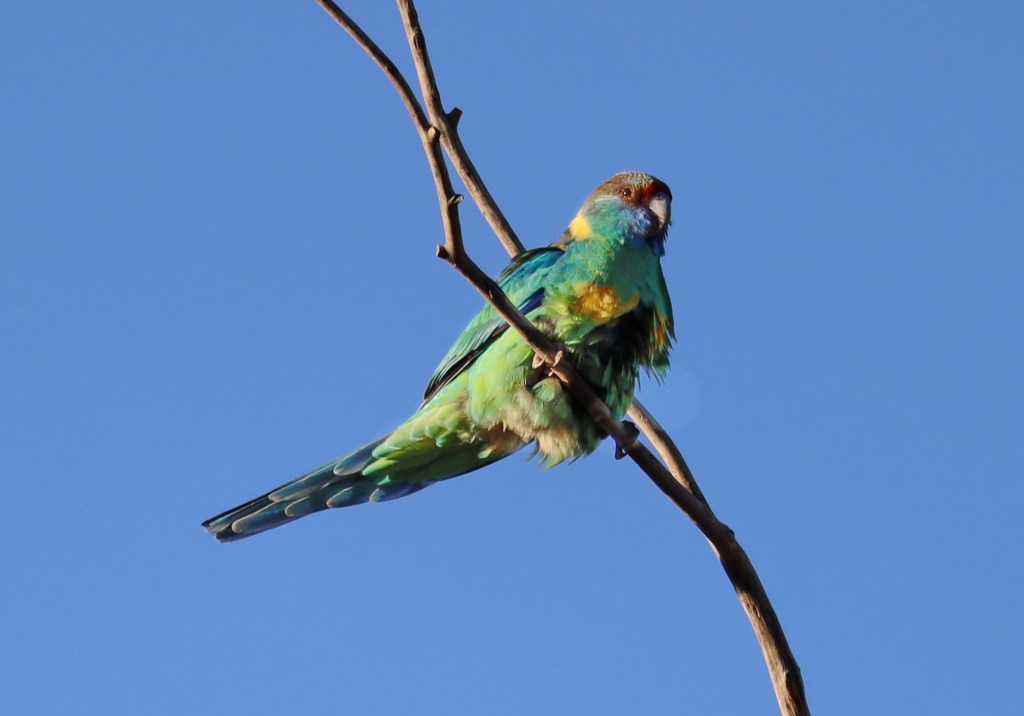
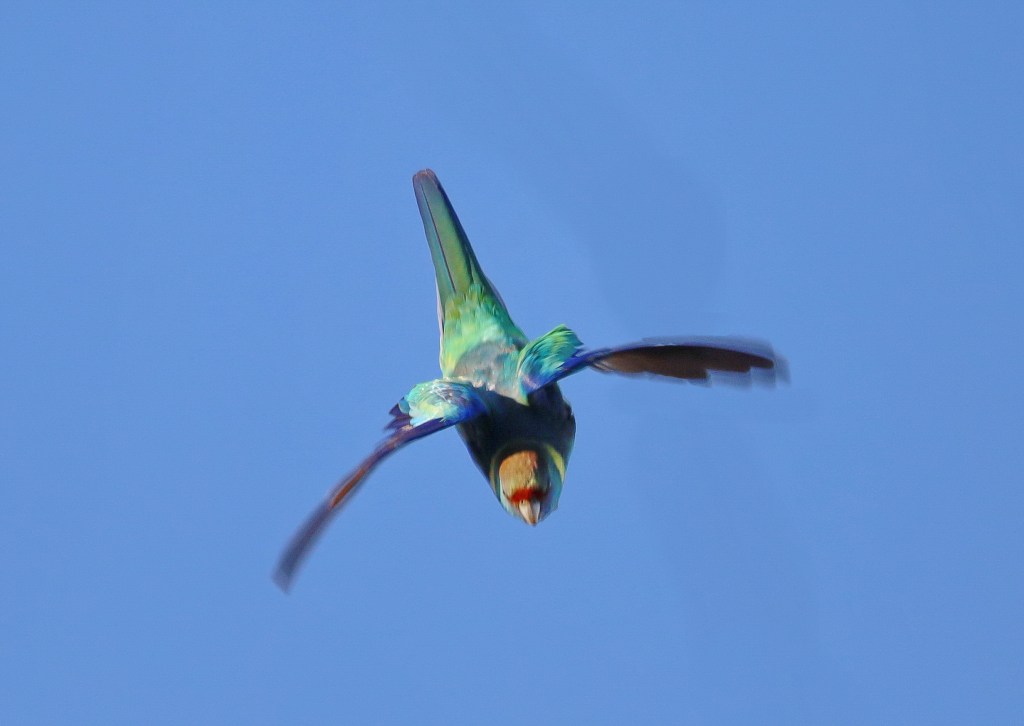
Continuing our recent western NSW tour of the Corner Country I will present some more of the birds unique to this region of Australia. The three main bushes that populate our desert regions in the outback are Saltbush, Mallee and Mulga. Each has its own areas of habitation. Most of our colourful Parrot family live in the driest hottest arid regions of our country, including the Mallee Ringneck, which is a Parrot species so named because of coloured plumage ring around its neck. We were delighted to see this one enjoying the warmth of the late afternoon Winter sun. Click on image to enlarge it.



Another interesting resident of these dry forest areas is the Apostlebird, named because it was originally found in tight family groups of about 12 birds. These unusual birds have similar tight family breeding structures similar to the White-winged Chough, as they are both very community minded.


The Zebra Finch are amazing tiny birds of the dry arid and desert regions of the outback, which thrive on seed, insects and very little water per day. Their flight speed, even in the hot sun is amazing. They are a beautiful bird and have their name due to the stripes on their tail. The male has the rufous face markings.

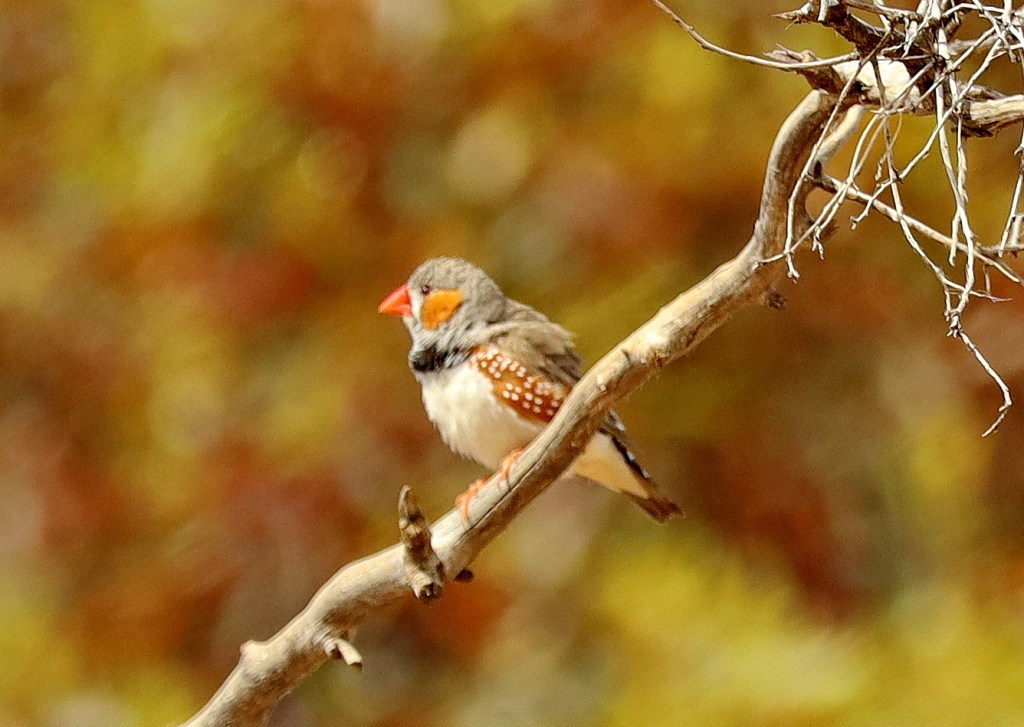
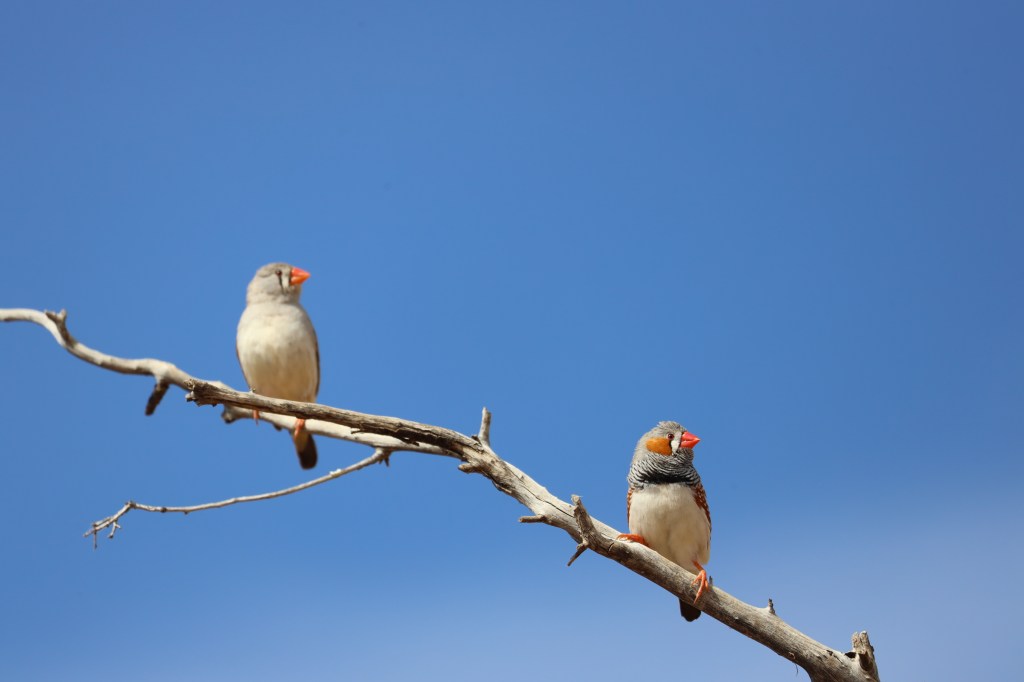
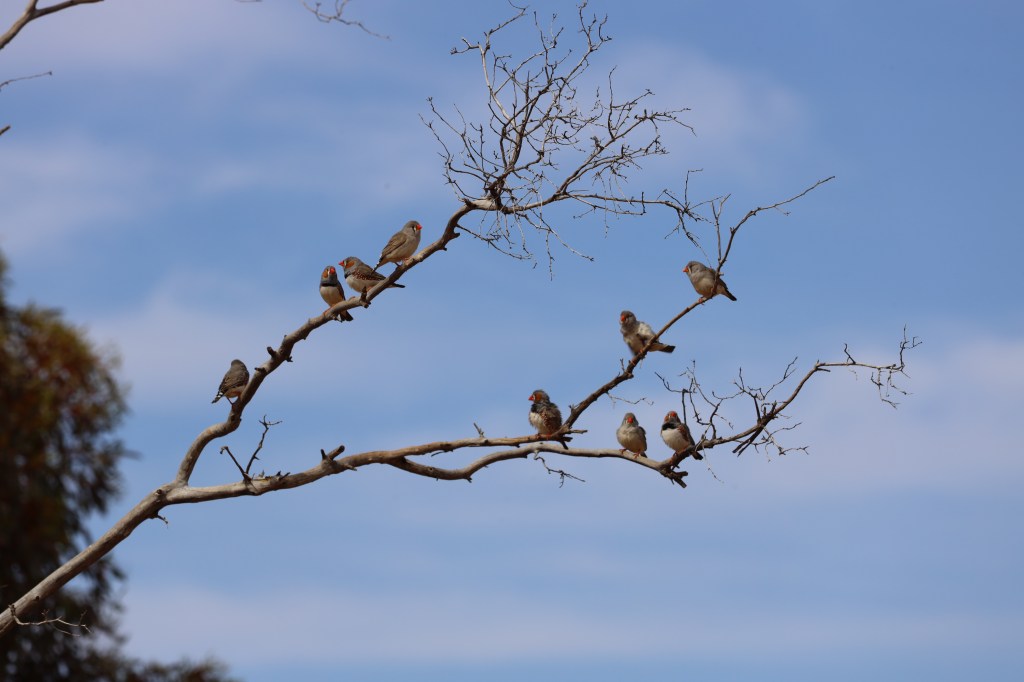
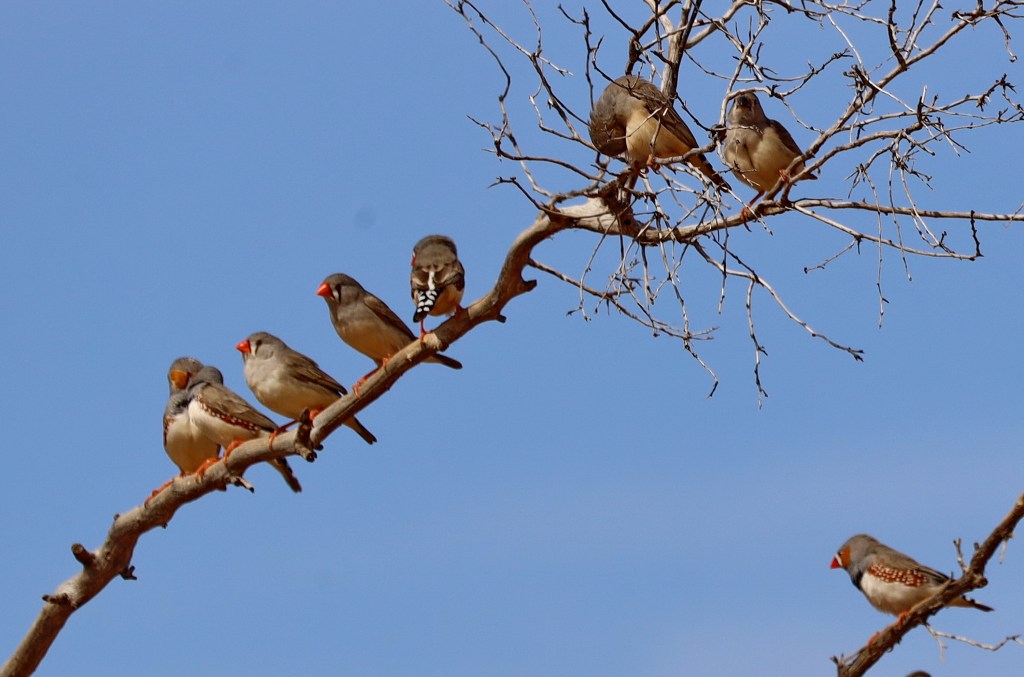
These birds are the predominant Finch species in the outback and are found in large flocks, which contributes to their survival. The flock is a means of protection, breeding and finding food and water sources. They can extraxt water from wet sand as seen below, since they need but a drop for survival. Listen and you will hear their unique Finch call. Females can view ultra-violet light with their special vision pigment which allows them to better appreciate the male of the species and see their reds and orange colours more vibrantly.
One of the features of the desert on our visit was the beautiful fields of wild flowers blooming in th early desert Spring. Here are some of the varieties we saw.


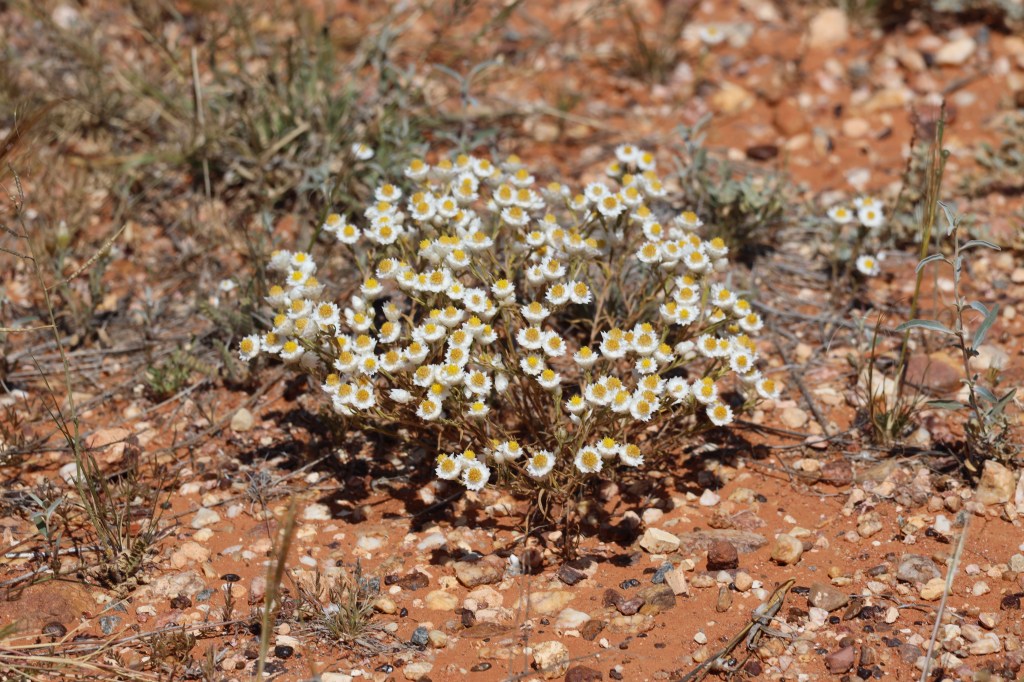
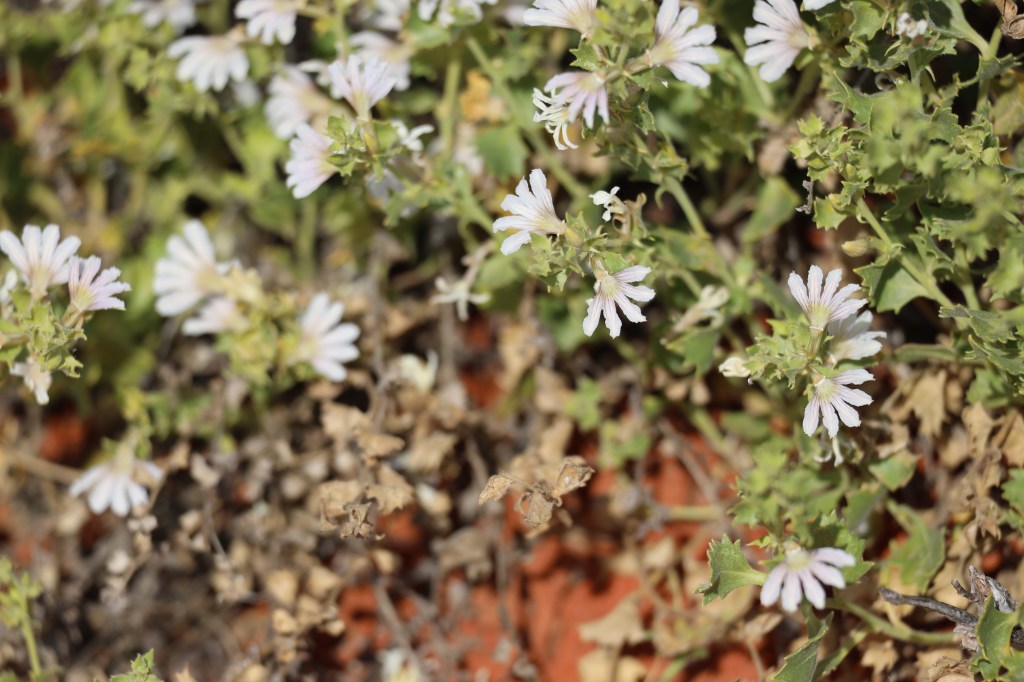

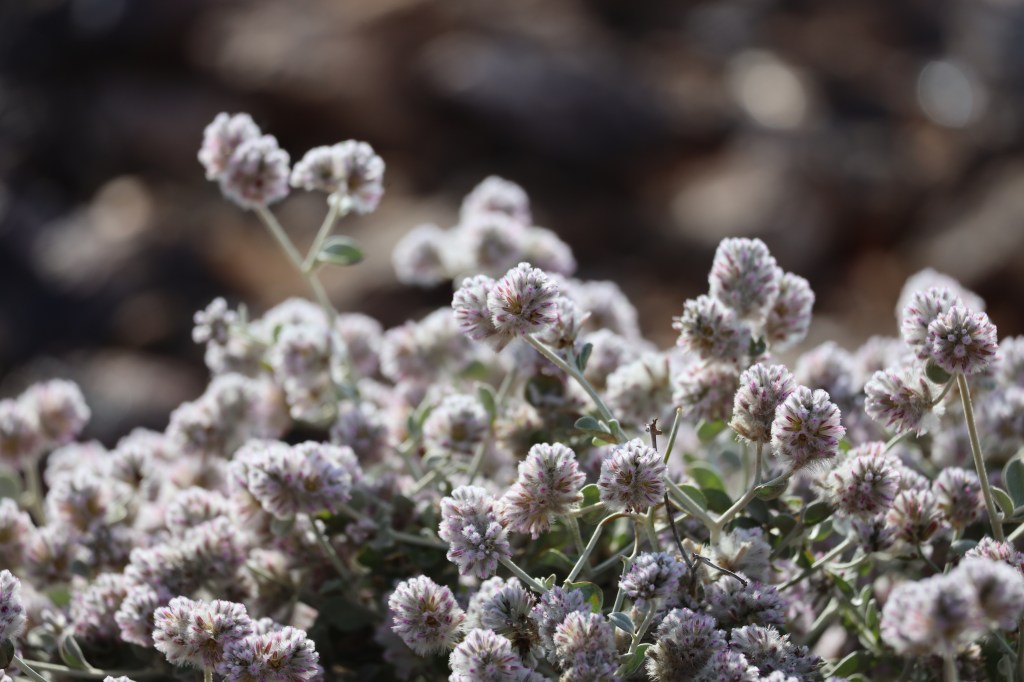
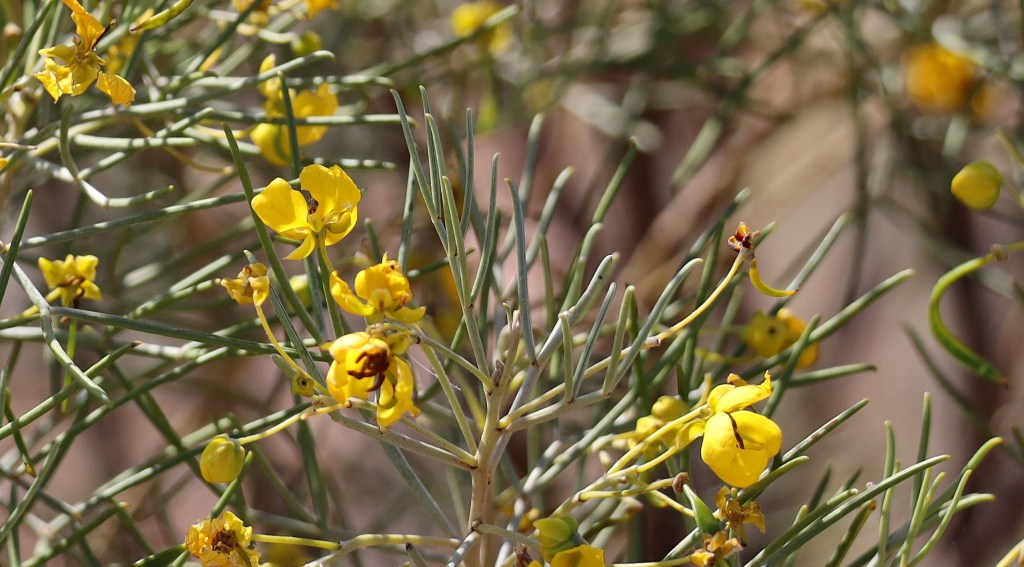
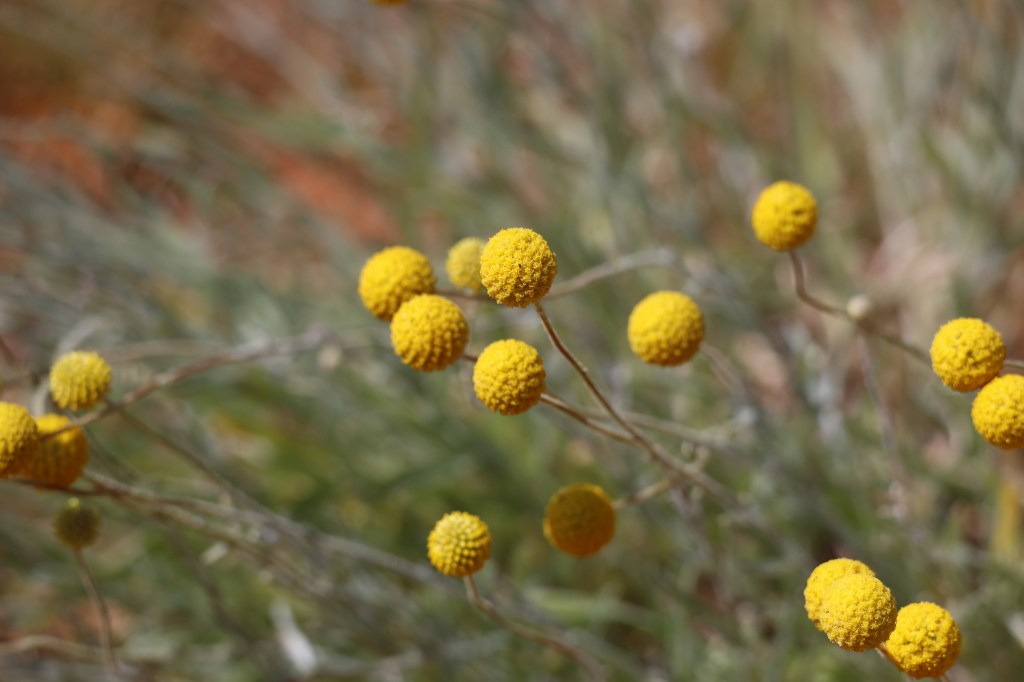


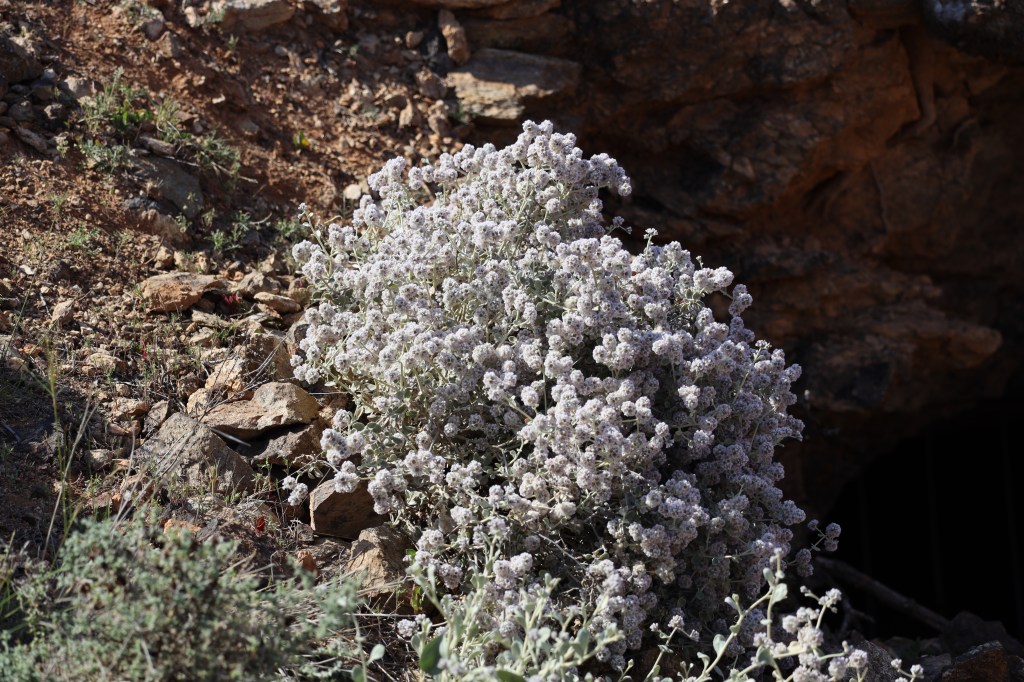
We were able to sample some ripe Quandong fruit bush tucker growing by the Menindee Lakes on the Darling River. The red fruit is ripe and tastes lovely. It is a good source of Vitamin C which the native First Nations People fed on for their health.
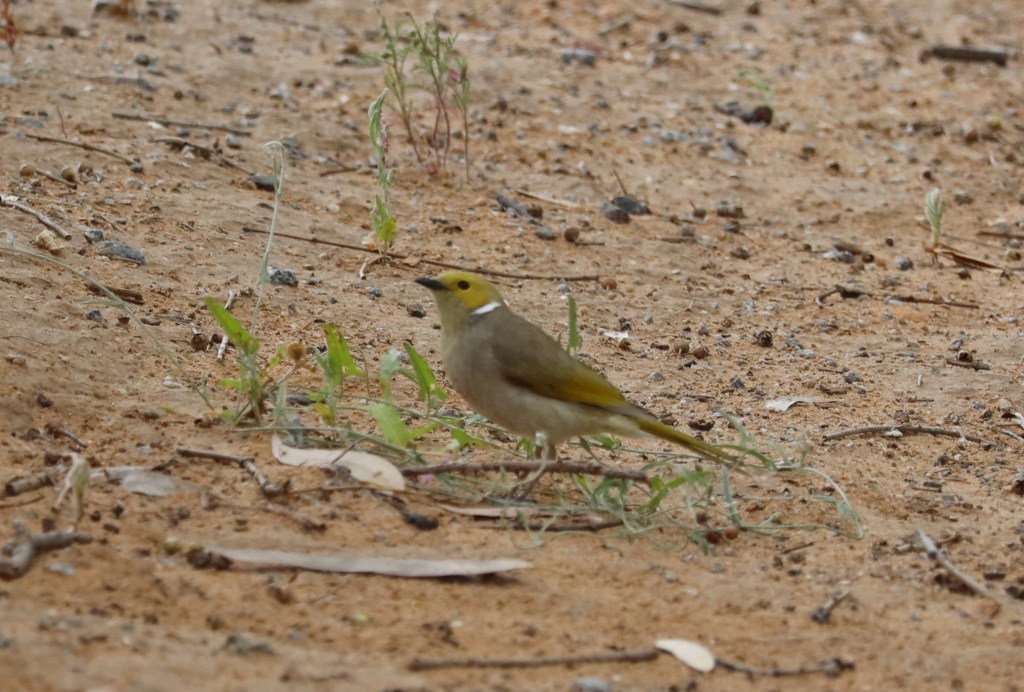
The two main Honeyeaters seen were the White-plumed Honeyeater and Singing Honeyeater.

The best places to view birds in arid and desert landscapes is of course near waterholes, springs and billabongs. Here the birds gather for water and refreshment from bathing. There is often green bushes bearing fruit growing around the water. We saw three special birds we never see firstly a small flock of Black-tailed Native Hen.


A flock of Cockatiel parrots in flight.


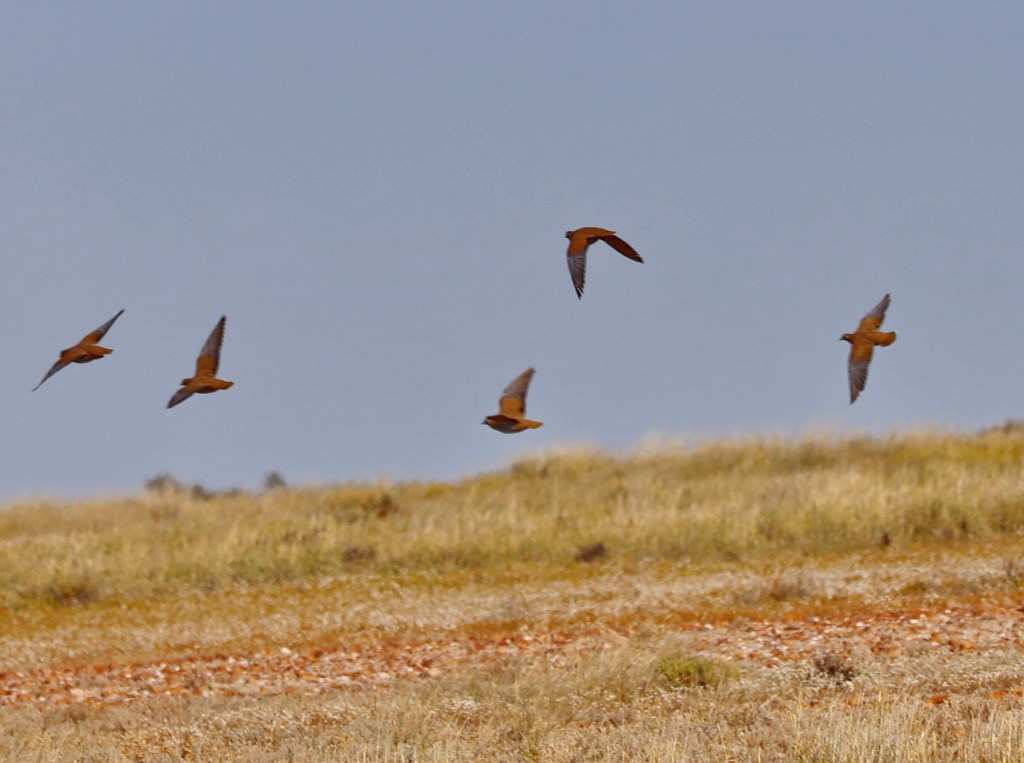
But to top it off we were excited to see the rarely seen or photographed Flock Bronzewing. Known as the desert pigeon it is only found in the most arid areas of our country on the dry hot Gibber Plains and inland desert areas and are extremely human shy. The males have most unusual facial markings with distinct black and white faces. Our previous shots of these birds in the Kimberley were not as close as these. Note the barren red rocky ground which is called Gibber Plain.



Have a wonderful week and enjoy the birds !
Next week I will give my final part to this series. Here is the small lake spring in the desert wilderness on the Gibber Plains or Gibbers, which attracts many species of animals and birds being their only source of water for many miles. King David, out of his love for God writes from one of his Psalms:

We may experience a time of the Dark Night of the Soul, where we may feel deserted, no body cares, afraid, empty, dry, alone or lost, feeling like a very thirsty person in a dry desert place in our lives. We search for the water of life to refresh and revive us to enable us to move forward again and regain our resilience. These are times when our Most Gracious God reaches out to us to extend his hand of love to us with hope that we will reconnect with him and know and love him as he does us.
“Jesus answered, “Everyone who drinks this water will be thirsty again, but whoever drinks the water I give them will never thirst. Indeed, the water I give them will become in them a spring of water welling up to eternal life.” – John 4:13,14 NIV
“He tends his flock like a shepherd: He gathers the lambs in his arms and carries them close to his heart;” – Isaiah 40:11
Don’t forget with Christmas just around the corner, and/or that special gift for your loved one’s Birthday, my beautiful bird books showcasing and introducing our amazing Australian birds are on sale now here online and recently also available in the Broken Hill Visitor Information Centre. Many of my blog Followers have purchased here online and can testify the books can be sent to international addresses.

Adv. Dip. in Counselling and Family Therapy.
Member of Birdlife Australia
To introduce people to our unique Australian birds,
And learn from them how to live a healthy and happy life.
NOTE: All photos, videos and music used on this website are photographed, composed, performed by the site owner and remains his copyrighted property, unless otherwise stated. The use of any material that is not original material of the site owner is duly acknowledged as such. © W. A. Hewson 2015, 2016, 2017, 2018, 2019, 2020, 2021, 2022, 2023, 2024, 2025.

My wife and I share a love of bird observing and bird photography which takes us all over Australia. We love sharing our experiences. Birds live in the beautiful parts of our country. We always get blessed with beautiful gifts of new birds and unexpected experiences each time we go out birding or just walking in the parks and reserves in our wonderful land. We love Australia, and the variety that each state and region offers in its wildlife and nature aspects. Join us in sharing our love. We have always found other birders enthusiastic and friendly people who appreciate the good things in life.
 Introduce your child to our amazing
and interesting birds.
Over 100 beautiful photos with
facts on how they do life, from
which we learn helpful life skills.
Click image above to Find out more and Buy the Beautiful Bird Book
Introduce your child to our amazing
and interesting birds.
Over 100 beautiful photos with
facts on how they do life, from
which we learn helpful life skills.
Click image above to Find out more and Buy the Beautiful Bird Book

Flight of a Fledgling similar to my first book uses the interesting lives of birds to teach valuable life skills.It is written expressly for teens and young adults as they prepare to leave the Nest. It helps them to better understand themselves and improve their personal relationships and better prepare for lifes challenges. Click on the above cover to find out more and purchase online.


 When in Sydney, take a visit to BirdLife Australia's Discovery Centre and learn more about our birds at Newington Armory, 1 Jamieson St, Sydney Olympic Park NSW 2127.The Discovery Centre is open on Sundays from 10 AM to 3 PM, with free Bird Walks the last Sunday of each month @ 10:00 AM (no need to book!). For more info Phone: (02) 96471033.
  If you are a birder visiting the Sydney region for the first time, check out the many National Parks (NP) that surround it for the great variety of birds found there. The Visitor Information centres at The Royal NP, Botany Bay NP, Fitzroy Falls and Minnamurra NPs have information and also sell my Beautiful Bird Books. If you follow this blog, make a date with Aussiebirder before you arrive for info tips or a visit.
 aussiebirder
Great photos Ashley, I love all the bright spring colours of the flowers you were able to see. I was interested in the black tailed native hen, which I hadn’t heard of before. It’s the same as our Tasmanian native hen but different colouring. Are the black tails just as noisy as the ones here in Tassie? I sometimes here them at night from a long way away, it’s amazing how loud they are!
LikeLiked by 1 person
Thanks Sue, yes the desert was in bloom in many places. The Native Hen were too far away for us to hear them, My photos are from about 40 metres away which is why they are not too clear or close. They kept moving away from us as we moved closer and flew off eventually. I do remember the Turbo Chooks in Tassie they moved at amazing speeds.
LikeLiked by 1 person
What beauties! Wonderful photos too.
LikeLiked by 1 person
Thanks Cindy 🙂
LikeLike
Apostles should behave better than that. :o) Thanks for the info about these birds. Very interesting.
LikeLike
Beautiful collection of photos, wow! I love the Mallee Ringneck, stunning coloring!
LikeLiked by 1 person
Thanks Donna, yes they are beautiful birds. I love that so many of our parrot species have multiple colours. Our artistic Lord has done an amazing work in creating such avian wonders for us to enjoy 🙂
LikeLiked by 1 person
I especially like the Christian bird. The Apostlebird. :0)
LikeLiked by 1 person
Thanks Lee, yes it is an interesting name to arrive at, obviously the person who named it had a Christian background. I seldom wee them in 12s they are usually more than seven as are the Choughs which are very similar in behaviour and in fact are often seen grazing nearby each other. I love the squeaky calls they make, similar to the Choughs. My wife dislikes Apostlebirds because they can gate crash and get in your face at picnics when they see you, as they have no table manners at all.
LikeLiked by 1 person