Australia
Birds of Western NSW (Pt 1) – The Emu
My wife and I recently visited and explored the arid wild west outback region of our state from Broken Hill to Cameron Corner, where NSW, South Australia and Queensland state […]
Welcome to our website for the study and appreciation of Australian birds and their interesting behaviours.
My wife and I recently visited and explored the arid wild west outback region of our state from Broken Hill to Cameron Corner, where NSW, South Australia and Queensland state […]
My wife and I recently visited and explored the arid wild west outback region of our state from Broken Hill to Cameron Corner, where NSW, South Australia and Queensland state borders meet. We took the 14 hour Silver City Express train journey inland to Broken Hill from Sydney and the one week Silver City Tour of Broken Hill, Menindee Lakes, White Cliffs, Tibooburra and the Corner Country. Though it was not a birding tour we did see some birds and one lifer. A feature of our journey was the many occasions we sighted Emu families by the roadside with young at various stages of development.
Emus breed during Winter months and now we are in Spring their new season young are running behind their father. The mother lays the large green eggs and the father incubates them for about 60 days and then trains and protects the chicks for the next 18 months, while the mother goes off to further breed and explore. Emus are our largest flightless bird and are able to survive the harsh dry hot arid environment. The juvenile chick has dark stripes and is usually in a clutch of 8 to 12 though the father below appears to have lost many to predation, which may include raptors, of which are numerous out there. Click on image to enlarge it.
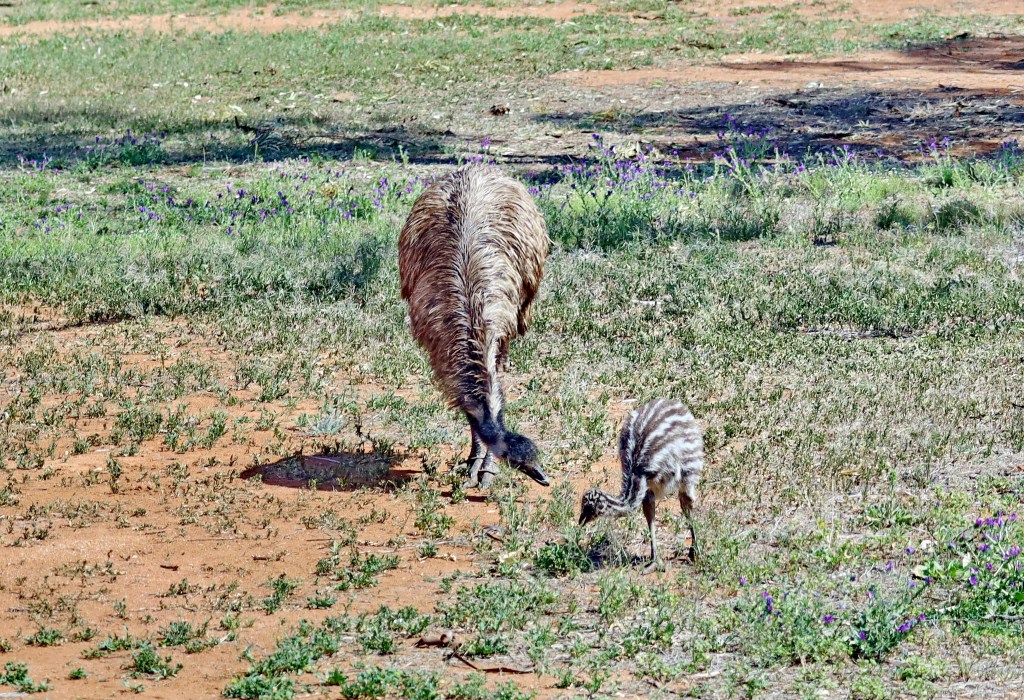


The male has a distinct blue neck. Their main predators are dingo packs and humans. One thing in their favour is that they can escape their pursuers with their powerful legs running up to 50 km/hour or more. One we encountered was keeping up with our bus doing 60, and fitted well to Henri Mancini’s ‘Baby Elephant Walk’. They can run for an extended time when chased and so outrun and exhaust their would be predator. They also can use their sharp claws and hard beak to injure opponents.
In the second edition of my first book ‘What Birds Teach Us’ the Emu is showcased to help us realise our abilities and personal full potential. We need to encourage our children, as well as ourselves to Realize, research and develop areas of skill and achievement we are most gifted at, and then improve ourselves in these areas and not compare ourselves with others. We need to appreciate and have a positive view of our uniqueness and personal contribution to our family and community. This book is an excellent Christmas present for any age as it encourages strong character building skills in a positive encouraging approach using our amazing Aussie birds. Click on the image below and purchase here securely online. You will also be able to purchase this book in the Broken Hill Visitor Centre from next week.

In Spring and Summer Emus graze on leaves, native fruit, flowers, insects and seeds and in Autumn and Winter on grass, insects and herbs. They can reach high to access leaves from bushes. They only need to drink once a day, and when they do they drink as much as they can to last them through the arid dry hot day of the outback.

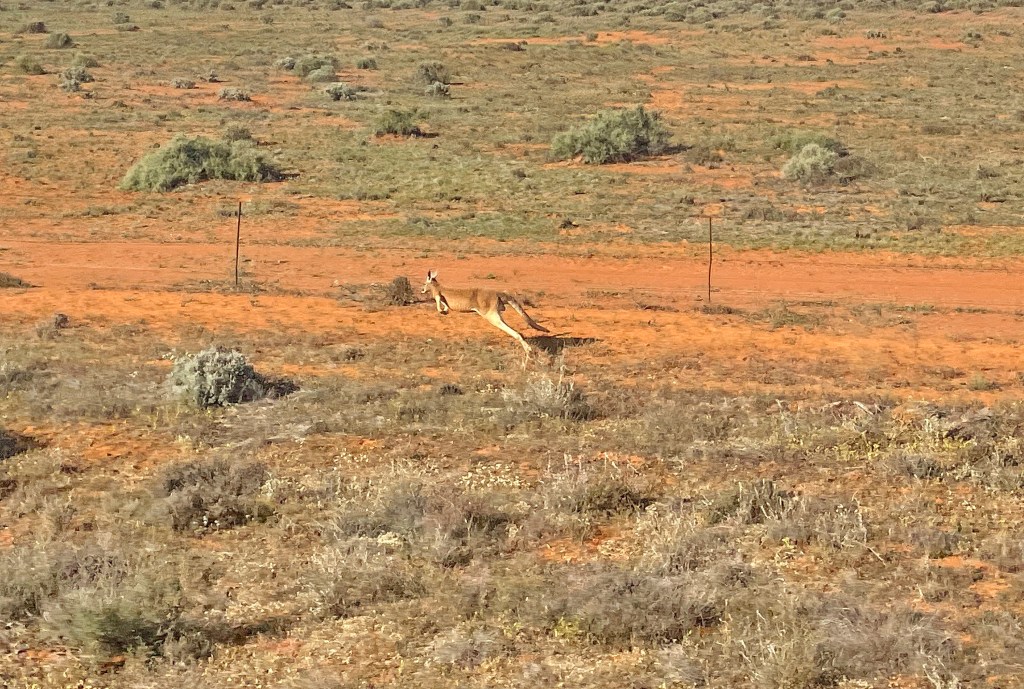
You can appreciate in the image above how well these birds blend into their red brown environment of the Gibber plains and savanna lands of the outback. I was delighted to see another creature which also matched its environment, a Kangaroo we never see east of the ranges. We usually see the Grey Kangaroo, which blends with our grey dark soils, but in the outback the Big Red Kangaroo is featured, and we saw plenty of these. As you can see they blend in well with the red soils. These creatures are the largest Australian marsupials and can stand between 1.8 and 2 metres tall.



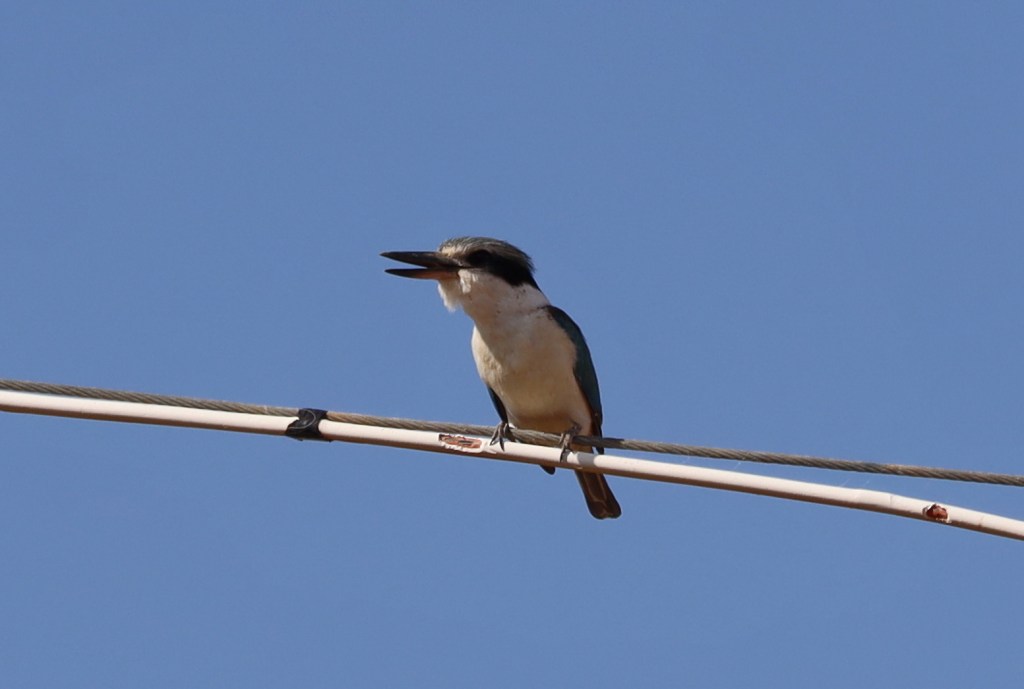
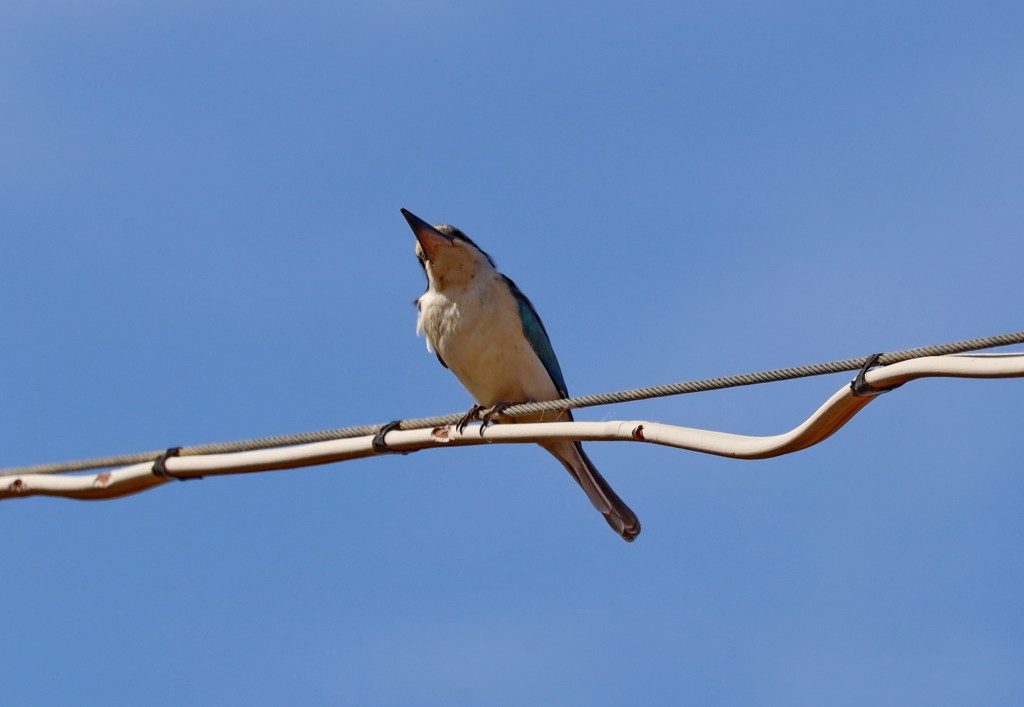
But the highlight for us was this lifer the Red-backed Kingfisher which has its habitat in this arid region. Here are the few shots we had of this bird. Thankfully my wife managed to photograph the bird’s diagnostic back photo, and I shot the frontal shots. Notice the diagnostic wavy hairdo also.


There were of course many other birds but these are for starters. We were amazed at how many common House Sparrows were in all the towns. Of course these introduced birds came on the ships from England but have thrived well here. Our native Noisy Miners drove them out of Sydney and the surrounding areas years ago.
Have a wonderful week and enjoy the birds !

Adv. Dip. in Counselling and Family Therapy.
Member of Birdlife Australia
To introduce people to our unique Australian birds,
And learn from them how to live a healthy and happy life.
NOTE: All photos, videos and music used on this website are photographed, composed, performed by the site owner and remains his copyrighted property, unless otherwise stated. The use of any material that is not original material of the site owner is duly acknowledged as such. © W. A. Hewson 2015, 2016, 2017, 2018, 2019, 2020, 2021, 2022, 2023, 2024, 2025.

My wife and I share a love of bird observing and bird photography which takes us all over Australia. We love sharing our experiences. Birds live in the beautiful parts of our country. We always get blessed with beautiful gifts of new birds and unexpected experiences each time we go out birding or just walking in the parks and reserves in our wonderful land. We love Australia, and the variety that each state and region offers in its wildlife and nature aspects. Join us in sharing our love. We have always found other birders enthusiastic and friendly people who appreciate the good things in life.
 Introduce your child to our amazing
and interesting birds.
Over 100 beautiful photos with
facts on how they do life, from
which we learn helpful life skills.
Click image above to Find out more and Buy the Beautiful Bird Book
Introduce your child to our amazing
and interesting birds.
Over 100 beautiful photos with
facts on how they do life, from
which we learn helpful life skills.
Click image above to Find out more and Buy the Beautiful Bird Book

Flight of a Fledgling similar to my first book uses the interesting lives of birds to teach valuable life skills.It is written expressly for teens and young adults as they prepare to leave the Nest. It helps them to better understand themselves and improve their personal relationships and better prepare for lifes challenges. Click on the above cover to find out more and purchase online.


 When in Sydney, take a visit to BirdLife Australia's Discovery Centre and learn more about our birds at Newington Armory, 1 Jamieson St, Sydney Olympic Park NSW 2127.The Discovery Centre is open on Sundays from 10 AM to 3 PM, with free Bird Walks the last Sunday of each month @ 10:00 AM (no need to book!). For more info Phone: (02) 96471033.
  If you are a birder visiting the Sydney region for the first time, check out the many National Parks (NP) that surround it for the great variety of birds found there. The Visitor Information centres at The Royal NP, Botany Bay NP, Fitzroy Falls and Minnamurra NPs have information and also sell my Beautiful Bird Books. If you follow this blog, make a date with Aussiebirder before you arrive for info tips or a visit.
 aussiebirder
What a delightful post, had me laughing watching the emu run with your bus along with the music you uploaded! Boy, they do run fast! First I think I’ve heard of the Red-backed Kingfisher, gorgeous species, congrats on sighting another lifer for you both! Can’t not mention the roos, they are so cute, although I know you don’t want to tangle with one, lol.
LikeLiked by 1 person
Thanks Donna, yes it was fun watching the Emu keep up with our bus, they run so fast. We love the many species of Parrot that we have, but it is interesting that many of them are hardly seen by humans as they live out in the arid desert areas of our great continent. True, you would not want to tangle with a male Roo especially if it has his females with him as they are very protective and can be dangerous able to approach, especially if they are up and watching you intently. I have had this experience. Have a great week my friend !
LikeLiked by 1 person
Great pics and videos Ashley. I went to Broken Hill back in the early 1990s, travelled there on the XPT I think, and visited Lake Menindee, Copi Hollow, White Cliffs, and Silverton. Saw the Burke & Wills tree, went underground touring the Delprats Mine, and saw lots of big red kangaroos and emus running in front of the tour bus. I still remember how vivid red the soil was there! It was also the first time I saw a wedge tailed eagle nest which had chicks in it! Thanks for the wonderful memories! 🙂
LikeLiked by 1 person
That’s wonderful Sue ! Sounds like you were on the same tour ! Yes we did enjoy our time there, though we never saw a Wedge at all which was promised me by the bus driver.
LikeLiked by 1 person
Thanks Cindy, yes they are so cute the way they follow after their parents. We were amazed at so many this season after the good rain of the past wet season, the desert is quite green and blooming with wild flowers which I will share next post.
LikeLike
LOL! That Emu keeping up with your bus was fun to watch. What amazing birds they are and how wonderful that you were able to see them, the Roos, and Kingfisher in the wild!
LikeLiked by 1 person
Thanks Deborah, yes they are very fast runners and have powerful legs and feet, it was a great delight when they ran alongside the bus. There were so many, which is good for the country since so many were shot by the early European settlers nearer the coastal settlements.
LikeLiked by 1 person
😊
LikeLike
Sounds like quite an interesting adventure. We’ve seen emus in zoos. They are quite interesting. Would be nice to see them in their natural habitat.
LikeLiked by 1 person
Thanks Lee, it is always the best seeing them in their natural habitat and understanding how our all wise Creator has equipped them well to thrive in such a harsh environment.
LikeLike
Very fast birds.
LikeLiked by 1 person
Thanks Sandra, that they are ! They have amazing endurance and resilience.
LikeLiked by 1 person
Amazing captures of the barren and rich red earth of broken hill. Thanks for sharing your experience with us. 🌈👏
LikeLiked by 1 person
Thanks Karen, yes the red centre certainly lives up to its name, it is like being on another planet at times, especially on the bare Gibber plains of the semi desert areas. The amazing thing is that any birds and animals thrive in these dry hot places. Thank s again for your welcome comment my friend.
LikeLiked by 1 person
Oh, the mother’s and chicks are so wonderful! Thank you for posting them.
LikeLiked by 1 person