Australian birds
Hooks on Beaks – Intelligent Design III
Another interesting aspect to Intelligent Design in bird morphology is the appearance of hooks at end of particular species of birds and what they are used for. As is the […]
Welcome to our website for the study and appreciation of Australian birds and their interesting behaviours.
Another interesting aspect to Intelligent Design in bird morphology is the appearance of hooks at end of particular species of birds and what they are used for. As is the […]
Another interesting aspect to Intelligent Design in bird morphology is the appearance of hooks at end of particular species of birds and what they are used for. As is the case of meat eating raptors, which have a small hook on their upper mandible for tearing their prey into swallowable pieces because they lack teeth to chew their prey. You may think that all other birds with hooked beaks would do likewise but this is not the case.
1. Yes, the most common use of the beak hook is to tear flesh as mentioned above. This Australian Hobby is tearing at a large bird it is dismembering into small edible pieces, occasionally using its beak to tear at the carcass. Eagle, Owls, Falcon, Kestrel, Hobby, Goshawk, Harrier. Osprey, Kookaburra, Butcherbird, Currawong and others all have a beak hook for tearing prey. Click on images to enlarge them.
Australian Hobby feeding on a large waterfowl
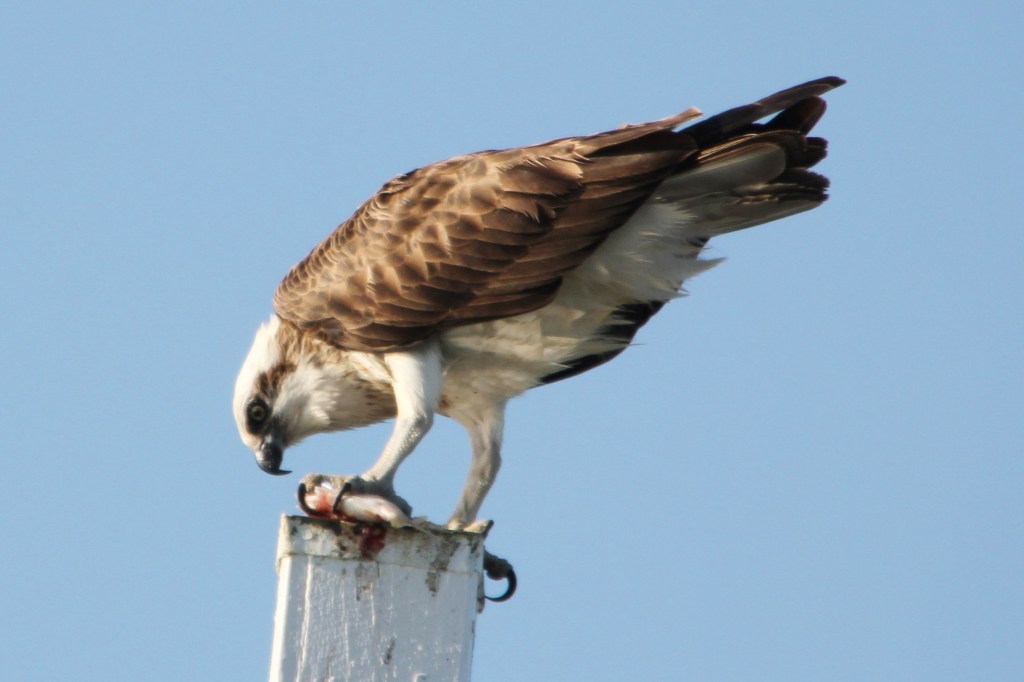
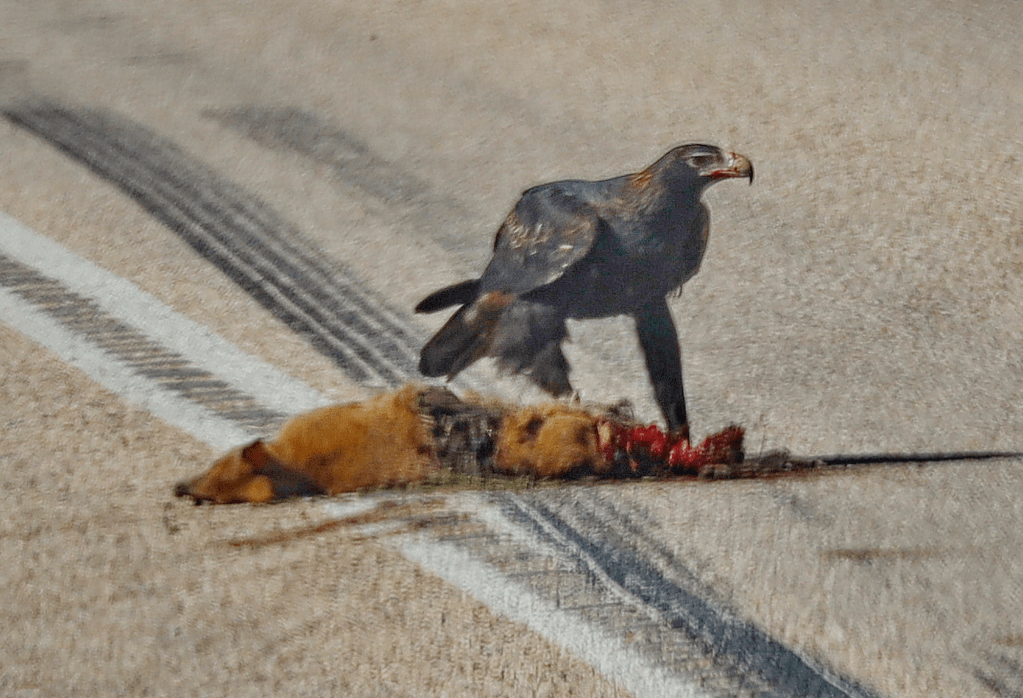
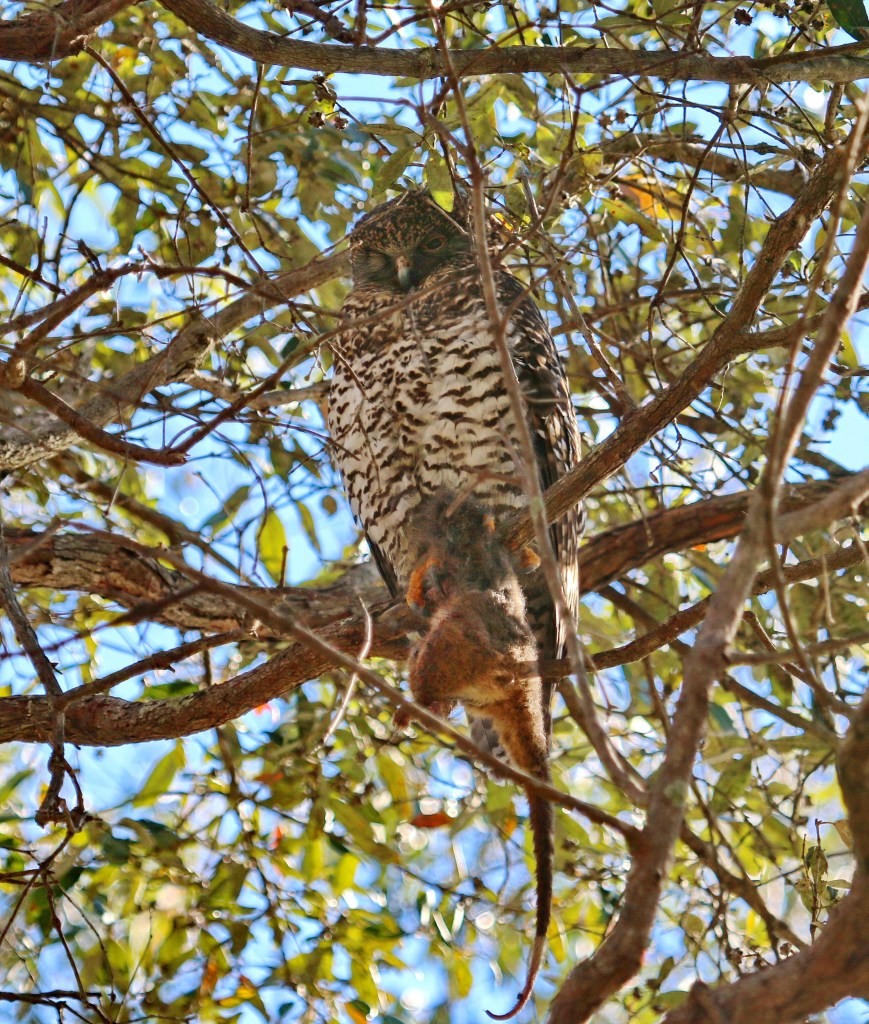
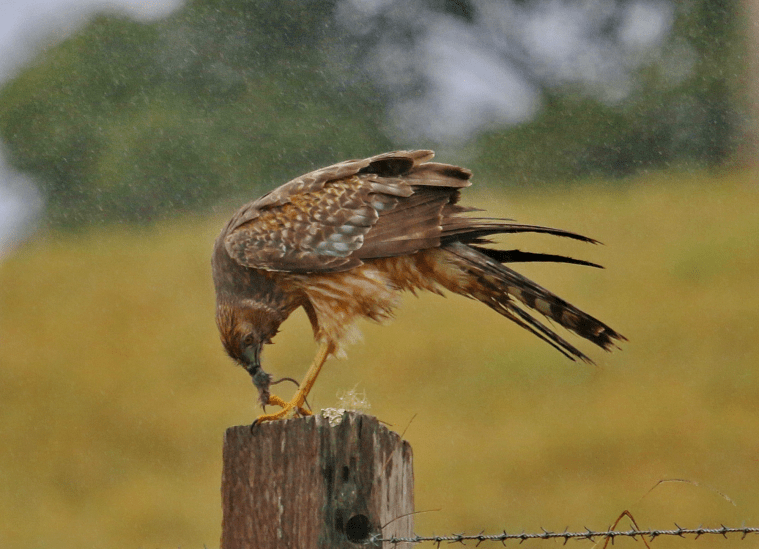
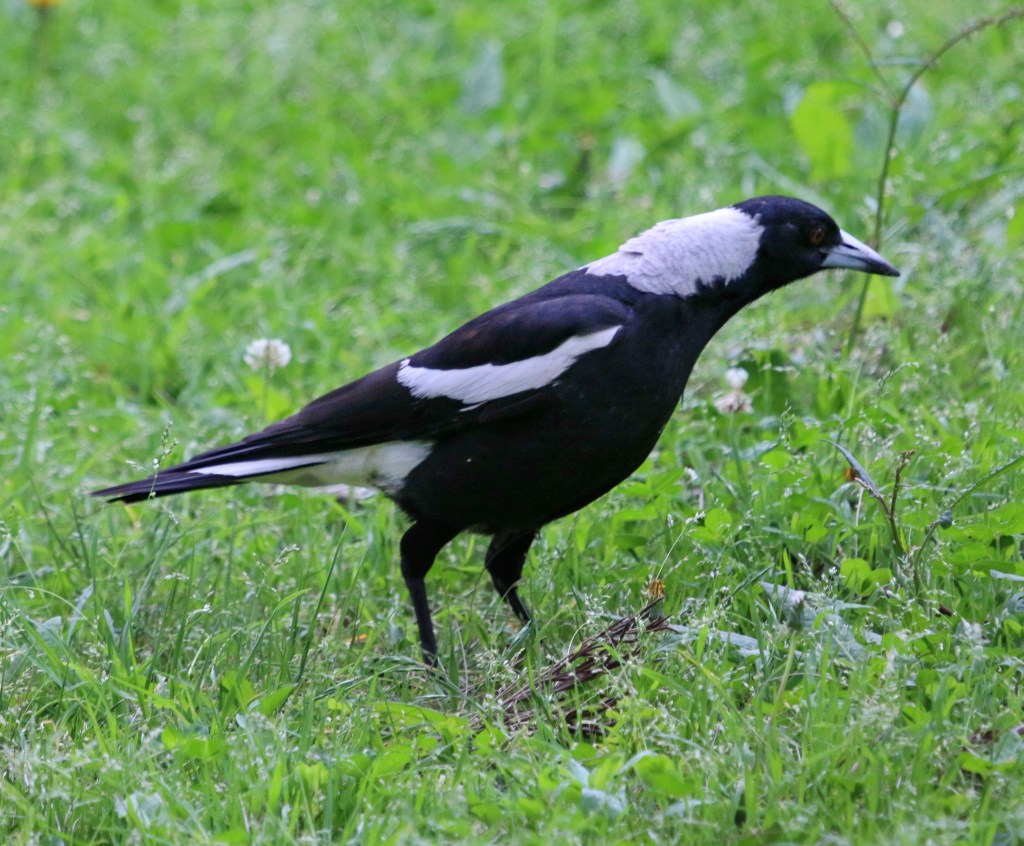
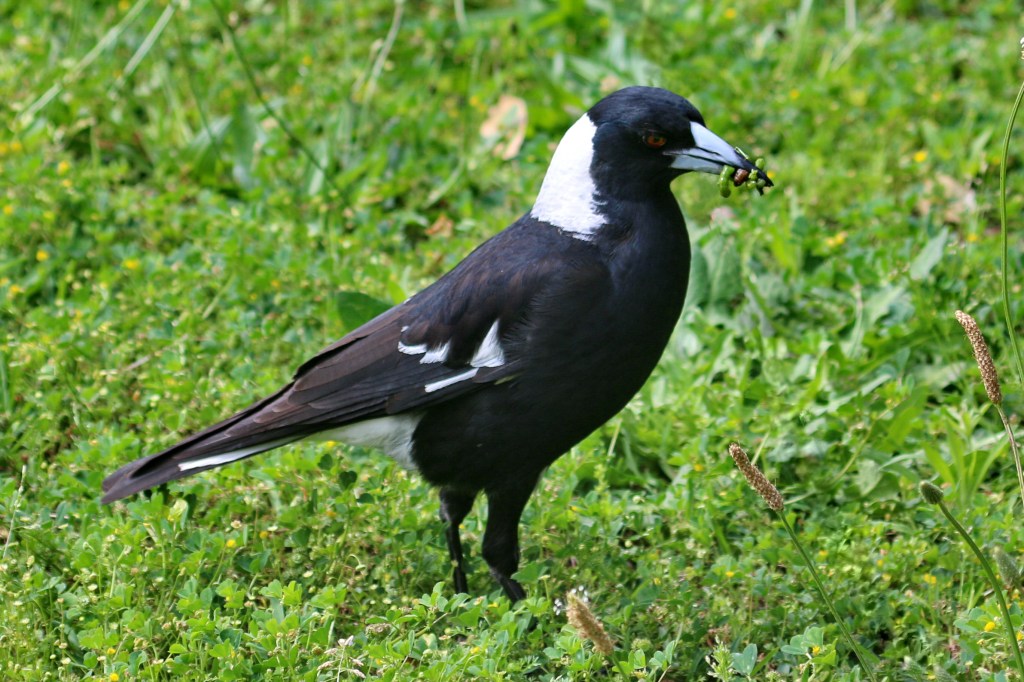
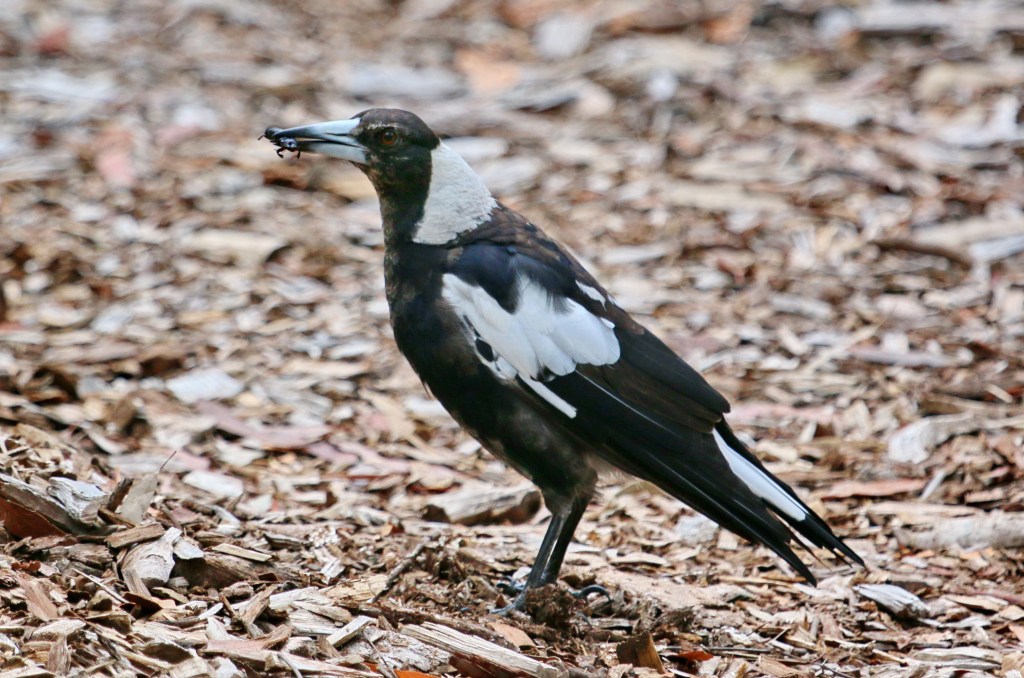
Some may ask why the Australian Magpie does not share a hook similar to the Currawong and Butcherbird as they are similar birds. The fact is that the Aussie Magpie is essentially a ground feeder, feeding mainly on subsurface larvae and insects. It needs its super hard beak to pierce the earth quickly to gain its food, therefore a hook would not be helpful but more a hindrance. Magpies take several years to learn the art of listening and then striking their food which lies beneath the surface of the ground soil. The Christmas Beatle larvae is an example of its food.
2. The newborn Laughing Kookaburra and Blue-winged Kookaburra are both born with a small temporary beak hook. In a similar way to raptors, the mother Kookaburra may stagger the laying of eggs when she lays three eggs, which is the usual clutch. The eldest nesting, sometimes may use their beak hooks to kill the second and/or third sibling to prevent them competing for food, or in hard times to become food for them. Sometimes the second sibling may assist the eldest sibling and survive. They will then eat the dead sibling or the parent will on its return to the nest. It is a natural urge, and in a similar way the eldest eagles with their permanent beak hook, may do likewise when the parent staggers her egg laying, especially in poorer seasons where food is more sparce. The feature here is that as the Kookaburra fledges it looses the beak hook, having served its function. This is why Kookaburras and many raptor species may only raise one and sometimes two young per year.
Parent feeding one youngster the only one raised to maturity this season.
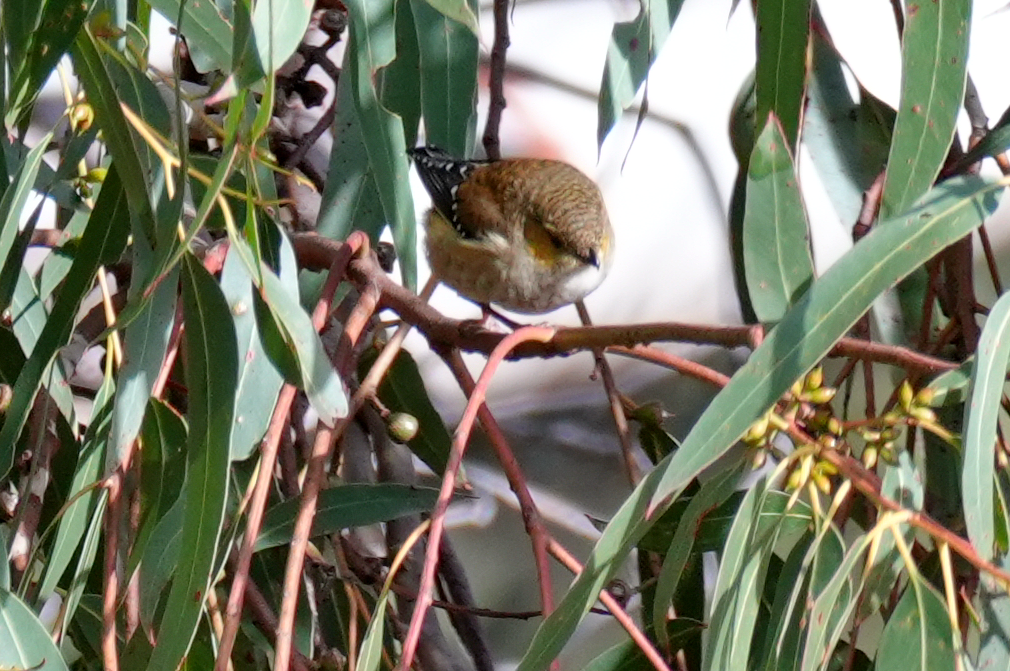
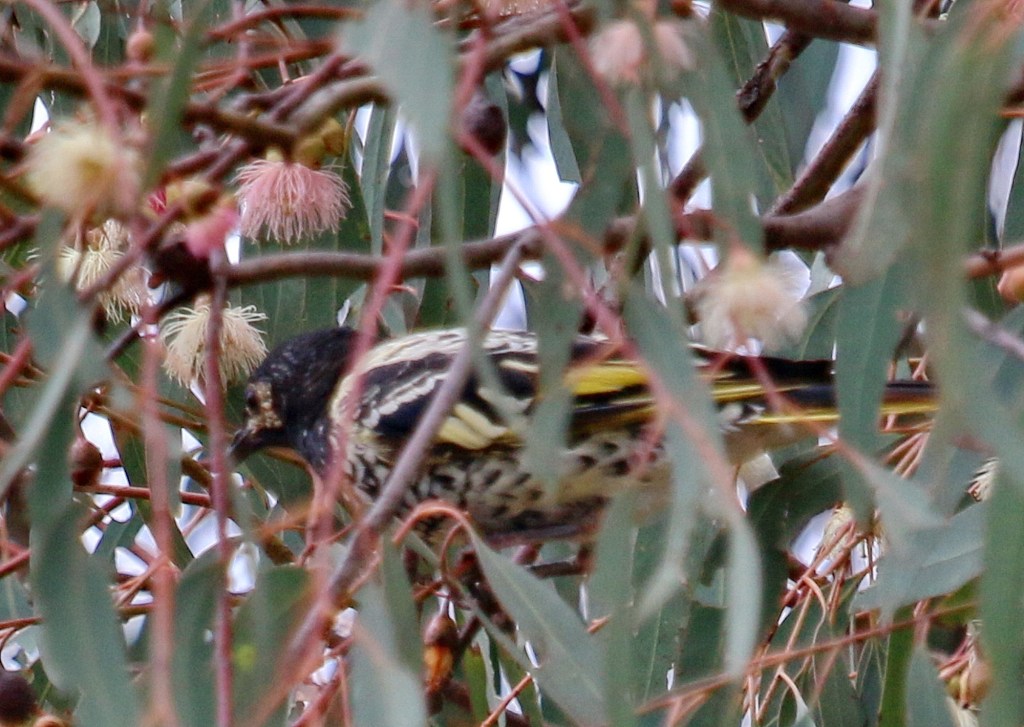
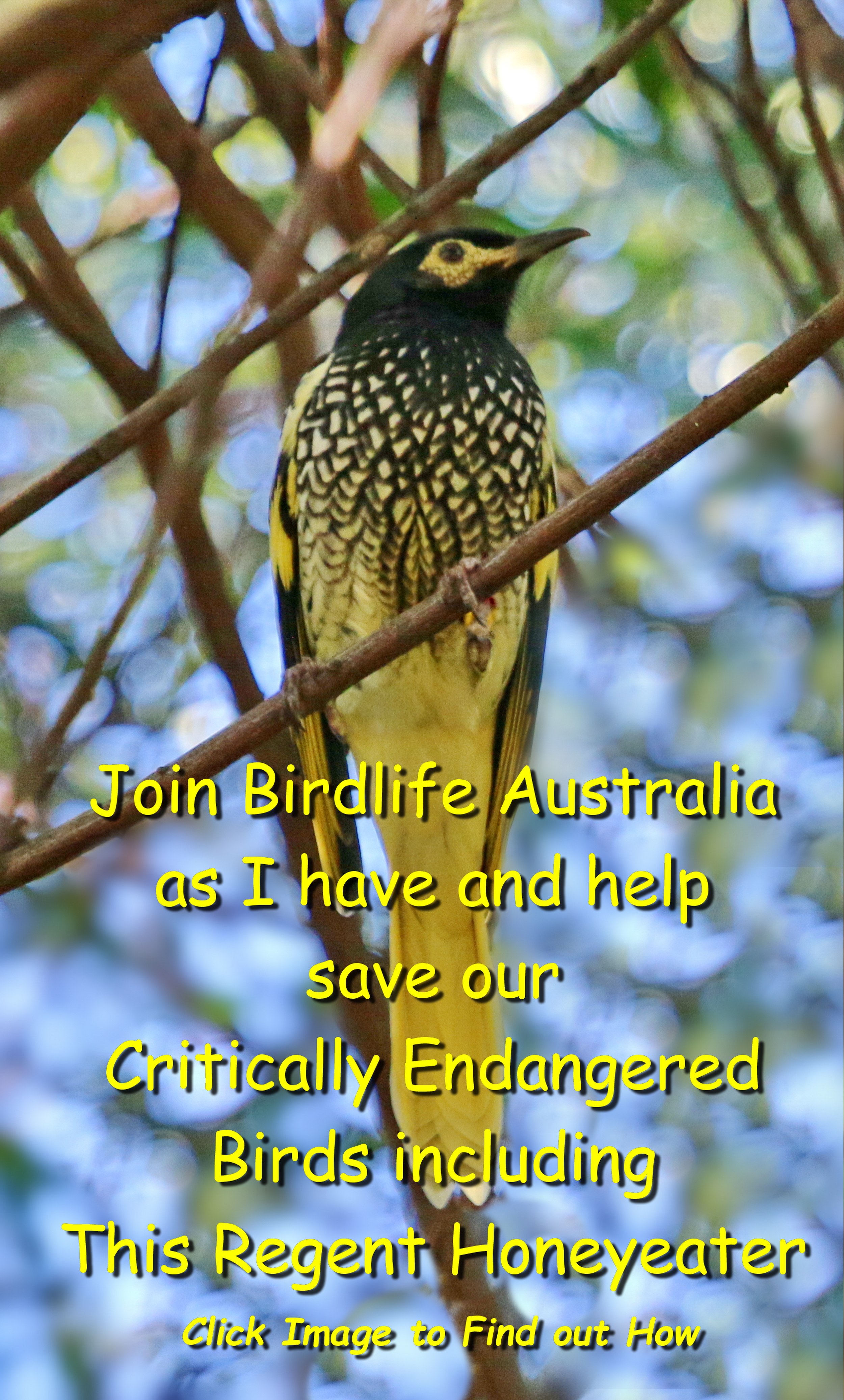
3. The Critically Endangered Forty Spotted Pardalote is the only species of Pardalote with a tiny beak hook. It is not used for any of the previous two functions but is used exclusively to pierce the cuticle of the White Gum ( Eucalyptus viminalis) leaf to make it bleed white sap which converts to sugary crystals when allowed to dry in the air. This is the basic food of this tiny species of bird, and also the reason this bird’s numbers are diminishing, as the trees are felled . The process if nicking the leaf cuticle with the hook also provides food for other small birds including honeyeaters. The 40 Spotted is endemic to Tasmania, and now most of the surviving breeding pairs are found on Bruny Island, where we visited last winter. You can check our my Click HERE to check out my blog post if you have not done so. It will open in a separate tab. Recent ornithological studies have found that many of Australia’s birds are tree dependant, and require the flowers or leaves of a particular species of Eucalypt to breed and live healthy lives. The Critically Endangered Regent Honeyeater is an excellent example of this, with drastically reduced numbers due to the careless and extensive felling of the Mugga Ironbark ( Eucalyptus sideroxylon) trees for railway sleepers. Also the continual removal of old ancient forest trees used for nesting, which may have provided nesting for hundreds of years.
Have a wonderful week birding, and stay warm in the north and cool in the south as we all experience uncertain weather patterns. If you are new to my blog – Welcome ! Take time to check out the pages from my Home Page where there are many useful birding tips and info on how we can learn from the birds to live a happy and healthy life. Check out my unique birdbooks which can be purchased securely here online.
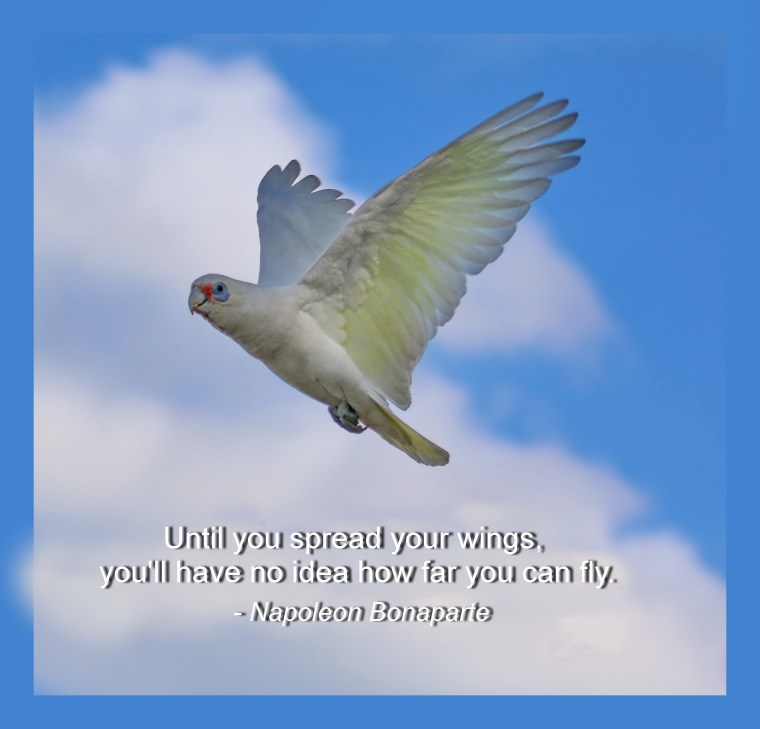
The words of Napoleon in the adjacent image are meant to encourage you to step outside your comfort zone of the irrational fear for your safety in previously uncharted unexplored experiences, and by faith overcome it by embracing new challenges thus developing new found accomplishments as well as strength and growth of character. Each of the above birds that were gifted with a beak hook, had to actually use their hook to assist the bird to achieve its goal, just as a bird must take its first leap of faith to know flight and utilise its wings. Am I using the talents and resources I have been gifted with to my best ability to bless others as well as myself ? Am I seeking to improve to reach my full potential as God created me to do ? We will eventually all give account for how we employed our gifting.
“And God is able to bless you abundantly, so that in all things at all times, having all that you need, you will abound in every good work.” – 2 Corinthians 9:8 (NIV)
“Whoever brings blessing will be enriched, and one who waters will himself be watered.” – Proverbs 11:25
“Whoever is kind to the poor lends to the Lord, and he will reward them for what they have done.” – Proverbs 19:17
“Do everything in love.” – 1 Corinthians 16:14

Adv. Dip. in Counselling and Family Therapy.
Member of Birdlife Australia
To introduce people to our unique Australian birds,
And learn from them how to live a healthy and happy life.
NOTE: All photos, videos and music used on this website are photographed, composed, performed by the site owner and remains his copyrighted property, unless otherwise stated. The use of any material that is not original material of the site owner is duly acknowledged as such. © W. A. Hewson 2015, 2016, 2017, 2018, 2019, 2020, 2021, 2022, 2023, 2024, 2025, 2026

My wife and I share a love of bird observing and bird photography which takes us all over Australia. We love sharing our experiences. Birds live in the beautiful parts of our country. We always get blessed with beautiful gifts of new birds and unexpected experiences each time we go out birding or just walking in the parks and reserves in our wonderful land. We love Australia, and the variety that each state and region offers in its wildlife and nature aspects. Join us in sharing our love. We have always found other birders enthusiastic and friendly people who appreciate the good things in life.
 Introduce your child to our amazing
and interesting birds.
Over 100 beautiful photos with
facts on how they do life, from
which we learn helpful life skills.
Click image above to Find out more and Buy the Beautiful Bird Book
Introduce your child to our amazing
and interesting birds.
Over 100 beautiful photos with
facts on how they do life, from
which we learn helpful life skills.
Click image above to Find out more and Buy the Beautiful Bird Book

Flight of a Fledgling similar to my first book uses the interesting lives of birds to teach valuable life skills.It is written expressly for teens and young adults as they prepare to leave the Nest. It helps them to better understand themselves and improve their personal relationships and better prepare for lifes challenges. Click on the above cover to find out more and purchase online.
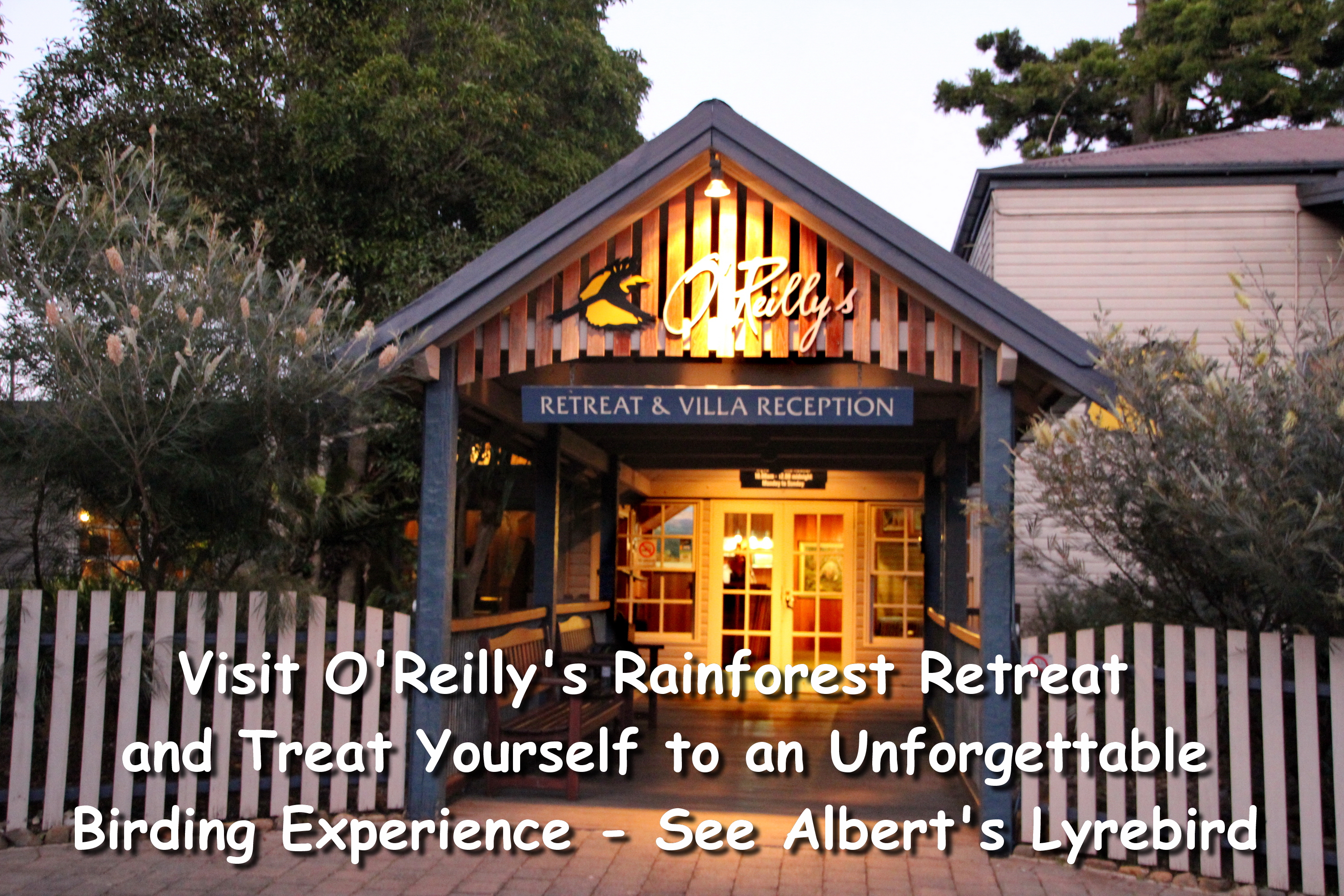



 If you are a birder visiting the Sydney region for the first time, check out the many National Parks (NP) that surround it for the great variety of birds found there. The Visitor Information centres at The Royal NP, Botany Bay NP, Fitzroy Falls and Minnamurra NPs have information and also sell my Beautiful Bird Books. If you follow this blog, make a date with Aussiebirder before you arrive for info tips or a visit.
 aussiebirder
Thanks for an interesting post Ashley. It’s great you have some great photos and videos to demonstrate the varying uses of a bird’s hooked beak. Hope the weather improves for you soon!
LikeLiked by 2 people
Great images of these birds and their prey. Their beaks were made for the tasks.
I hope you get some nice weather soon so you can get out birding.
LikeLiked by 2 people
Thanks Deborah, yes we would like to go birding but my wife has had the call of her daughter as they have their first child and it is just over a month old and needing some support, so she drives off to her almost daily at present. We hope to fit in some birding as the weather has improved these last few days with more rain on the way. Enjoy your day my friend 🙂
LikeLiked by 2 people
Congratulations on the new Grandbaby!! Your daughter is so lucky to have her Mom nearby to help her while she’s recovering and getting used to be a new mom.
LikeLiked by 1 person
Great photo of the owl with the possum!!
LikeLiked by 2 people
Thanks Lisa, the male owls will hang their prey from their claw overnight when they are not nesting. He has already eaten the head, which is the choicest part and will share the remains with his partner who is sitting in a branch nearby.
LikeLiked by 2 people
Oh my goodness that is fascinating! I love owls. We have a pair in our neighborhood. I rarely see them, and usually only at dusk or dawn, so still hard do see. But at certain times of the year I hear them hooting to each other, which I love to hear!
LikeLiked by 1 person
Thanks Takami, so delighted that you are enjoying the series. It fills in for the inclement weather we’ve been experiencing these last few weeks. Not good for birding especially when its very hot cold wet or smokey. We hope you are both doing well into this new year our dear friends.
LikeLiked by 1 person
Hello Ash, as always it’s always exciting to learn something new through your articles. We’re enjoying this Intelligent Design series very much☺️
LikeLiked by 2 people