After a peaceful walk by the Hacking River in our local Royal National Park, fondly known as the ‘Nasho‘, I decided to feature the birds we saw today and have […]
After a peaceful walk by the Hacking River in our local Royal National Park, fondly known as the ‘Nasho‘, I decided to feature the birds we saw today and have seen in recent days that dwell along the river banks. The word riparian is a quaint word we seldom use which means ‘by the river‘. Birds use the river for water, food, bathing and escape from impending danger, especially from human approach.
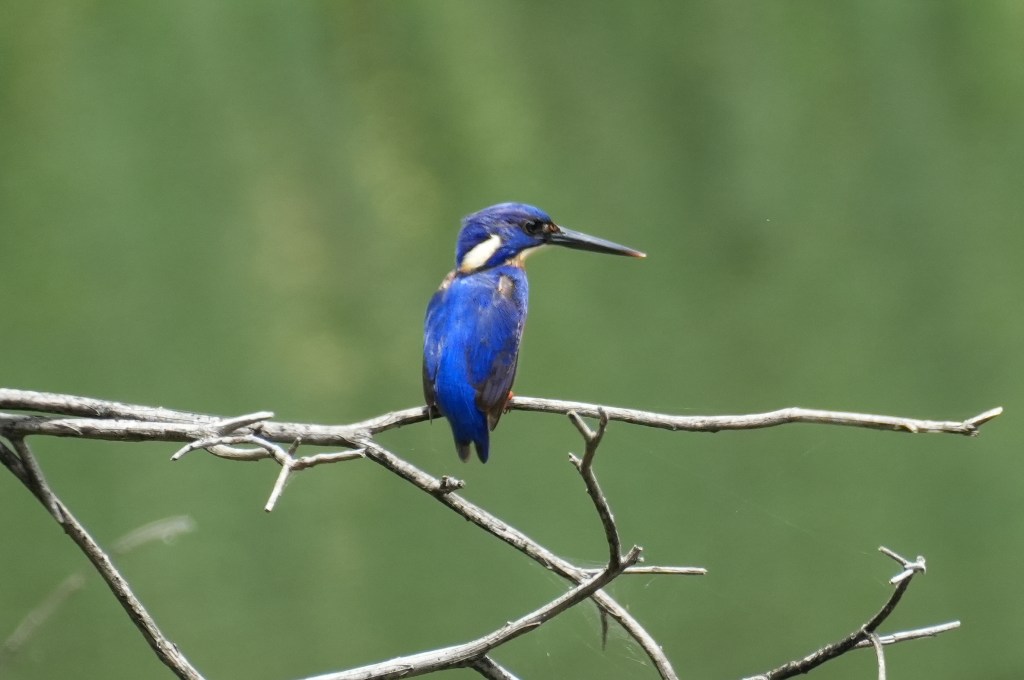
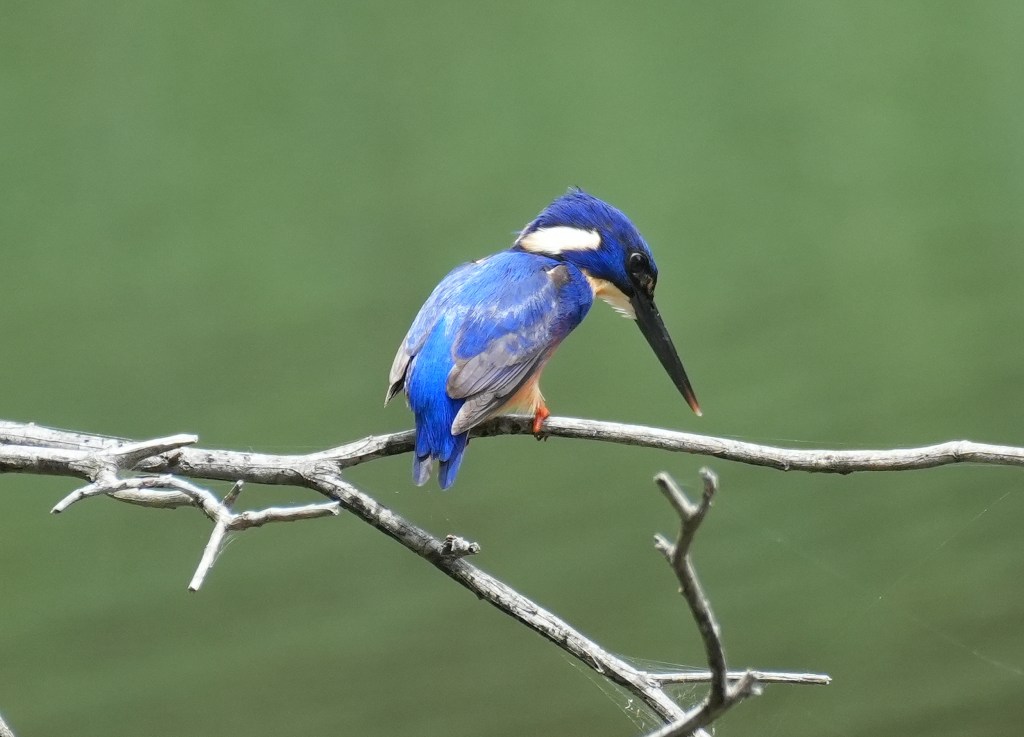
The first bird we saw on arrival was this beautiful tiny Azure Kingfisher brilliant in the sunshine with its contrasting aqua blue and bright orange plumage. This bird appears to be nesting in the riverbank beneath where it is perched. Azure Kingfisher dig their nesting tunnels above the water level into the riverbank sloping upwards. These nests can be prone to danger should the river flood. They are river dependent with the river being its only source of food, which includes small fish, aquatic insects, crustaceans and shrimp. Click on image to enlarge it.
on lookoutchecking nest belowtiny bird with tiny feet
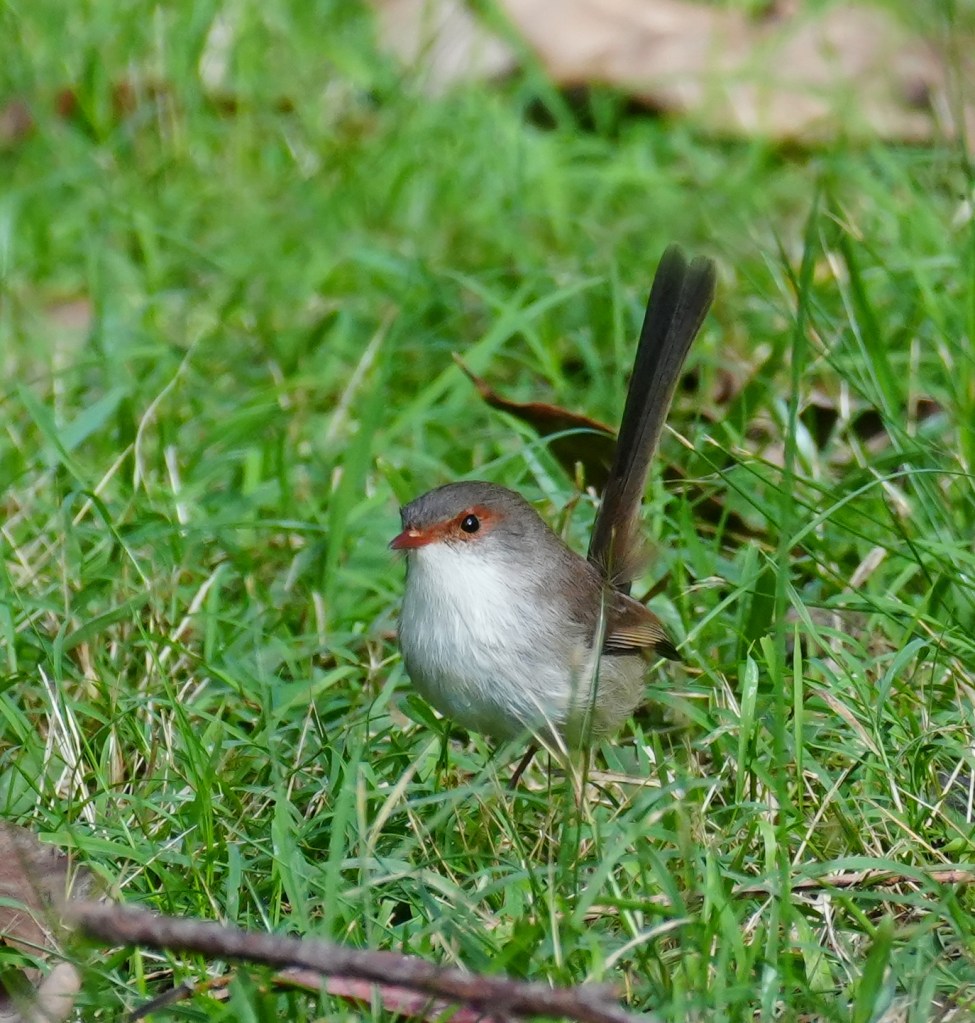
In the ferns and shrubbery along the river near the Azure Kingfisher the high pitched calls of the Superb Fairy-wren could be heard. Several families of these birds are found along the river at Fig Tree Flat. Occasionally the birds would come out and hop around on the grass and dive back under cover on our approach.
male Superb Fairy-wren in breeding plumageFemale Superb Fairy-wren
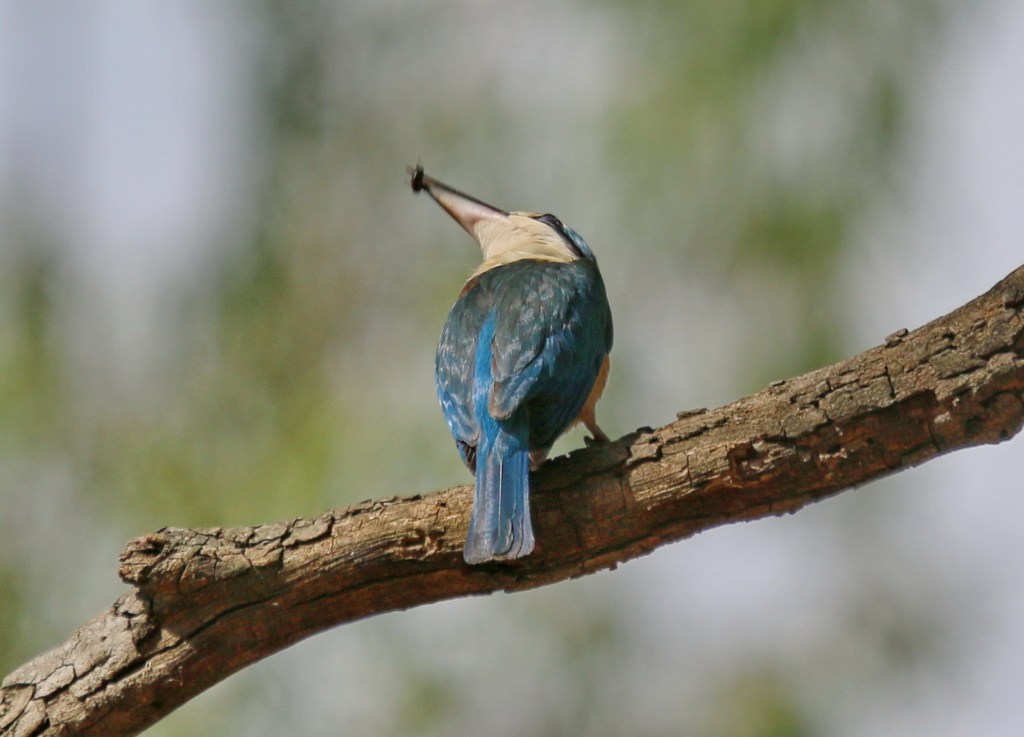
Further along the river the Sacred Kingfisher can be seen resting. These birds nest in the forest nearby usually in arboreal termite nests. They are not as dependant on the river as the Azure is and will eat small reptiles, rodents. small birds and insects in addition to small fish. Kingfishers have amazing extremely keen binocular eyesight which can correct for the refraction of water in the river, making it possible for them to catch fish with pinpoint accuracy.
resting over the riverI gotcha !
Walking under the large fig tree we came across the latest new family of Australian Wood Duck out grazing on the riverside lawn. These birds are grazing ducks and spend most of their day on the land, only going to the water to escape danger and to drink and wash. They eat mainly insects, clover, seeds, grasses and small invertebrates. Only the mother duck quacks giving instruction to her children, and the father duck bravely hisses and attacks when the family is threatened. Wood Ducks are unique in that they nest high above the ground in tree holes and not by the water.
Male wood duck guarding his familyclose up of the ducklings
These little ‘fluff ball babies’ are very prone to predation out on the paddock, hence the term sitting ducks. This is why they have large clutches because they usually lose many of the clutch to raptors before they mature. The male and female pair for life and they both raise the young together. The male has the dark brown head and the ducklings resemble the mother’s plumage until they begin reaching maturing, as with most juvenile bird species.
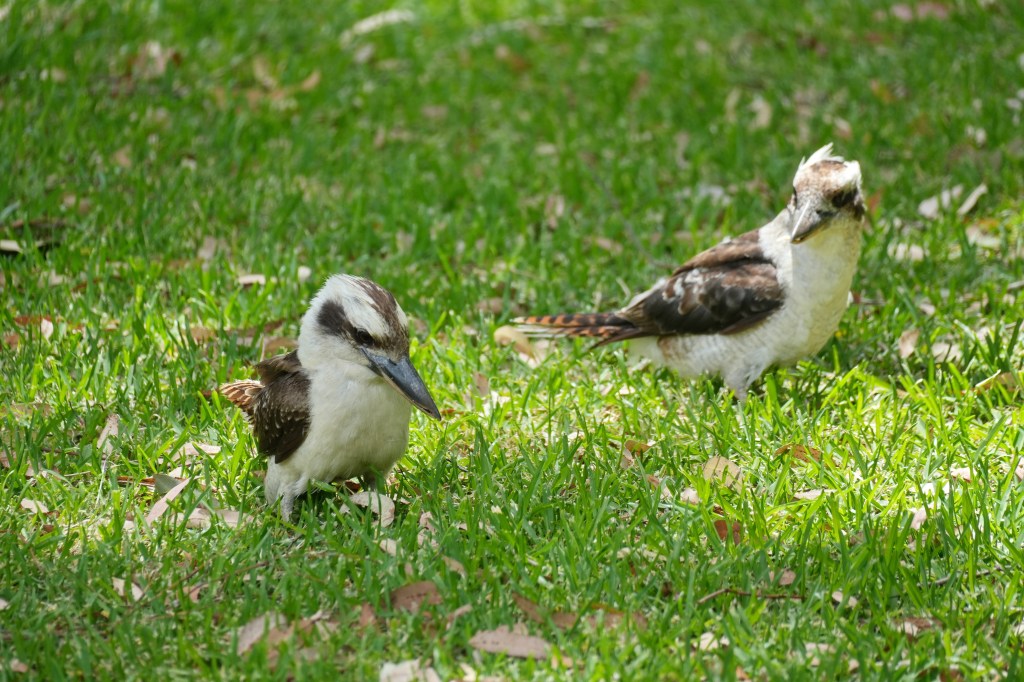
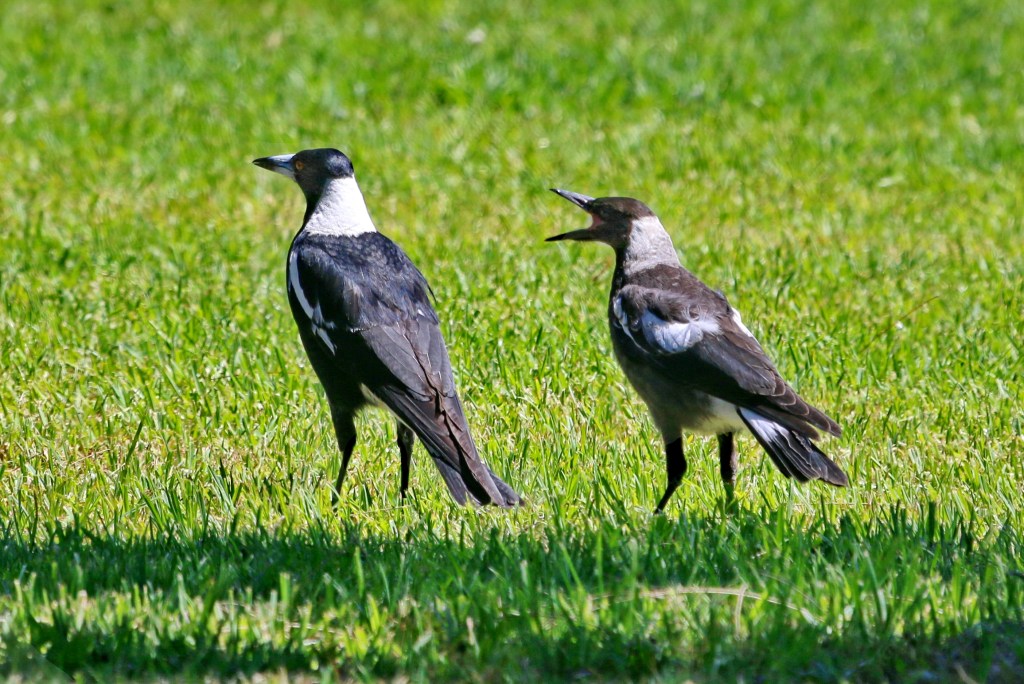
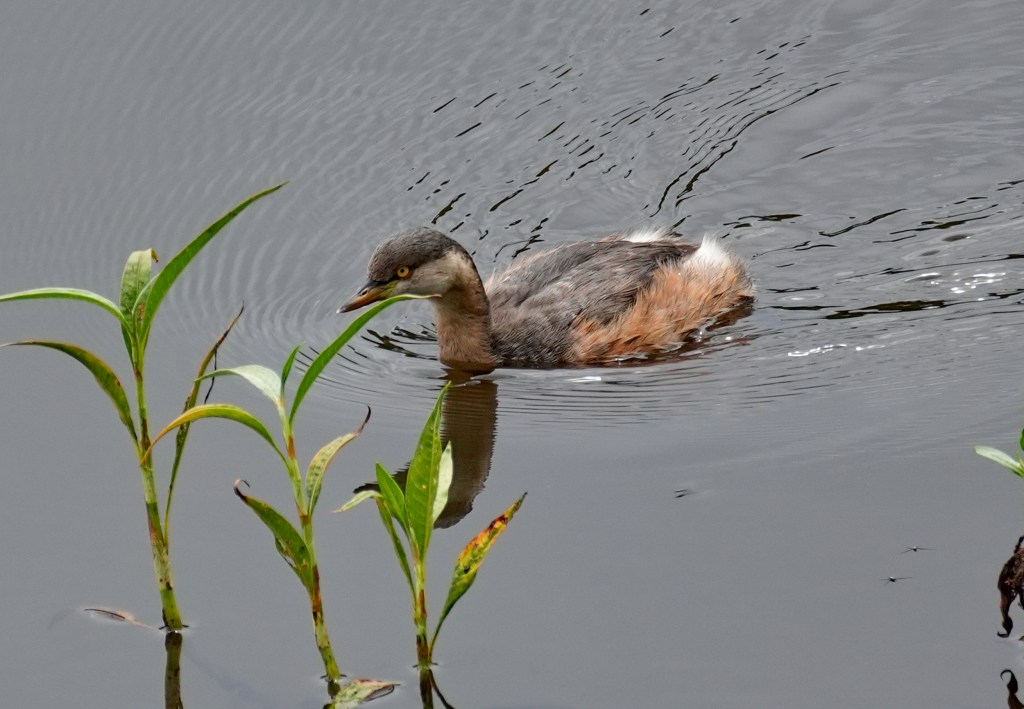
Also on the grass at the river flats you would find these young Laughing Kookaburra and father Australian Magpie feeding his youngster who is learning by observation. Both Little Pied Cormorant and Little Black Cormorant drying their wings over the river after a morning of fishing. Cormorants are diving birds but their feathers are not oiled like those of ducks, as they lack the uropygial oil gland at the base of their tail which the ducks, including the Pacific Black Duck pair pictured, draw from when preening, to waterproof their feathers.
Young Kookaburras learning to forageJunior learning from dad MagpieMale Magpie with begging juniorLittle Pied Cormorant airing his wingsLittle Black Cormorant airing his wingsPacific Black Duck pair enjoying the river toegtherAustralasian Grebe alone as usual
Each year in spring on the green grass field by the river in front of the park cafe the Mask Lapwing (known previously as the Spur-winged Plover) pair appear and decide to nest where visitors sit and children play. The male is constantly on alert and quite stressed to guard the female nesting on a simple nest on the grass in the middle of the field. Lapwings prefer a 360° clearance around the nest. The male will become quite aggressive on the approach of any creature and will even stand erect and show its spurs if challenged. The two juveniles have hatched and are learning to graze under the careful watch of the father.
Father Lapwing on guardjuvenile out and aboutjuvenile learning to forage
Here is a good example of the spurs being protruded when the Lapwing is in it’s full upright defence mode. You can understand why it had the previous name of Spur-winged Plover. It is also the largest of the Plover species in Australia and a formidable opponent to any human, dog, bird or even cat. This will usually only only occur during breeding season when the unwitting opponent may, if they proceed to approach the nest or young may receive wounds from the spurs which it readily weaponizes.
For a touch of humour, here is a riverbank capture taken some months before of the same male and female Fairy-wren pair. The male is just finishing his moult. His wild preening is assisting his plumage change. Music is from Henri Mancini’s Baby Elephant Walk written for the movie Hatari which was one of the first movies I saw in the cinema as a boy.
100 Best Birdwatching Sites in Australia (now in its 3rd Edition) by Sue Taylor is an excellent book for those starting out birding in Australia and for not so novices. My wife and I found this book most helpful and over the last twelve yearshave visited most of the sites.We highly recommend the book and its easy reading approach. Sue takes you along to places you may never thought of in each state and island in Australia where she shares the specific birds species she found.
front coversample page
Click on the image below to find out more and purchase these beautiful books which many are buying for Christmas presents.It will open in a new tab.
Yes, my Pre Christmas book signing morning is this coming Saturday at Harry Hartog Bookstore – Miranda Fair
I would be especially delighted if you came and told me that you Followed my blog.
“Oh, the joys of those who do not follow the advice of the wicked, or stand around with sinners, or join in with mockers. But they delight in the law [Words] of the Lord, meditating on it day and night. They are like trees planted along the riverbank, bearing fruit each season. Their leaves never wither, and they prosper in all they do.”
My wife and I share a love of bird observing and bird photography which takes us all over Australia. We love sharing our experiences. Birds live in the beautiful parts of our country. We always get blessed with beautiful gifts of new birds and unexpected experiences each time we go out birding or just walking in the parks and reserves in our wonderful land. We love Australia, and the variety that each state and region offers in its wildlife and nature aspects. Join us in sharing our love. We have always found other birders enthusiastic and friendly people who appreciate the good things in life.
Hello Ash,
You and your wife encountered many beautiful birds during your visit to the ‘Nasho’!
It is pure joy to see the birds in all their Spring/Summer glory. The Azure Kingfisher looks like a flying jewel, and I love the unique angles of the tail feathers of the Superb Fairy Wrens. The male is stunning but the female is especially lovely. Your narration in the videos makes for a very enjoyable viewing while learning more about the birds at the same time. We couldn’t choose a ‘favourite’ bird – they are all wonderful. Your book signing event is coming up this weekend (how time flies) may it be especially blessed☺️
Thanks Takami, it is always with great excitement when we see the Azure on a sunny day, as the colours are so beautiful. It did not turn so I was unable to show the glorious bright orange front of the bird. It looks like a blaze of colour when it flies. It is a very small Kingfisher but not quite as small as our smallest, the Little Kingfisher which we have seen in Far North Queensland. Yes the Fairy-wrens are so cute with their tail feathers which rise and fall to signal their intentions to other Fairy-wrens, especially their partner. Thanks again for your faithful friendship, prayers and blessings.
Lovely photos once again Ashley. Great photo of the lapwing with its spurs. Love the video of all the little fluffballs (ducklings), they are fascinating to watch. I saw a pair of pacific black ducks walking down the street near the local school one morning and incredibly they had 19 little ones trailing along, with 5 of them being larger in size that the newly hatched ones. Very cute to watch!
Thanks Sue, the male Lapwing is a formidable opponent. When I lived in the country our little toy foxy use get attacked in its own back yard and the poor little thing use to get such a shock. You can see why the ducks are sitting ducks and why they need to have such a large clutch, Wow, 19 ! I have never heard of that many, I have seen 12. I have always loved watching the Black Ducks with the single trail of ducklings swimming behind, though they have stopped breeding in our park because the water is so polluted. Enjoy the rest of your week my friend.
Yes, it was a large number of ducklings, they may have adopted some or had a second lot close behind the first. But as you said in your post, they do lose quite a few. Love those little foxies, they’ll have a go at anything! Have a great weekend!
Thanks Deborah, we are so blessed with such beauty in the plumage of our birds which is highlighted in bright sunlight which I was blessed with when I shot those photos. The Lapwing is a formidable opponent when he takes his fighting stance, for a moderate sized bird it can and will attack and do one damage if the intruder continue to approach as it defends its territory and family. Enjoy your week my friend.
Thanks so much Lisa, I am delighted you enjoyed the post, Blessings to you also my friend ! I have been known to say each year ‘I love for us to celebrate Thanksgiving to our Lord here in Australia, but sadly there was and is too much pain because of the brutal English invasion on our indigenous inhabitants. Richest blessings returning to you and you family Lisa.
Oh my goodness! I loved all the videos! The Wood Ducks are adorable! And your last video made me smile! I would love to come in and meet you at your book signing! Hope it went well! Blessings to you Ashley! (I was going to wish you a Happy Thanksgiving, until I realized that is an American holiday! 🤣)
Introduce your child to our amazingand interesting birds.Over 100 beautiful photos with facts on how they do life, from which we learn helpful life skills.Click image above to Find out more and Buy the Beautiful Bird Book
Teens and Young Adults
Flight of a Fledgling similar to my first book uses the interesting lives of birds to teach valuable life skills.It is written expressly for teens and young adults as they prepare to leave the Nest. It helps them to better understand themselves and improve their personal relationships and better prepare for lifes challenges.Click on the above cover to find out more and purchase online.
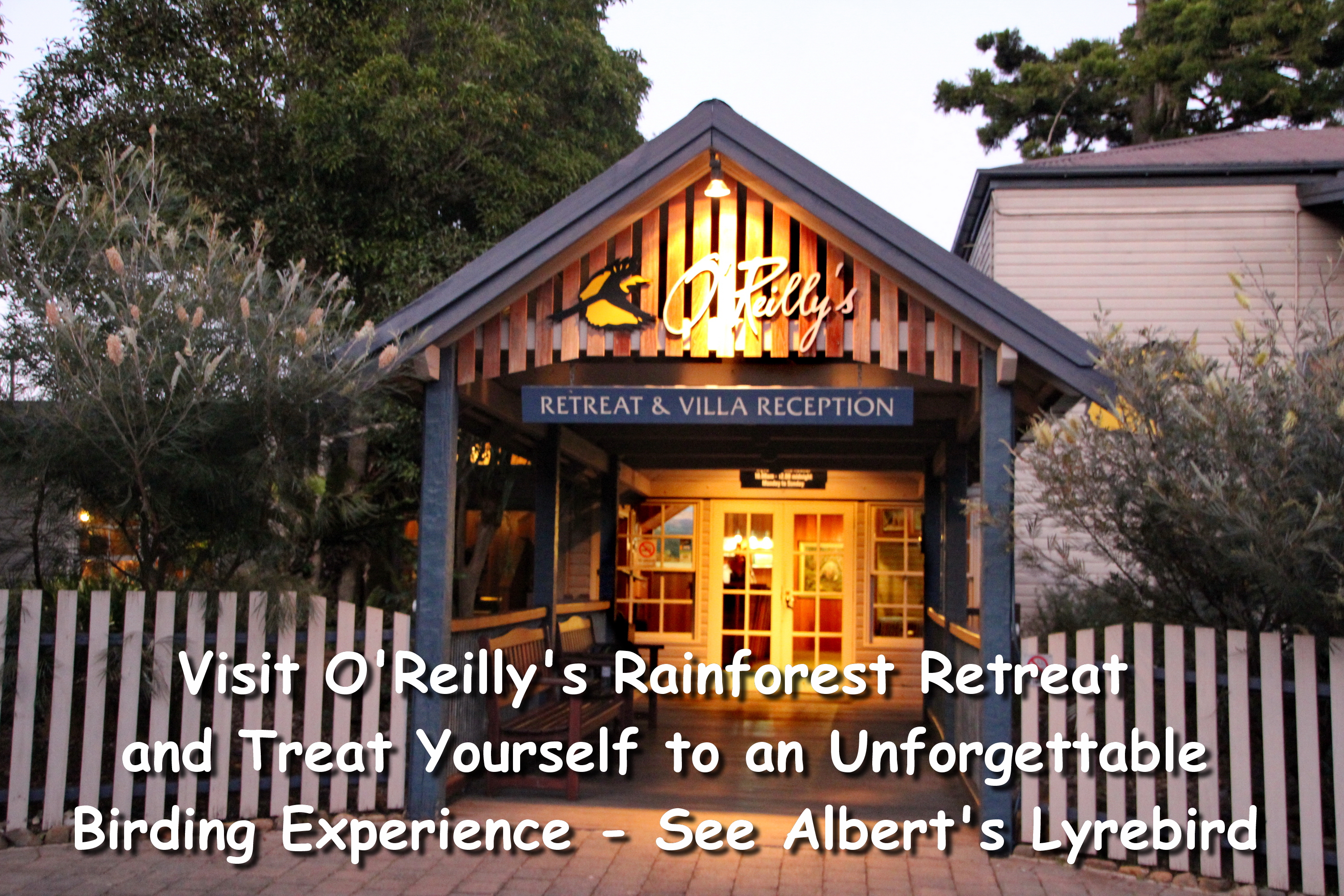
Stay and Explore the Rainforest in Lamington N P – click
Visit Broome Bird Observatory
Include in your next visit to Broome WA a couple of days on bird tours in Australia's Shorebird Capital at Broome Bird Observatory (BBO) in conjunction with Birdlife Australia, it is well worth it. Enjoy a self guided tour through their new and beautiful interactive discovery centre. Accommodation is available. Tours to various bird habitats: mangroves; bush and shoreline. BBO Wardens Sebastian and Jamie will make you welcome. While you are there check out the Beautiful Bird Book 'What Birds Teach Us'.
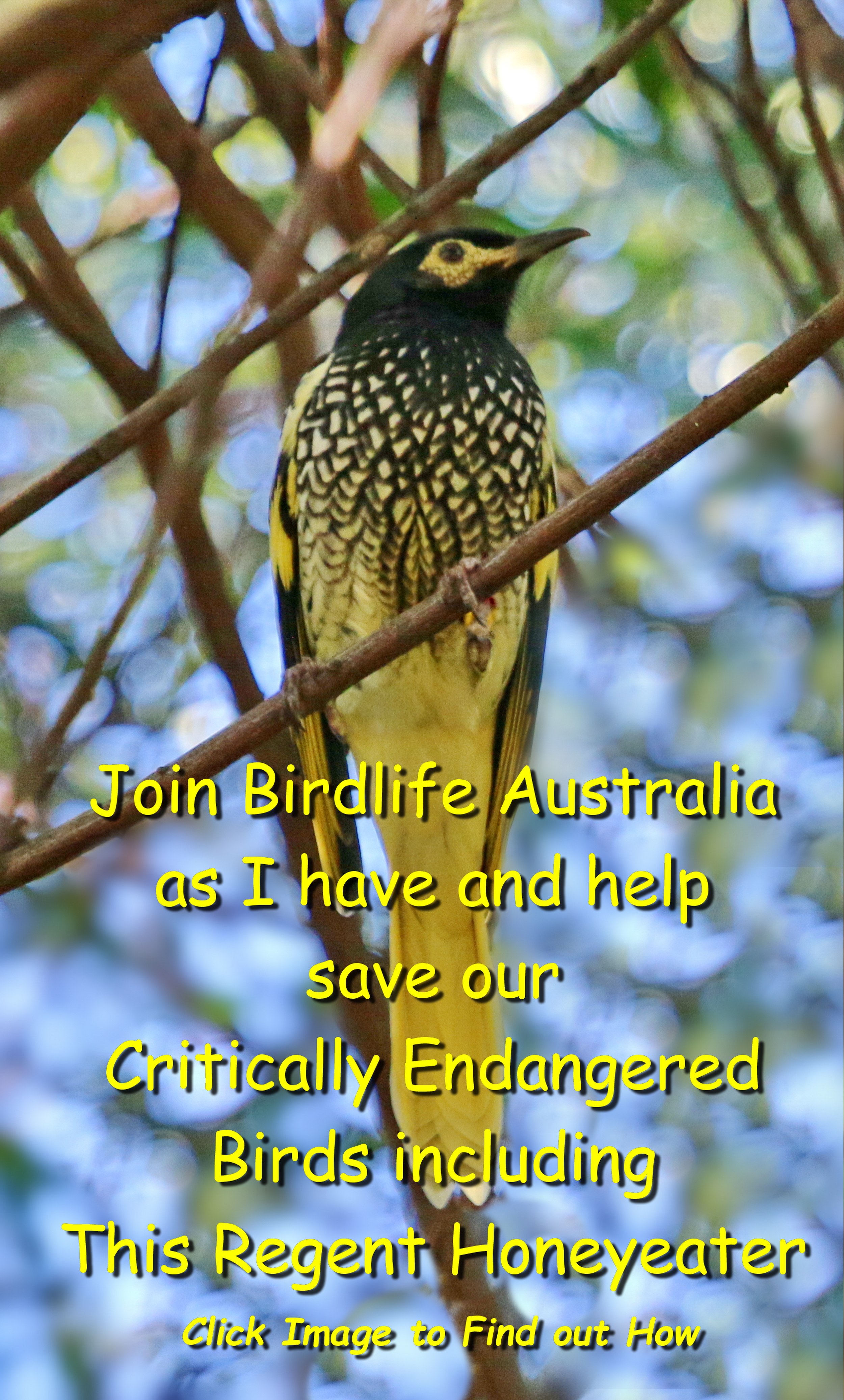
Help Save Our Birds
See Tasmania’s Endemic Birds
Luxury Stay in the Capertee Valley: bellebois.com.au
Where Can I Buy The Beautiful Bird Books?
How Do Birds Keep Their Nests Clean ?
Birding Around the Sydney Region
If you are a birder visiting the Sydney region for the first time, check out the many National Parks (NP) that surround it for the great variety of birds found there. The Visitor Information centres at The Royal NP, Botany Bay NP, Fitzroy Falls and Minnamurra NPs have information and also sell my Beautiful Bird Books. If you follow this blog, make a date with Aussiebirder before you arrive for info tips or a visit.
















 aussiebirder
Hello Ash,
You and your wife encountered many beautiful birds during your visit to the ‘Nasho’!
It is pure joy to see the birds in all their Spring/Summer glory. The Azure Kingfisher looks like a flying jewel, and I love the unique angles of the tail feathers of the Superb Fairy Wrens. The male is stunning but the female is especially lovely. Your narration in the videos makes for a very enjoyable viewing while learning more about the birds at the same time. We couldn’t choose a ‘favourite’ bird – they are all wonderful. Your book signing event is coming up this weekend (how time flies) may it be especially blessed☺️
LikeLiked by 1 person
Thanks Takami, it is always with great excitement when we see the Azure on a sunny day, as the colours are so beautiful. It did not turn so I was unable to show the glorious bright orange front of the bird. It looks like a blaze of colour when it flies. It is a very small Kingfisher but not quite as small as our smallest, the Little Kingfisher which we have seen in Far North Queensland. Yes the Fairy-wrens are so cute with their tail feathers which rise and fall to signal their intentions to other Fairy-wrens, especially their partner. Thanks again for your faithful friendship, prayers and blessings.
LikeLike
Lovely photos once again Ashley. Great photo of the lapwing with its spurs. Love the video of all the little fluffballs (ducklings), they are fascinating to watch. I saw a pair of pacific black ducks walking down the street near the local school one morning and incredibly they had 19 little ones trailing along, with 5 of them being larger in size that the newly hatched ones. Very cute to watch!
LikeLiked by 2 people
Thanks Sue, the male Lapwing is a formidable opponent. When I lived in the country our little toy foxy use get attacked in its own back yard and the poor little thing use to get such a shock. You can see why the ducks are sitting ducks and why they need to have such a large clutch, Wow, 19 ! I have never heard of that many, I have seen 12. I have always loved watching the Black Ducks with the single trail of ducklings swimming behind, though they have stopped breeding in our park because the water is so polluted. Enjoy the rest of your week my friend.
LikeLiked by 2 people
Yes, it was a large number of ducklings, they may have adopted some or had a second lot close behind the first. But as you said in your post, they do lose quite a few. Love those little foxies, they’ll have a go at anything! Have a great weekend!
LikeLiked by 1 person
Beautiful post! Love your insight in nature and God’s Word. Blessings.
LikeLiked by 2 people
Thanks Merryl, we can learn so much from our birds as our Lord alluded to them in many of his life illustrations about the Kingdom.
LikeLiked by 1 person
The Fairy Wren, and Kingfisher are beautiful. The Lapwing’s facial expression is funny, but those spurs are something aren’t they!
LikeLiked by 2 people
Thanks Deborah, we are so blessed with such beauty in the plumage of our birds which is highlighted in bright sunlight which I was blessed with when I shot those photos. The Lapwing is a formidable opponent when he takes his fighting stance, for a moderate sized bird it can and will attack and do one damage if the intruder continue to approach as it defends its territory and family. Enjoy your week my friend.
LikeLiked by 1 person
Thanks so much Lisa, I am delighted you enjoyed the post, Blessings to you also my friend ! I have been known to say each year ‘I love for us to celebrate Thanksgiving to our Lord here in Australia, but sadly there was and is too much pain because of the brutal English invasion on our indigenous inhabitants. Richest blessings returning to you and you family Lisa.
LikeLike
Oh my goodness! I loved all the videos! The Wood Ducks are adorable! And your last video made me smile! I would love to come in and meet you at your book signing! Hope it went well! Blessings to you Ashley! (I was going to wish you a Happy Thanksgiving, until I realized that is an American holiday! 🤣)
LikeLiked by 2 people