Australian birds
Birding Cape York Part 3 – The Brolga
As my granddaughter is spending a few days with us during her school vacation, so I will share a brief post of Australia’s only endemic crane which is known as […]
Welcome to our website for the study and appreciation of Australian birds and their interesting behaviours.
As my granddaughter is spending a few days with us during her school vacation, so I will share a brief post of Australia’s only endemic crane which is known as […]
As my granddaughter is spending a few days with us during her school vacation, so I will share a brief post of Australia’s only endemic crane which is known as the Brolga, which we saw on several occasions during our adventure north on the Cape. This name is derived from the Indigenous Gamilaraay word burralga for this bird. We were quite excited when our guide backed up the bus having seen a parent Brolga with its youngster in a very small billabong near the road.
Parent and Younger Brolga
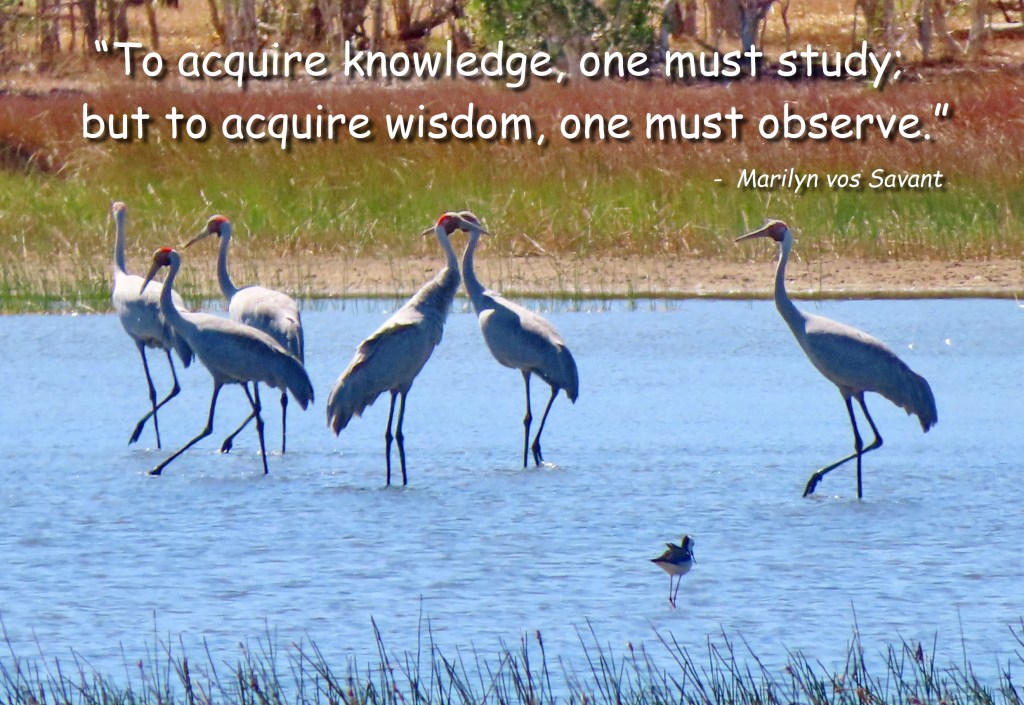
Brolga are usually in small to large flocks when not breeding, and spend a lot of their time in wetlands and billabongs hunting for small reptiles, frogs, small fish, water plant tubers, grains, insects, aquatic invertebrates like molluscs and crustaceans and small mammals like mice and snakes. They are known for their courting dance where they spread their wings and bow while they leap. It would appear that this father is giving tuition to its son, though I could be wrong, but the youngster does attempt to copy. Click on images to enlarge them.
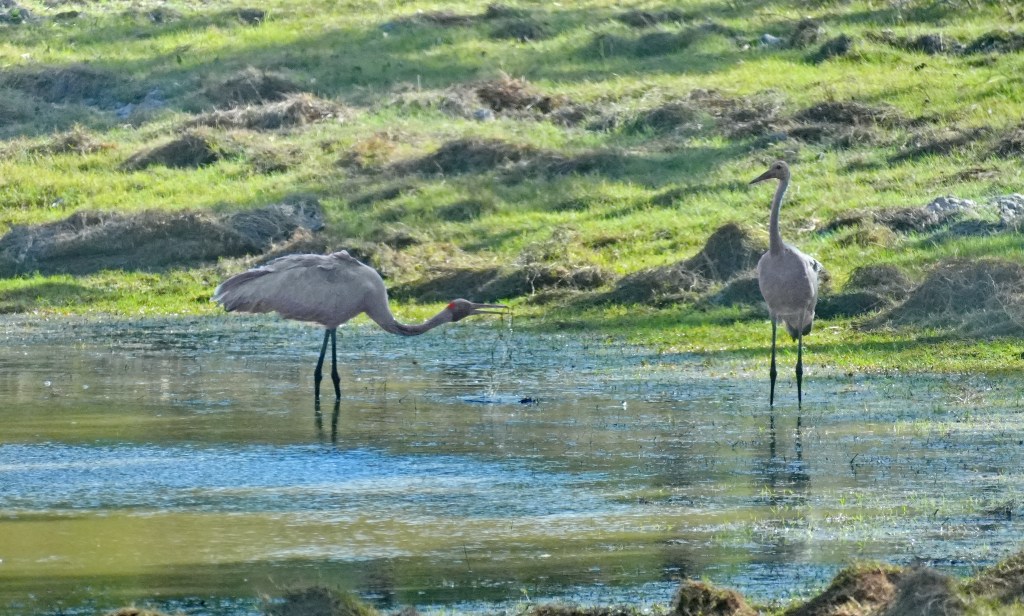

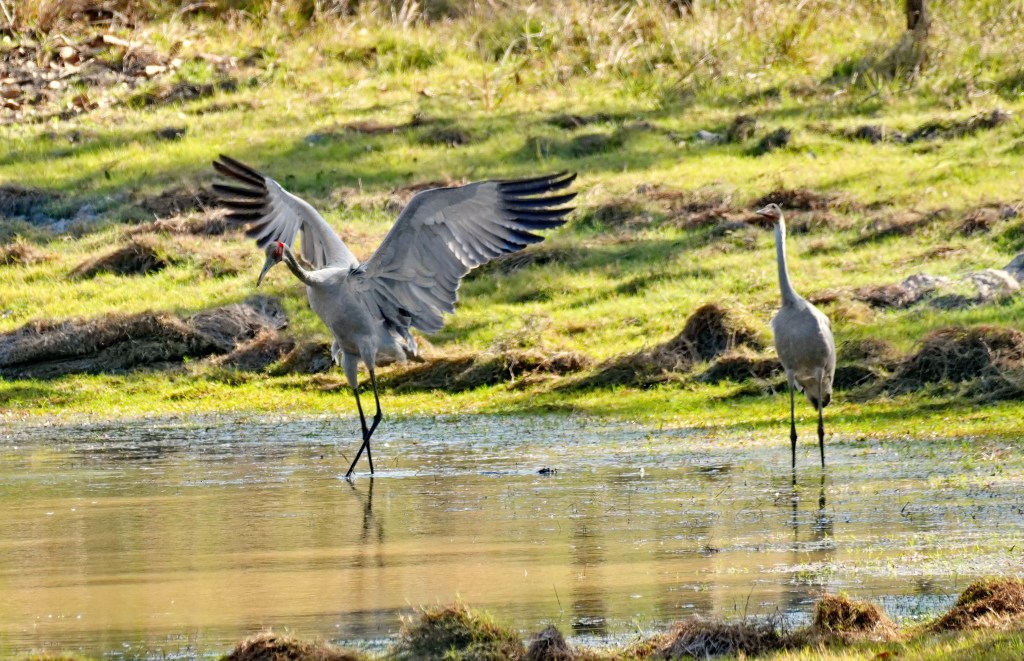
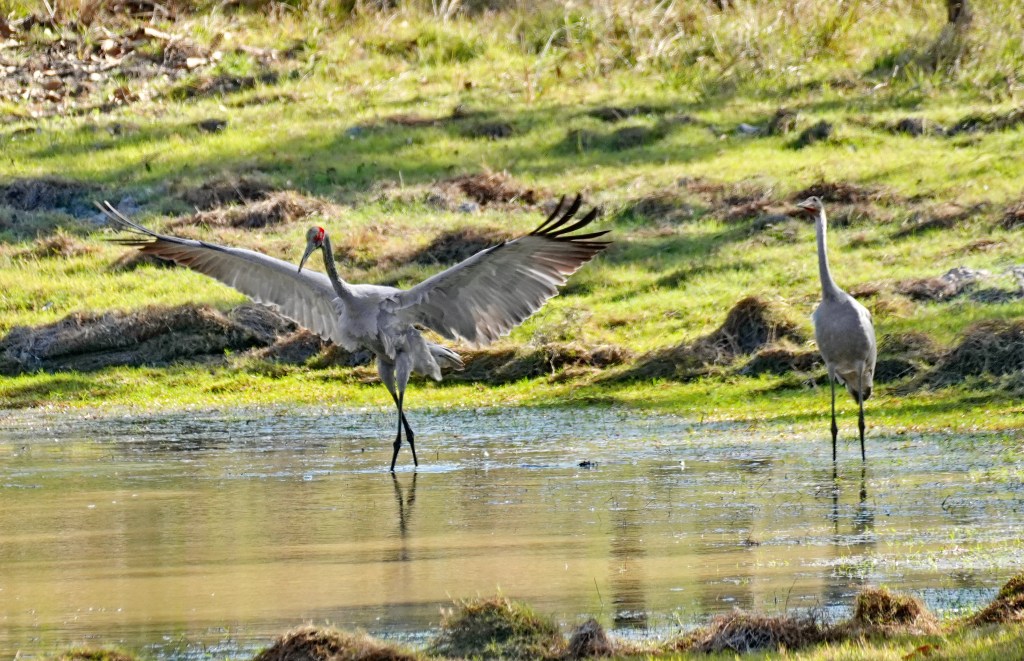
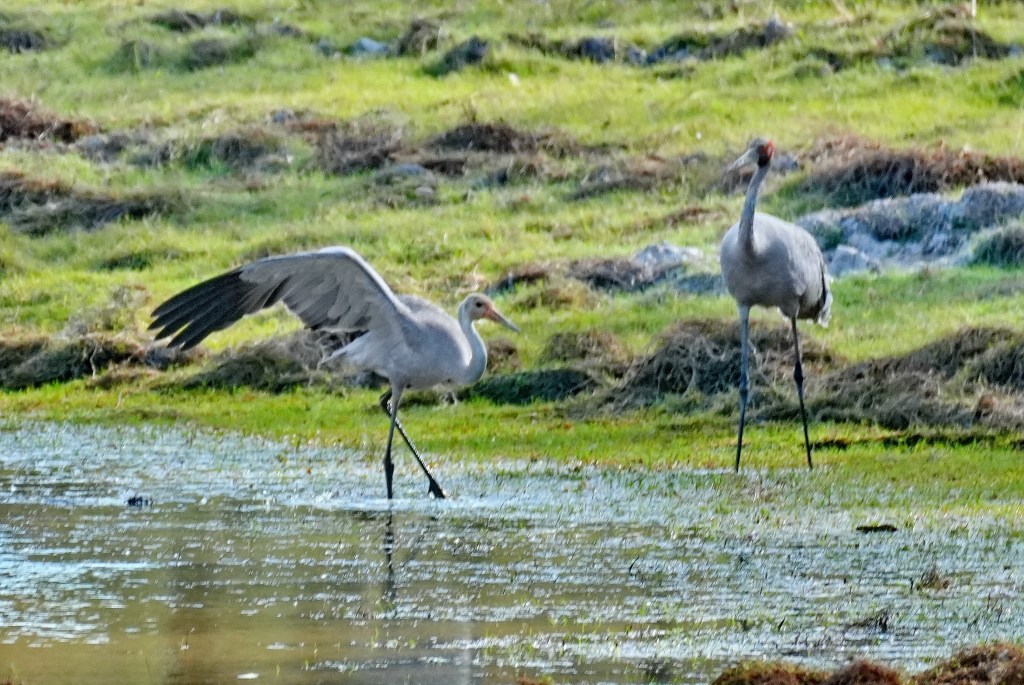
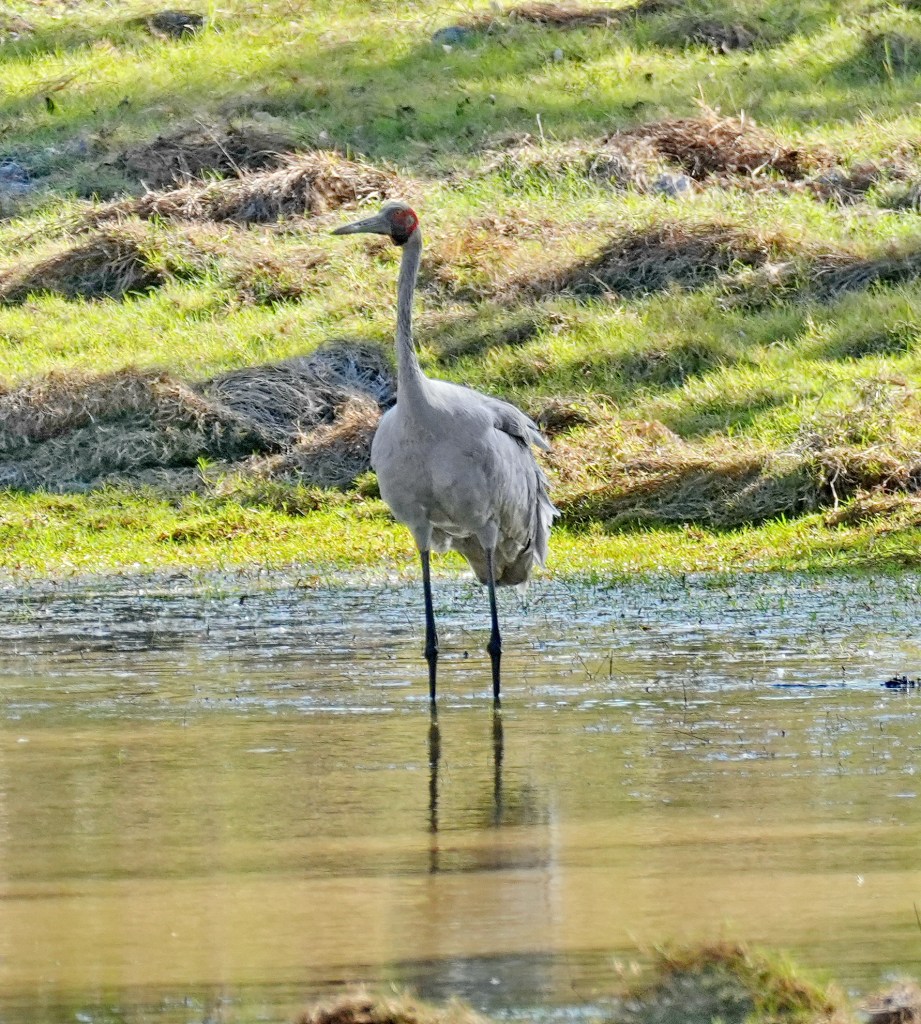
This was a special moment for us to observe this instruction lesson, as much of bird behaviour is taught and learnt from observation of example.
Have a most enjoyable Spring or Fall as we watch the change of seasons once again and the birds take to the flyways on migration. More next post, as we continue revealing more species of birds we saw on the Cape. Check out my books HERE online as they make great unique Christmas or Birthday gifts.
Check out my website and find out how we can learn to live a more peaceful and joyful life learning life tips from the birds. Click HERE.
“My child, you must follow and treasure my teachings and my instructions.” – Proverbs 2:1
“Better a poor but wise youth than an old but foolish king who no longer knows how to heed a warning.” – Ecclesiastes 4:13

Adv. Dip. in Counselling and Family Therapy.
Member of Birdlife Australia
To introduce people to our unique Australian birds,
And learn from them how to live a healthy and happy life.
NOTE: All photos, videos and music used on this website are photographed, composed, performed by the site owner and remains his copyrighted property, unless otherwise stated. The use of any material that is not original material of the site owner is duly acknowledged as such. © W. A. Hewson 2015, 2016, 2017, 2018, 2019, 2020, 2021, 2022, 2023, 2024, 2025, 2026

My wife and I share a love of bird observing and bird photography which takes us all over Australia. We love sharing our experiences. Birds live in the beautiful parts of our country. We always get blessed with beautiful gifts of new birds and unexpected experiences each time we go out birding or just walking in the parks and reserves in our wonderful land. We love Australia, and the variety that each state and region offers in its wildlife and nature aspects. Join us in sharing our love. We have always found other birders enthusiastic and friendly people who appreciate the good things in life.
 Introduce your child to our amazing
and interesting birds.
Over 100 beautiful photos with
facts on how they do life, from
which we learn helpful life skills.
Click image above to Find out more and Buy the Beautiful Bird Book
Introduce your child to our amazing
and interesting birds.
Over 100 beautiful photos with
facts on how they do life, from
which we learn helpful life skills.
Click image above to Find out more and Buy the Beautiful Bird Book

Flight of a Fledgling similar to my first book uses the interesting lives of birds to teach valuable life skills.It is written expressly for teens and young adults as they prepare to leave the Nest. It helps them to better understand themselves and improve their personal relationships and better prepare for lifes challenges. Click on the above cover to find out more and purchase online.



 If you are a birder visiting the Sydney region for the first time, check out the many National Parks (NP) that surround it for the great variety of birds found there. The Visitor Information centres at The Royal NP, Botany Bay NP, Fitzroy Falls and Minnamurra NPs have information and also sell my Beautiful Bird Books. If you follow this blog, make a date with Aussiebirder before you arrive for info tips or a visit.
 aussiebirder
I love the Brolga’s dance lesson Dad, aren’t they beautiful!
LikeLiked by 1 person
Thanks Jo, yes this was a special moment we captured on the road north. We are always excited when we see Brolga. The last time we saw them dance was in the Kimberley on a Broome Observatory Bird Tour. Have a wonderful week.
LikeLike
What a beautiful bird. It was very interesting to learn that ‘Brolga’ derives from the language of the native people. They remind me of the Hooded & White-naped Cranes that spend the winters in the southern part of our country. We hope you are having a wonderful visit with your granddaughter.
LikeLiked by 1 person
Thanks Takami, yes they are a very elegant and graceful bird which is famous for its dance. Many school children had to learn the song ‘The Carol of the Birds’ which you can look up. We just returned from delivering my granddaughter back home after a lovely few days with her. Enjoy your weekend.
LikeLiked by 1 person
Beautiful & so similar to our Sandhills!
LikeLiked by 1 person
Thanks Cindy, yes they are similar to your Sandhill Crane. Ours prefer wetlands, do yours prefer the same?
LikeLike
What a great moment to enjoy. And to share.
They are such awesome creatures and to see their elegance in a dance is breathtaking to say the least. That such a big bird can be so elegant and graceful almost floating feather-like is special to observe.
Around 100 years ago they were quite prolific around the Geelong and Bellarine peninsula But sadly development took over.
I had a birding friend who was a young schoolgirl in the 1920s and would see them as she walked to school. She just thought they part of the scenery.
We have been fortunate at the WTP to have a small flock, slowly build up numbers. Regretably their young are taken by foxes, but one or two have survived to add to the numbers.
Great post, Ashley, made me smile.
LikeLiked by 1 person
Thanks David, for sharing about the past. It must have been wonderful to see Brolga dancing in the local towns. I heard that the Riverina farmers killed hundreds of them because they stole their fruit and they are trying to bring them back there in some way. I loved your previous posts on the Brolga in the WTP, especially with the ball passing. We did enjoy seeing them again on the Cape in several locations by billabongs. My wife was sad that we did not see our target bird the Palm Cockatoo, they are very unpredictable and also dropping in numbers. Enjoy your week my friend.
LikeLike
How fortunate to be able to witness a youngster learning from its parent! Great spotting by your guide!
LikeLiked by 1 person
Thanks Sue, yes it was a special moment, and quite unexpected find. It was almost like we could interpret the adults actions and calls to junior. Enjoy your week.
LikeLiked by 1 person