Australian birds
Birding Cape York in Far North Queensland – Cairns
We have been away up Far North Queensland on a tour of the Cape York Peninsula right to the very Tip of the Australian mainland. We even went further to […]
Welcome to our website for the study and appreciation of Australian birds and their interesting behaviours.
We have been away up Far North Queensland on a tour of the Cape York Peninsula right to the very Tip of the Australian mainland. We even went further to […]
We have been away up Far North Queensland on a tour of the Cape York Peninsula right to the very Tip of the Australian mainland. We even went further to the Torres Strait Islands with a premium touring company called Outback Spirit which we have toured with on previous occasions. My wife was hoping to see the Palm Cockatoo, which is Australia’s largest and endangered Cockatoo, only found in this region. Sadly, they did not turn up for us. However we did see a dozen new lifers which are only found in the wild wilderness like area of tropical rainforest, savanna and open woodland of Cape York Peninsular.


Of course we saw many species that we look forward seeing whenever we travel to Cairns, where our adventure begins, after a couple of days exploring the famous Cairns Waterfront Esplanade, where many waterbirds and tree birds are seen. The sound of the Australasian Figbird can be heard constantly as they feed from the numerous fruiting fig trees which Australia is rich with many species. This Northern species known as the ‘Yellow fronted’ Figbird has a male with a yellow belly and much redder eye ring than our southern race.
As night falls in Cairns you begin to hear the loud high pitched unusual cries of the Bush Stone-Curlew as they come out at night to hunt for insects, small reptiles and mammals and also to socialise with other birds of their species. This unusual bird will stand motionless for some time thinking it makes the best camouflage, but is great for photographing them. Many of these peculiar birds walk the streets at night calling to one another all night long. Click on image to enlarge it.
Can you imaging listening to this all night…
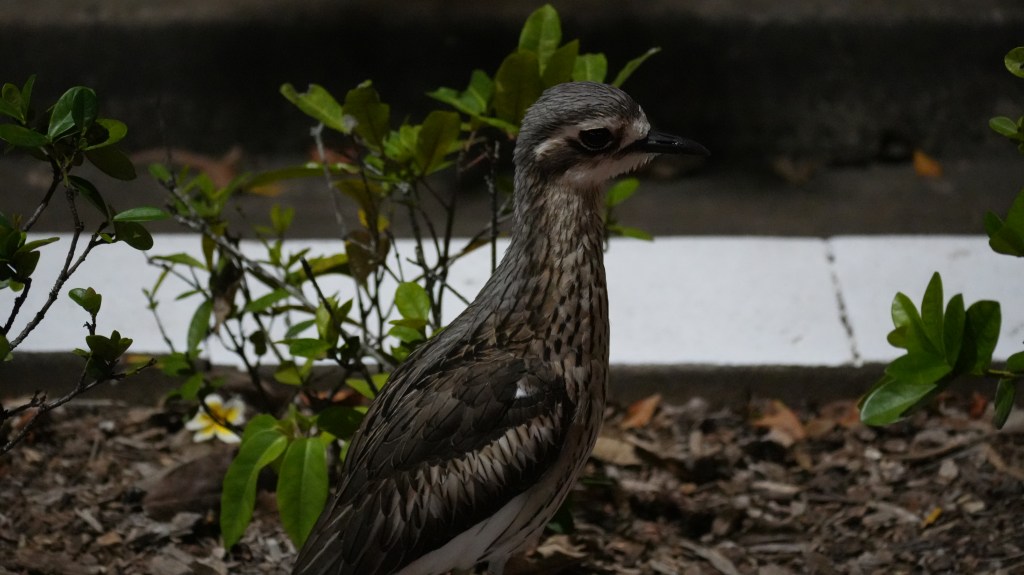
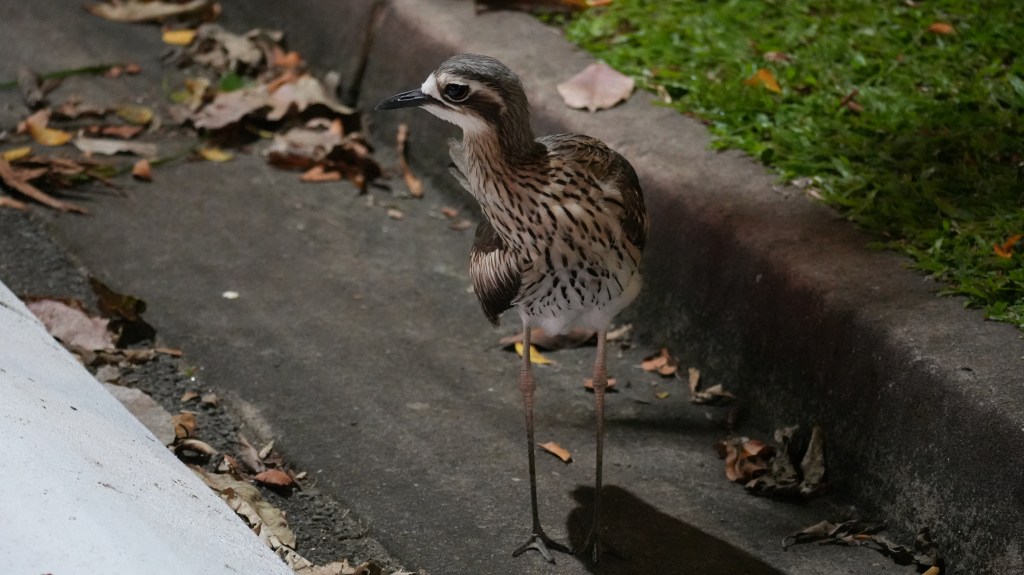

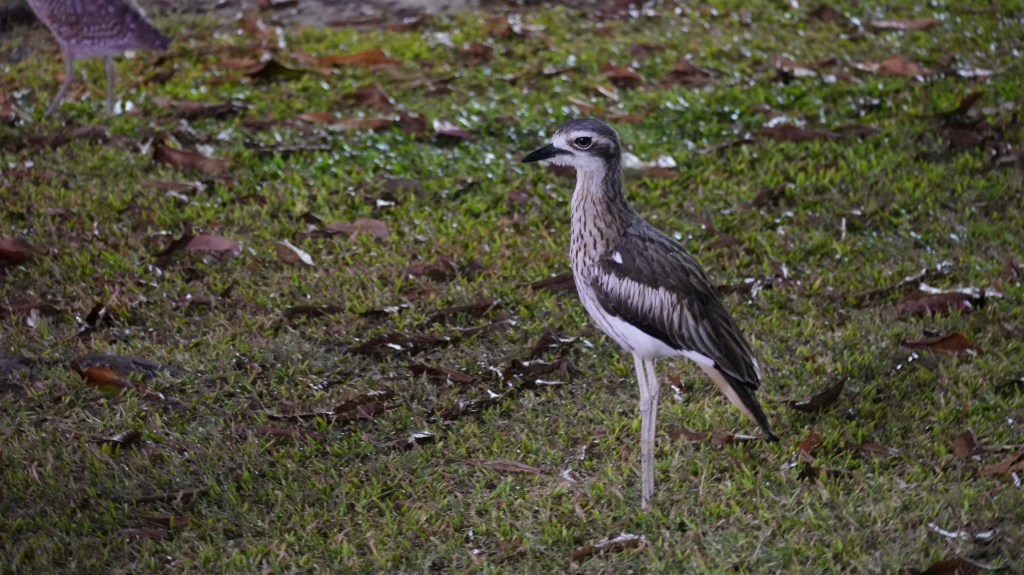

Our first lifer was the seeing its cousin the Beach Stone-Curlew, which is an endangered species decreasing in number yearly. This was an exciting moment as we have been hoping to see this bird for years. Instead of running about the town, these birds walk the low tide mud flats of Cairns, where it experiences extreme tides that go our for kilometers. It likewise was standing motionless on the low tide mud flats as it watched us watch it. They are hunting for small crabs, molluscs and marine creatures in the wet sand. Here is our special photo:

The main attraction being Spring here in Cairns is the return of many species of migratory waders from their time breeding in the Northern Hemisphere. We just managed to see some of the flocks return, especially for our next lifer the Great Knot. There were mixtures of Sandpiper which included Common, Curlew, Terek and Sharp-tailed Sandpiper and one Lesser Sand Plover. The occasional Gull-billed Tern were among the flocks. Eastern Curlew, Eastern Reef Egret and Whimbrel were also present in single numbers scattered over the mud flats.
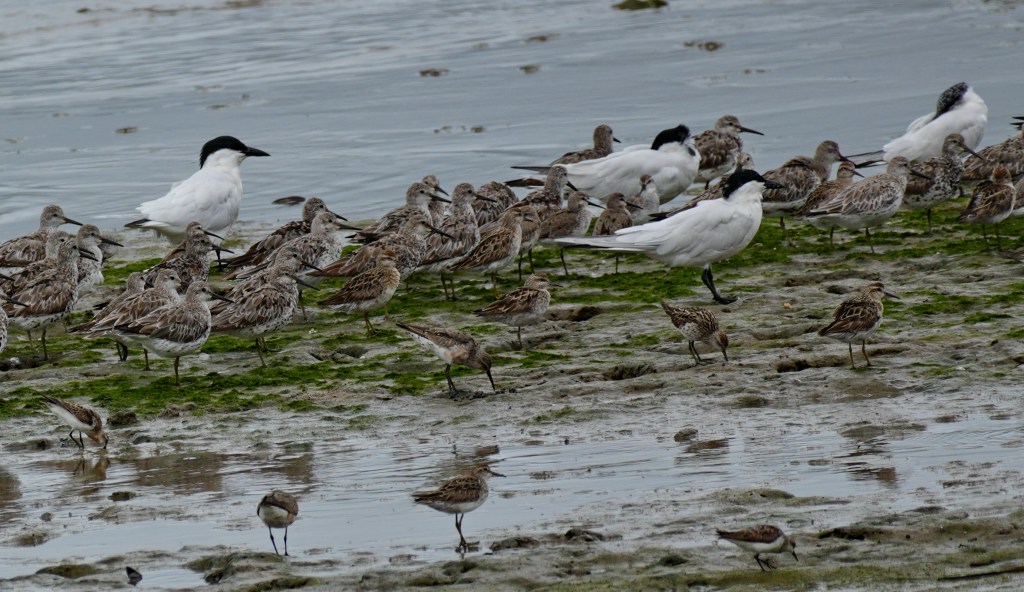
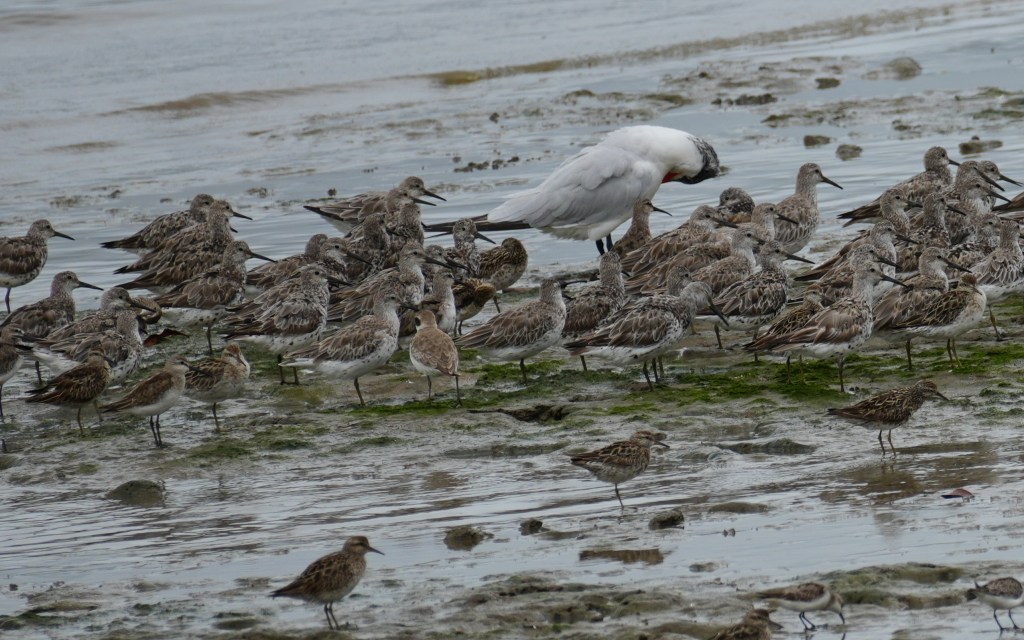
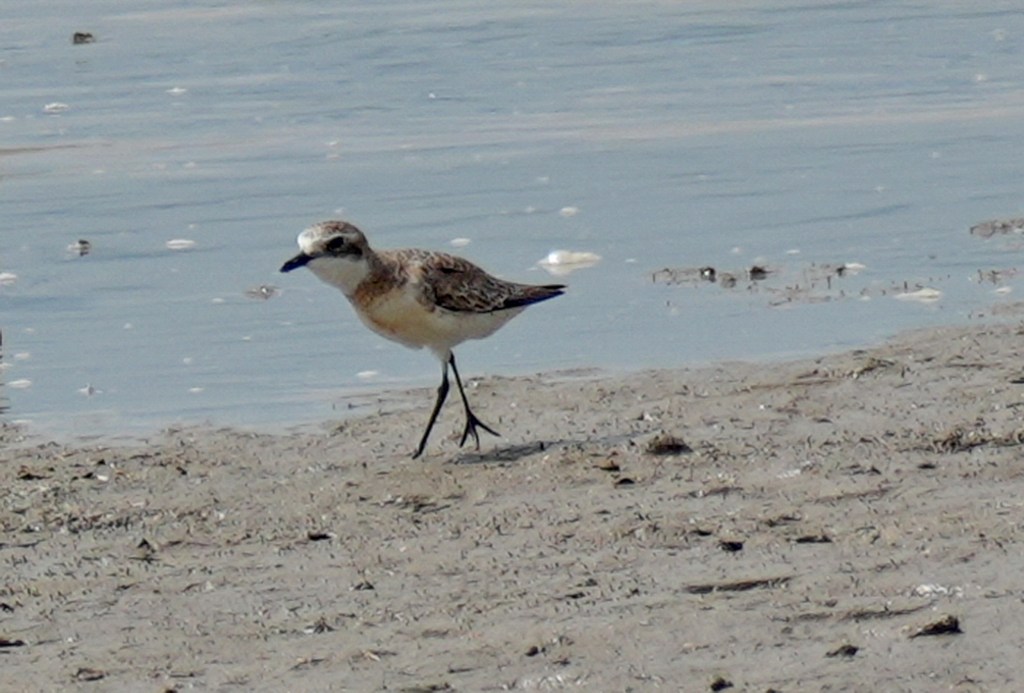

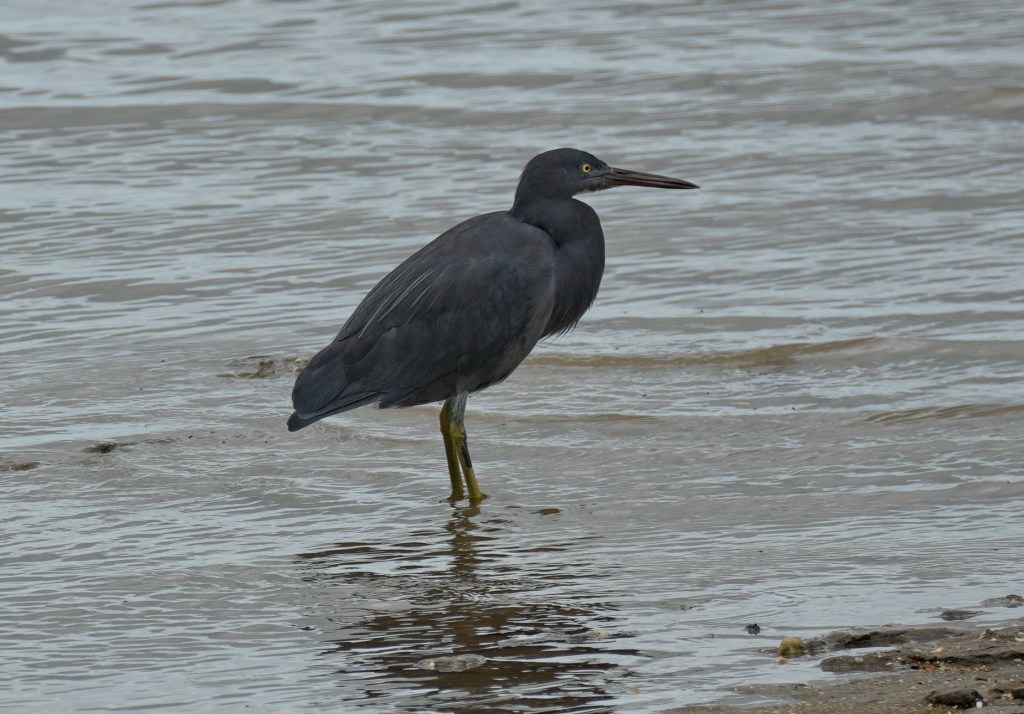
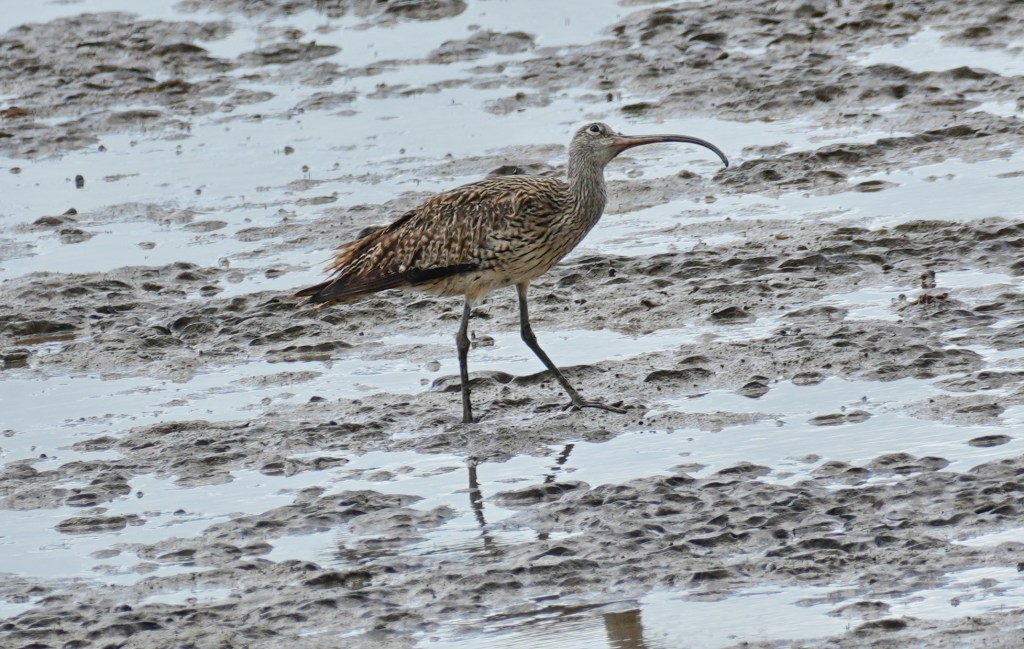


There are advantages of being in a flock, even if it is mixed like our multicultural communities. We benefit in safety both physically and emotionally knowing someone is there, and birds are no different to us in this aspect.
Sandpiper landing
In next week’s post we will begin our journey up the coast through the ancient coastal tropical rainforests and rivers lined with Saltwater Crocodiles. It is very difficult photographing and even seeing birds in dense dark rainforest habitats. Enjoy your week and weekend as the seasons once again change and many species of migratory birds all over the world enter the flyways once again to move to their warmer climate as our Australian migrating birds are currently doing.
My favorite migratory bird the Bar-tailed Godwit was also present in small numbers on the Cairns waterfront as they begin returning from Alaska and Siberia on their non stop 14,000 to 16,000 km journey across the Pacific Ocean to Australia and New Zealand. This amazing bird is highlighted in my book What Birds Teach Us for its resilience. This is a wonderful beautifully illustrated book selling well already as an excellent Christmas gift. this book not only has beautiful coloured photographs of our Australian birds and interesting facts about their behaviours but in addition, each bird teaches a valuable life lesson or skill which will assist the reader in making wise life choices. Click on the image below to find out more:

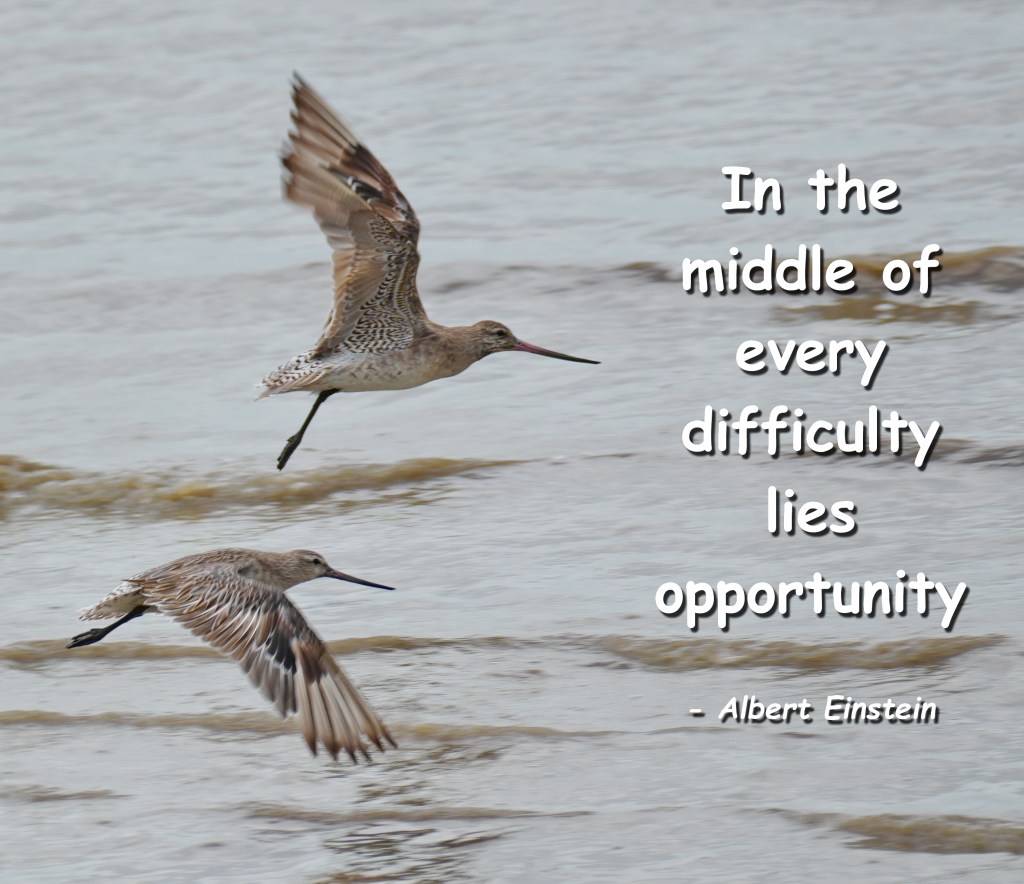
If we view life with a positive mindset and view our journey as one full of challenges to grow, strengthen and make us more resilient people, we can be much happier knowing that our Loving Creator is at work in each of our individual lives forming and shaping us to become the best person we can. Every so called ‘problem’ is an opportunity to take up the challenge and with the help of that same Loving Creator who constantly watches over us, overcome and achieve what appeared unachievable. Fear and doubt prevent us from taking the risk but faith, insightful wisdom along with determination together transport us into previously undiscovered, uncharted areas of achievement previously believed impossible.
“Jesus looked at them [his followers] and said, “With man this is impossible, but with God all things are possible.” – Matthew 19:26 (NIV)
“I can do all this [be content with every life situation] through him [Jesus] who gives me strength.” – Philippians 4:13

Adv. Dip. in Counselling and Family Therapy.
Member of Birdlife Australia
To introduce people to our unique Australian birds,
And learn from them how to live a healthy and happy life.
NOTE: All photos, videos and music used on this website are photographed, composed, performed by the site owner and remains his copyrighted property, unless otherwise stated. The use of any material that is not original material of the site owner is duly acknowledged as such. © W. A. Hewson 2015, 2016, 2017, 2018, 2019, 2020, 2021, 2022, 2023, 2024, 2025, 2026

My wife and I share a love of bird observing and bird photography which takes us all over Australia. We love sharing our experiences. Birds live in the beautiful parts of our country. We always get blessed with beautiful gifts of new birds and unexpected experiences each time we go out birding or just walking in the parks and reserves in our wonderful land. We love Australia, and the variety that each state and region offers in its wildlife and nature aspects. Join us in sharing our love. We have always found other birders enthusiastic and friendly people who appreciate the good things in life.
 Introduce your child to our amazing
and interesting birds.
Over 100 beautiful photos with
facts on how they do life, from
which we learn helpful life skills.
Click image above to Find out more and Buy the Beautiful Bird Book
Introduce your child to our amazing
and interesting birds.
Over 100 beautiful photos with
facts on how they do life, from
which we learn helpful life skills.
Click image above to Find out more and Buy the Beautiful Bird Book

Flight of a Fledgling similar to my first book uses the interesting lives of birds to teach valuable life skills.It is written expressly for teens and young adults as they prepare to leave the Nest. It helps them to better understand themselves and improve their personal relationships and better prepare for lifes challenges. Click on the above cover to find out more and purchase online.



 If you are a birder visiting the Sydney region for the first time, check out the many National Parks (NP) that surround it for the great variety of birds found there. The Visitor Information centres at The Royal NP, Botany Bay NP, Fitzroy Falls and Minnamurra NPs have information and also sell my Beautiful Bird Books. If you follow this blog, make a date with Aussiebirder before you arrive for info tips or a visit.
 aussiebirder
Hello Ash,
It has been sheer joy reading this update☺️
We are delighted that you were able to see many new lifers on your birding adventure. Your country is so vast and full of variety – it never ceases to amaze how the birds have evolved together with their surroundings.
We chuckled while watching the video of the Bush Stone-Curlews. They seem absolutely convinced of their ‘successful’ camouflage – your documentary style narration was the perfect touch😀 We have fallen in love with these birds, especially their piercing gaze. It must be quite an experience for the locals, to hear their cries each night. The Beach Stone-Curlew is a stunning bird – it must have been a very special moment for you and your wife, to have a view of this rare bird, and the lovely photo makes it a double blessing. We loved the mixed flock of migratory waders – we see some of our favourites there. We are so happy your favourite Bar-tailed Godwit were also there.
We can imagine it was very disappointing for your wife, to have ‘missed’ seeing the Palm Cockatoo. As bird lovers, we painfully relate! Nevertheless, we are happy that this was a special trip for both of you. Have a wonderful week!
LikeLiked by 1 person
Thanks Takami for your most welcome comment, it is always a great delight to us both that you both enjoy our posts. I knew the video of the Bush-stone Curlew would spark some humour as they never cease to amuse. You, like us, would be in your element if you were walking through Cairns at night and seeing how many of these birds are out and about looking for each other and hunting, it is a great thrill. Yes the waders are on their way back and the mixed flocks are becoming larger by the day. Australia is vast as you said and so many different habitats allow so many species of birds to exist but one must travel many miles to seek them out. Enjoy your week my friend 🙂
LikeLiked by 1 person
How wonderful you were able to see so many lifers on your trip! Great photos Ashley and I loved the video of the sandpipers coming in to land on the beach. Looking forward to your next post and what you find in the rainforest!
LikeLiked by 1 person
Thanks Sue, it was a great privilege to tour Cape York to the Tip, a part of Australia which we had never visited. We are always excited to see new birds, though we may have our target birds we wanted to see, such as the Palm Cockatoo which we sadly did not see, but we were blessed with other lifers which I will share in later posts. The weather has become very humid earlier than usual as the locals think it may be an early wet season. Cairns is always the best birding starting point and the Atherton Tablelands the best finishing point for us on our return. The sandpipers always elude my ability to accurately identify them, as they have many young among those who have returned. There are just so many species that look almost the same. Being September w were seeing them return, as most people, us included choose to visit in winter when it is cooler and less humid, but bird numbers are less. Enjoy your week my friend 🙂
LikeLiked by 1 person
Beautiful collections of birds
LikeLiked by 1 person
Thanks bridge2nature so glad you enjoyed our Aussie birds.
LikeLiked by 1 person