Last week my wife and I travelled to South Bruny Island, Tasmania in search of the tiny, rare endangered Forty-spotted Pardalote which is now only found in small groups in […]
Last week my wife and I travelled to South Bruny Island, Tasmania in search of the tiny, rare endangered Forty-spotted Pardalote which is now only found in small groups in the far south-west of Tasmania, Australia’s island state. After catching the car ferry across from Kettering, south of Hobart we drove from the North Island onto the South Island to the town of Lunawanna, which by the way has a winery where meals are served, Bruny Hotel where meals are also served and a really great cafe nearby Inala Nature Reservewhere we stayed three nights in excellent accommodation.
We enjoyed our morning visits to Lunawanna Cafe on Cloudy Bay Rd, Lunawanna which we thoroughly recommend for a very enjoyable and interesting experience perusing the shop of its many books about Tasmania as well as art works and scenic video playing. It has good coffee and food served by a very friendly staff Selim and Monica. Delicious Morning Tea, Breakfast and lunch with freshly baked cakes and pies. We loved it !
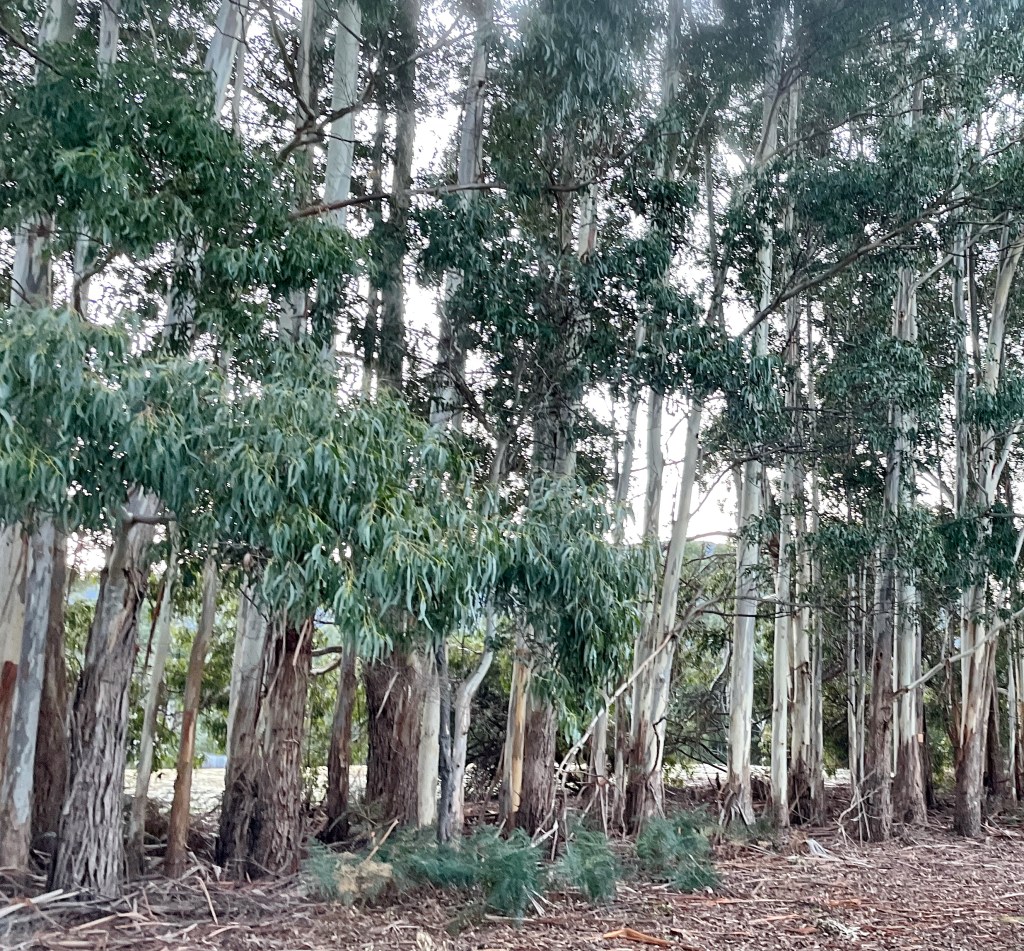
Every year Forty-spotted Pardalote, numbers are decreasing, as are the Critically Endangered Swift Parrot, limiting their breeding and feeding to a small area of Tasmania. The tree which provides over 80% of the food source of the Forty-spotted Pardalote is Eucalyptus viminalis (Tasmanian White Gum or Manna Gum). This is mainly because, it is dependant for successful survival and growth on this one particular endemic eucalypt species. When that species of tree declines in number and is cleared by human progress or attacked by drought or disease, the survival of these birds are directly affected. I will explain why this tree is so essential as you read on.
We stayed at an amazing privately owned wildlife reserve at Lunawanna called Inala, which many Australian birders love to stay at because it is one of the very few places, if not the only place, one can observe and learn about the Forty-spotted Pardalote and see most of the other birds endemic to Tasmania. The accommodation was modern and featured beautiful wood panelling throughout. Dr Tonia Cochran owns the property converting previous farm land by planting many Tasmanian White Gum and Tasmanian Blue Gum trees to save the endangered 40 Spotted and also the Critically Endangered Swift Parrot which prefers the Blue Gum trees for feeding. You may have seen the episode of Gardening Australia featuring Dr Cochran showing the Gondwana Jurassic Garden. We were amazed at how many people came to visit it while we were there.
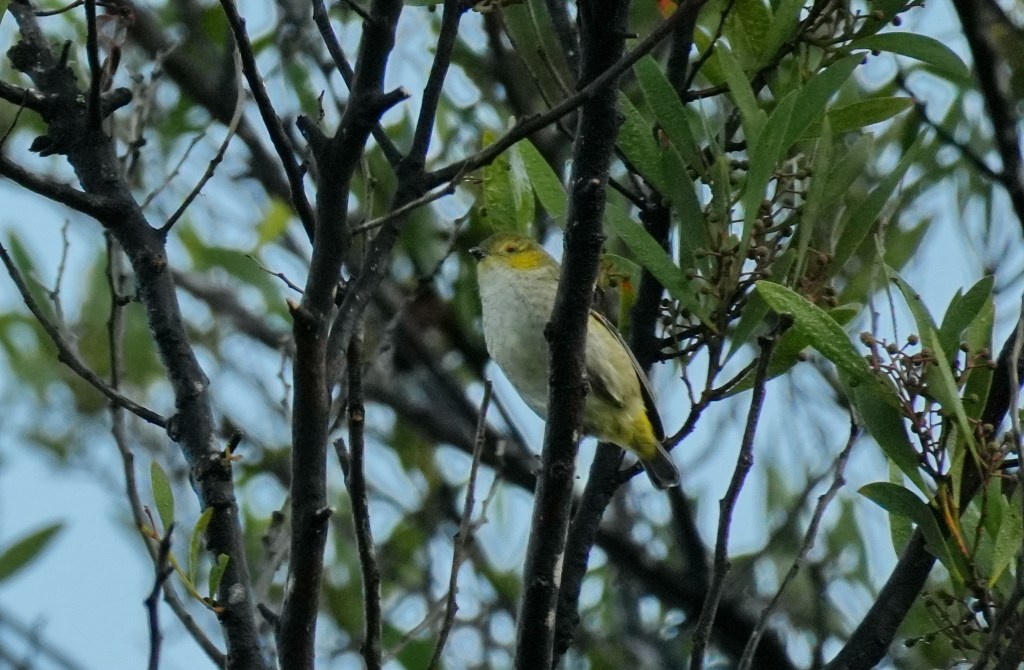
Our first task was to look for the rare and special Pardalote we had come all this way to see, which would be our next lifer and it did not disappoint. To observe this bird we climbed the Pardalote Platform where one can observe the pardalotes feeding and coming and going from their breeding boxes which had been built and placed high in the White Gum trees, with a hole only just big enough for the Pardalote to squeeze in and out of, preventing other species and predators from entering. They appear to be early nest building as they usually breed in the Late July to September. Now let’s look at this bird which was quite a challenge to photograph due to its size, speed and colour. Click on photos to enlarge them:
Cat Davidson – Inala Guide introduces us to the 40 Spotted Pardalote at Inala Pardalote Platform
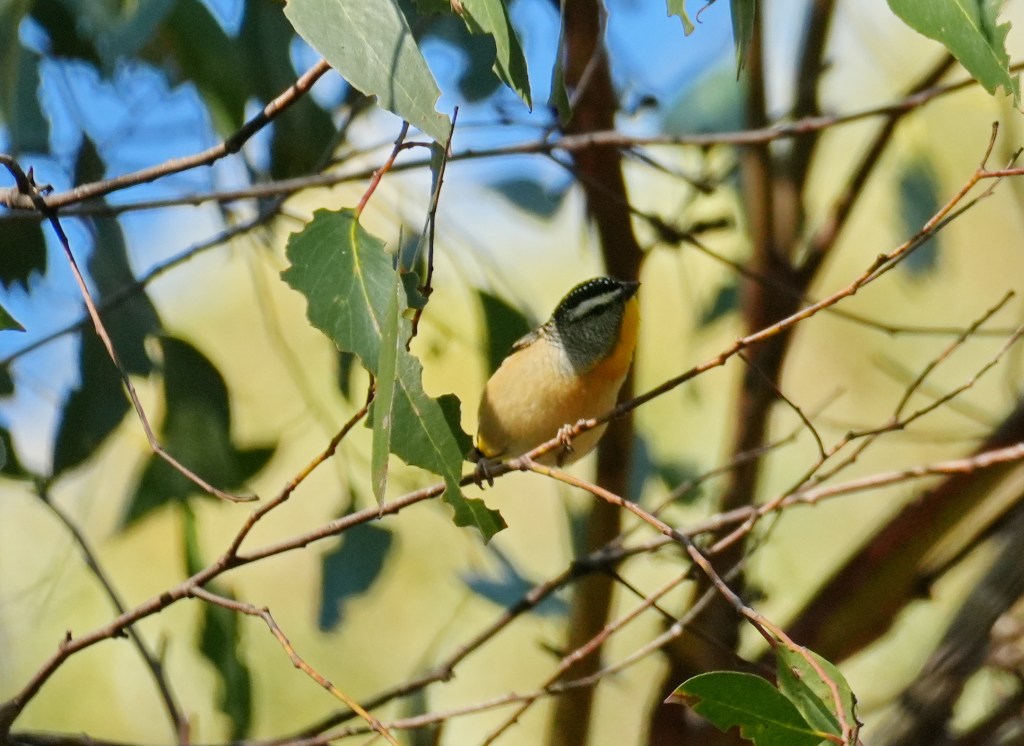
We also saw its attractive cousin, the Spotted Pardalote which is much more widely found even here in Sydney. This male was seen in the trees with the 40 Spotted. Both Pardalotes feed on insects and lerps (the sugary coating on the larvae of the Psyllid insect as well as on the larvae themselves. Both have a tiny hook like end to their beak which they use to scoop up the lerps and larvae from the gum leaf. The larvae are attached to the back of the eucalypt leaves by the jumping plant lice that feed off the nutrients of the leaf, harming the tree.
The unique feature of the Forty-spotted Pardalote explained by Cat Davidson during our Inala tour: How the bird farms the White Gum for Manna.
Here is some nesting material being brought to the nesting box as they prepare for egg laying in the coming weeks. A Forty-spotted Pardalote can have 4 to 5 chicks in a clutch. They may also lay a second clutch in a breeding season. The chicks typically fledge (leave the nest) at approximately 25 days. They are very vulnerable to predation by Sugar Gliders, Kookaburras and Screw Worm Fly. Cleverly, Inala has introduced spraying feathers with insecticide and placing them near the boxes so the pardalotes take them into the nest, thus killing the screw worm fly, which has been another win where human s have helped save birds.
We paid for a full day tour with a professional Inala tour guide which took us birding all over the South Bruny. It was a perfect winter’s day and we enjoyed learning and seeing so many endemic birds. The tour is well worth the experience as a one off. Cat Davidson took us on tour with Mike who was learning the ropes. Both were extremely knowledgeable. Click here for more info. I will share more of our findings next week. Here is a short video of Cat explaining about the Forty-spotted pardalote:
Have a wonderful week birding and enjoying the outdoors. Take some friends and family out on a birding walk to let them discover the delights. We do this frequently and love to open the eyes and ears of our friends to our avian wonders. It is amazing how sensitive to bird calls and even sighting birds they become after spending time with us, they all seem to say the same thing: We never really noticed birds till we spent time on a bird walk with you, now we enjoy looking for them and listening for them.
What we can learn from this post and the plight of the Forty-spotted Honeyeater, the Swift Parrot, Regent Honeyeater and other endangered bird species dependant on particular tree species for future survival, is that there are consequences for our behaviour. These may not seem apparent at the time, and may not even be considered, as the selfish heart: will do because it can and while it can. The selfish nature we all possess is often opportunistic when it is possible to get away with it. This is like the Pied Currawong presented in my book “What Birds Teach Us which is available here online. Click on the image below to find out more:
Just as Ironbark, the hardest of timbers, which was logged extensively for railway sleepers on the mainland resulting in habitat loss for the Regent Honeyeaters, likewise, the extensive logging of Tasmanian White Gum, a very durable hardwood used in construction, for poles and wharves and railway sleepers and even paper pulp has led to decline in Forty-spotted Pardalote. The consequences for the over logging of these timbers has resulted measurable relationship between a decline in the tree numbers and the bird population in that area due to their direct dependance on this tree for food and nesting holes. It takes more than 30 years for these trees to mature, thus the removal of old growth trees is devastating for birds dependant on these trees for survival.
What we do now, affects our lives and the lives of others up ahead, even others not even involved with us at all. Like concentric circles from a single stone falling into the still water, our deeds selfish or loving spread their effect (consequences) in our life and the lives of others we are related to or may not even know. Everyone is related and in relationship with another through family and community.
“The Lord God took the man and put him in the Garden of Eden to work it and take care of it. ” – Genesis 2:15 (NIV)
“For God so loved the world that he gave his one and only Son, that whoever believes in him shall not perish but have eternal life. For God did not send his Son into the world to condemn the world, but to save the world through him.” – John 3:16,17
Not destroy it. But in a similar way to our wise indigenous First Nation People, we need to maintain the balance between what we really need and what other life forms dependant on the same resource need.
My wife and I share a love of bird observing and bird photography which takes us all over Australia. We love sharing our experiences. Birds live in the beautiful parts of our country. We always get blessed with beautiful gifts of new birds and unexpected experiences each time we go out birding or just walking in the parks and reserves in our wonderful land. We love Australia, and the variety that each state and region offers in its wildlife and nature aspects. Join us in sharing our love. We have always found other birders enthusiastic and friendly people who appreciate the good things in life.
Really glad you had good weather while on Bruny Island and were able to see the 40 spotted pardalote. Great photos and videos of the pardalotes. It would have been an exciting experience viewing these marvelous tiny creatures. I have seen Inala on TV before and it looks an amazing place for birdwatching. I’ve put it on my must do list!
Thanks Sue, yes it was amazing seeing this tiny bird we were so excited to actually see it and learn so much about it from the excellent tour guides. Watching it coming and going from the breeding boxes. We came at just the right time to see them nest building inside the boxes. I do hope you get to spend a couple of nights there. The winter three nights for the price of two winter special is on now. Many of the endemics are on the property, and they take you on a tour of the south bruny to find the others.
Thanks Cindy, yes Covid stopped a lot of birding and sadly we lost many older birders and their reporting. Hopefully you may get down here again. We have only recently started getting out more last year, but the weather has been terrible for birding most days so far, which is so unseasonable.
Hello Ash,
How exciting to see this update and we’re thankful that you and your wife returned safely from your travels.
We enjoyed learning more about Inala wildlife reserve through your article and via the links provided – what a wonderful place. I can imagine it must have been an unforgettable experience to spend a few nights there. We are delighted to hear you were blessed with clear winter weather and special bird viewings. How wonderful you could see a lifer and observe the Forty-spotted Pardalote while learning more about this bird thanks to the skilled guides.
I miss our conversations greatly, hope you are resting from the exciting trip and have a blessed remainder of the week. Always in our thoughts!
Thanks Takami, it was a lovely time away though brief. The weather looked to be bad on our weather app but we prayed and it turned out lovely for most of the time though it did snow one day on Mt Wellington we could see it nearby as we tried to walk in gale force winds. Thankfully our days at Bruny were mostly clear and cold without too much wind. Inala was an amazing place and has an amazing conservation story behind it. The tour guides were worth their money and we were privileged to have them all to ourselves. We missed seeing this Pardalote on our previous visits to Bruny , so Inala was the answer we were told, as well as most of Tassie’s endemics are also there. We returned home to another weather bomb of torrential rain causing much devastation for many. We await your letter on how you are going. Yes we don’t communicate as much as we have done in our busy lives. You also are always in our thoughts and prayers. We hope you are enjoying your warm Summer weather.
Introduce your child to our amazingand interesting birds.Over 100 beautiful photos with facts on how they do life, from which we learn helpful life skills.Click image above to Find out more and Buy the Beautiful Bird Book
Teens and Young Adults
Flight of a Fledgling similar to my first book uses the interesting lives of birds to teach valuable life skills.It is written expressly for teens and young adults as they prepare to leave the Nest. It helps them to better understand themselves and improve their personal relationships and better prepare for lifes challenges.Click on the above cover to find out more and purchase online.
Stay and Explore the Rainforest in Lamington N P – click
Visit Broome Bird Observatory
Include in your next visit to Broome WA a couple of days on bird tours in Australia's Shorebird Capital at Broome Bird Observatory (BBO) in conjunction with Birdlife Australia, it is well worth it. Enjoy a self guided tour through their new and beautiful interactive discovery centre. Accommodation is available. Tours to various bird habitats: mangroves; bush and shoreline. BBO Wardens Sebastian and Jamie will make you welcome. While you are there check out the Beautiful Bird Book 'What Birds Teach Us'.
Help Save Our Birds
See Tasmania’s Endemic Birds
Luxury Stay in the Capertee Valley: bellebois.com.au
Where Can I Buy The Beautiful Bird Books?
How Do Birds Keep Their Nests Clean ?
Birding Around the Sydney Region
If you are a birder visiting the Sydney region for the first time, check out the many National Parks (NP) that surround it for the great variety of birds found there. The Visitor Information centres at The Royal NP, Botany Bay NP, Fitzroy Falls and Minnamurra NPs have information and also sell my Beautiful Bird Books. If you follow this blog, make a date with Aussiebirder before you arrive for info tips or a visit.














 aussiebirder
Really glad you had good weather while on Bruny Island and were able to see the 40 spotted pardalote. Great photos and videos of the pardalotes. It would have been an exciting experience viewing these marvelous tiny creatures. I have seen Inala on TV before and it looks an amazing place for birdwatching. I’ve put it on my must do list!
LikeLiked by 1 person
Thanks Sue, yes it was amazing seeing this tiny bird we were so excited to actually see it and learn so much about it from the excellent tour guides. Watching it coming and going from the breeding boxes. We came at just the right time to see them nest building inside the boxes. I do hope you get to spend a couple of nights there. The winter three nights for the price of two winter special is on now. Many of the endemics are on the property, and they take you on a tour of the south bruny to find the others.
LikeLiked by 1 person
Wow. Gorgeous. We were going to visit there but covid hit.
LikeLiked by 1 person
Thanks Cindy, yes Covid stopped a lot of birding and sadly we lost many older birders and their reporting. Hopefully you may get down here again. We have only recently started getting out more last year, but the weather has been terrible for birding most days so far, which is so unseasonable.
LikeLike
Hello Ash,
How exciting to see this update and we’re thankful that you and your wife returned safely from your travels.
We enjoyed learning more about Inala wildlife reserve through your article and via the links provided – what a wonderful place. I can imagine it must have been an unforgettable experience to spend a few nights there. We are delighted to hear you were blessed with clear winter weather and special bird viewings. How wonderful you could see a lifer and observe the Forty-spotted Pardalote while learning more about this bird thanks to the skilled guides.
I miss our conversations greatly, hope you are resting from the exciting trip and have a blessed remainder of the week. Always in our thoughts!
LikeLiked by 1 person
Thanks Takami, it was a lovely time away though brief. The weather looked to be bad on our weather app but we prayed and it turned out lovely for most of the time though it did snow one day on Mt Wellington we could see it nearby as we tried to walk in gale force winds. Thankfully our days at Bruny were mostly clear and cold without too much wind. Inala was an amazing place and has an amazing conservation story behind it. The tour guides were worth their money and we were privileged to have them all to ourselves. We missed seeing this Pardalote on our previous visits to Bruny , so Inala was the answer we were told, as well as most of Tassie’s endemics are also there. We returned home to another weather bomb of torrential rain causing much devastation for many. We await your letter on how you are going. Yes we don’t communicate as much as we have done in our busy lives. You also are always in our thoughts and prayers. We hope you are enjoying your warm Summer weather.
LikeLiked by 1 person
Thank you dear friend. I was able to finally send an update email and hope to follow up with more soon. Blessings to you both.
LikeLiked by 1 person