Australia
Now You See Him, Now You Don’t – Superb Fairy-wren
The early winter months down here are very quiet in our local parks, having fewer bird species and almost no current wildflowers to feed the many nectar eaters. However, our […]
Welcome to our website for the study and appreciation of Australian birds and their interesting behaviours.
The early winter months down here are very quiet in our local parks, having fewer bird species and almost no current wildflowers to feed the many nectar eaters. However, our […]
The early winter months down here are very quiet in our local parks, having fewer bird species and almost no current wildflowers to feed the many nectar eaters. However, our insectivorous birds including the Superb Fairy-wren, Grey Fantail, Eastern Yellow Robin, Golden Whistler, White-browed Scrubwren, Brown and Striated Thornbills and the Magpies, continue to thrive during this period.


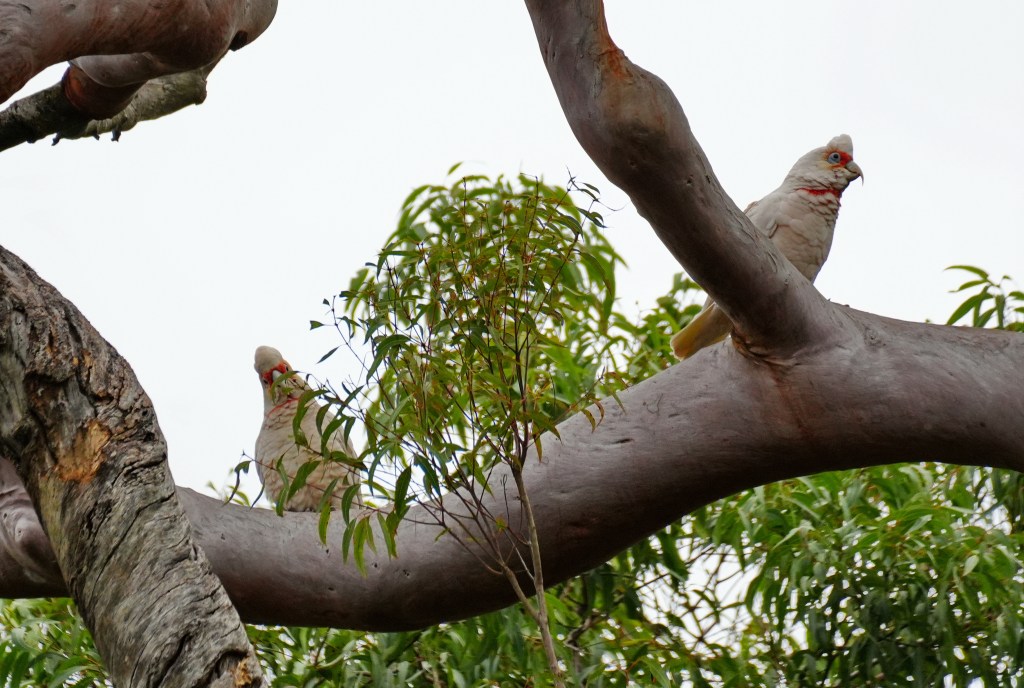
Several of the Parrot family including Sulphur-crested Cockatoo, Rainbow Lorikeet, Eastern Crimson Rosella and recently Long-billed Corella are also late nesters in our local Nature Reserve, the seed pods and cones from last summer continue to offer feed for these species. Yes we are very surprised that a pair of Long-billed Corella have returned to the major nesting tree (angophora costata or Sydney Red Gum) as we thought the Sulphurs had driven the flock away last week.

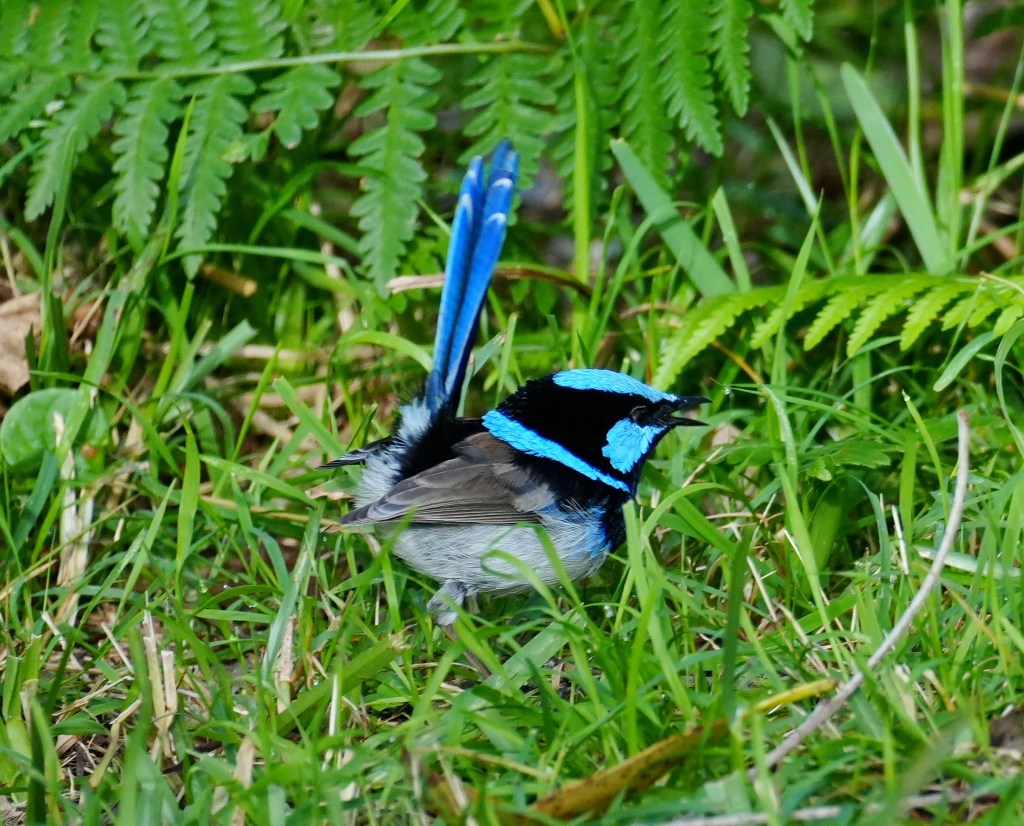
While we have many birds that nest during our winter months, especially rainforest birds, many of our small passerines nest during spring and summer, though occasionally one species, the Superb-fairy wren, may nest three times a year. I was delighted when visiting the spot that originally inspired the first page of my first book What Birds Teach Us to experience an extraordinary moment when a breeding male, non breeding male and a female all appeared together at the one time.
Notice the male always maintains its bright blue tail. The facial features are quite different in the two sexes. Click on photos to enlarge them.



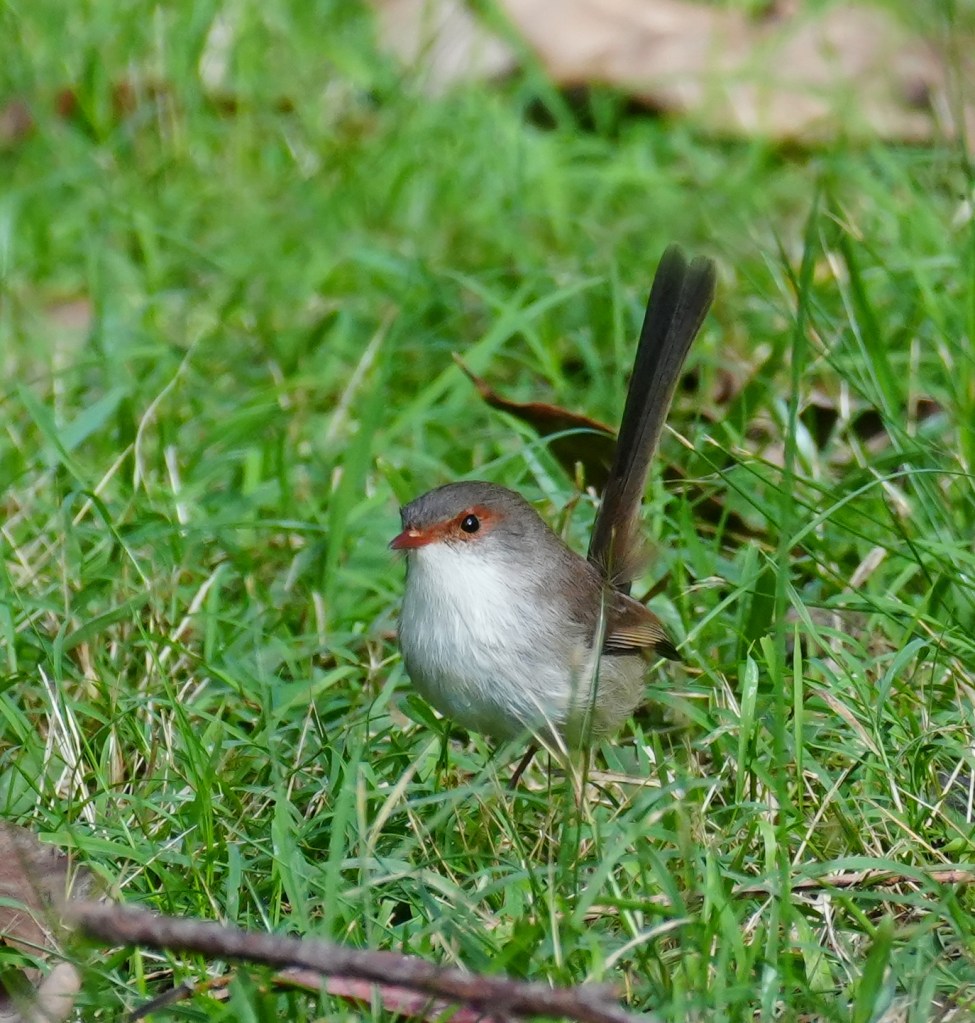
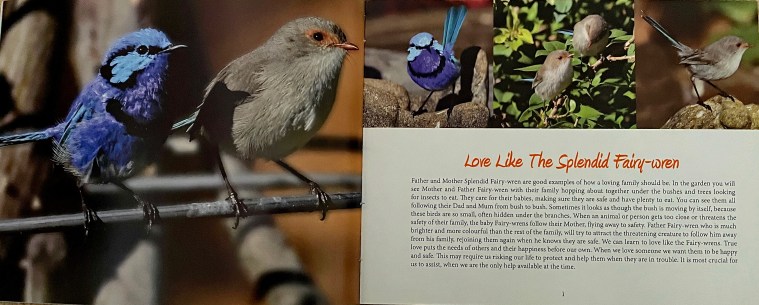
I am often asked by people not familiar with our Fairy-wrens: “My Blue Wrens I see in my garden have disappeared, do you know why ?” After explaining about breeding plumage they have a light bulb moment and realise they are still their but are incognito until the next Spring. You can explore my first pages of my first bird by clicking the image below, it will open on a new tab. I used the Splendid Fairy-wren from Western Australia as it was the only time back then that I could get male and female together, of course I have photographs now, ten years later, of them together. Many bird species transform to and from breeding plumage during each year, the Fairy-wrens included.

It is always an exciting find to see the male morphing from eclipse to breeding or visa versa as you can see here. It does take several weeks to change over. The females will then be attracted to him and make themselves available for breeding. The birds have the ability to see UV light and can see colour and embodiments around the male which are not visible to our human eyes.
A couple of days later we took a couple of friends after coffee to see the Powerful Owl hidden among the Mangroves while viewing the nesting hole from a distance. If you did not know where to look you would never find it. If she is in the nest they will have 30 days to wait, and the male will have to hunt each night for them both and later the chicks and bring food, preferably a possum or other small mammal or large bird. They always extract the entrails of the animal which can sometimes be seen left lying on the track.

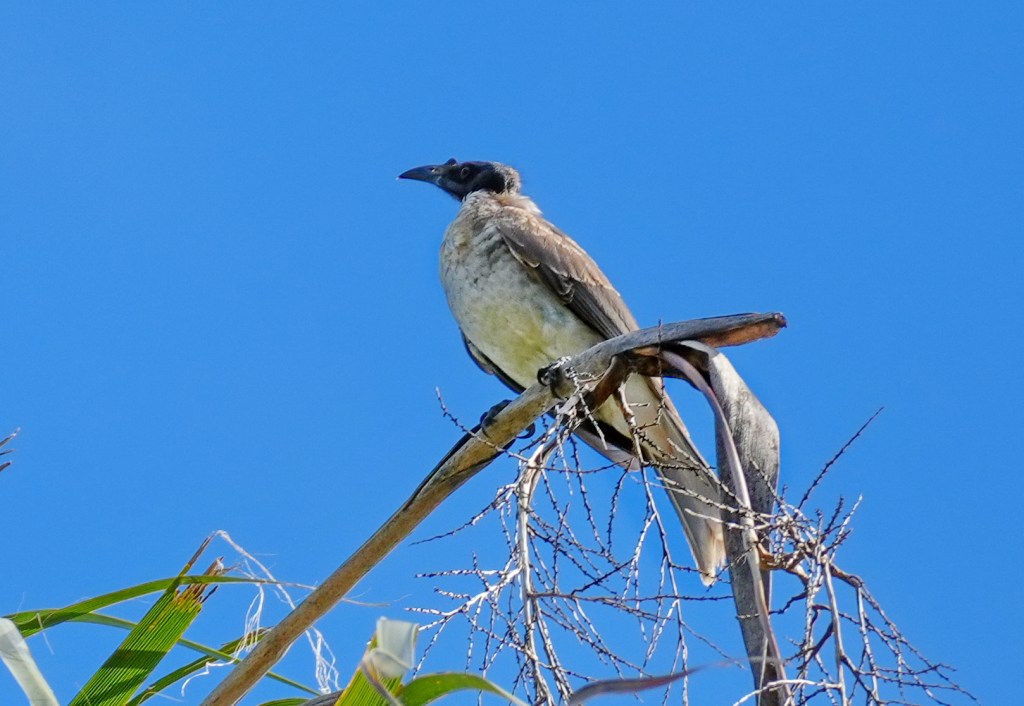
Lastly, one of the signs of winter is the appearance of Noisy Friarbirds which come in from the west of our state to feed on any blossom or fruit that may remain. Their raucous call is similar to the grating metal sound of the Red Wattlebird, both honeyeaters are aggressive toward one another and will try to drive the other away, which is what we witnessed when taking these photos. Notice the first photo with its tubular retractable straw-like nectar sucking tongue has not been retracted.

Enjoy your week and hopefully it is not as wet as it has been here with unseasonable rainfall which is not the best for birding. We are thankful to God for a few sunny days to get out and about.
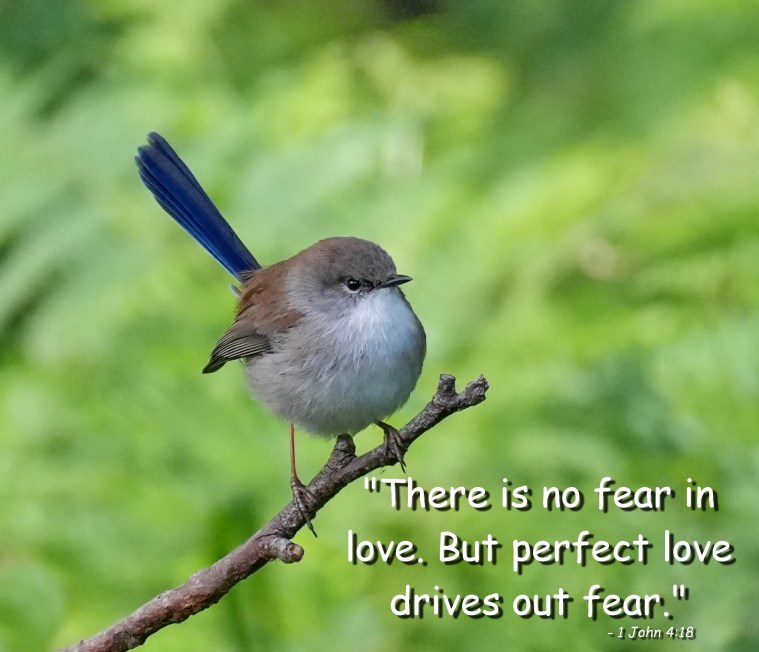
LOVE is the life lesson taught by the Fairy-wren in the pages of my first book What Birds Teach Us. It shares how the very visible male in bright blue breeding plumage places his own life on the line to draw away any perceived threatening creatures, while his female partner and youngsters escape to safety. He later joins them after cunningly eluding his predators. Sometimes in the case of raptors and other bird eating birds, he gives his life for them. The qualities of courage and sacrifice for those we love and care about, and even for those who we do not know, but need our assistance when in danger, are examined in the text of my book. The source of such courage and faith is God himself through Jesus who conquered the fear of death through his own courageous death and resurrection on our behalf.

LOVE is both courageous, sacrificial and intentional. It puts the needs and safety of others before its own needs. Jesus taught this sought of love and demonstrated this quality of God’s agape (unconditional love) when he offered himself to die in our place on the horrific Roman Cross as a our penalty bearer, taking the blame and shame for the sin and sins of all who would put their faith and trust in him. That’s how much God loves you and me. God’s Holy Spirit empowers those who place their faith in Jesus, as his Spirit is given as a gift to encourage and enable them to love courageously like our Lord Jesus did here on earth.

After all, everything God wants us to know and receive is grounded and sourced through his Love, His unconditional, totally free, all embracing, all forgiving, all redeeming Love.

Adv. Dip. in Counselling and Family Therapy.
Member of Birdlife Australia
To introduce people to our unique Australian birds,
And learn from them how to live a healthy and happy life.
NOTE: All photos, videos and music used on this website are photographed, composed, performed by the site owner and remains his copyrighted property, unless otherwise stated. The use of any material that is not original material of the site owner is duly acknowledged as such. © W. A. Hewson 2015, 2016, 2017, 2018, 2019, 2020, 2021, 2022, 2023, 2024, 2025, 2026

My wife and I share a love of bird observing and bird photography which takes us all over Australia. We love sharing our experiences. Birds live in the beautiful parts of our country. We always get blessed with beautiful gifts of new birds and unexpected experiences each time we go out birding or just walking in the parks and reserves in our wonderful land. We love Australia, and the variety that each state and region offers in its wildlife and nature aspects. Join us in sharing our love. We have always found other birders enthusiastic and friendly people who appreciate the good things in life.
 Introduce your child to our amazing
and interesting birds.
Over 100 beautiful photos with
facts on how they do life, from
which we learn helpful life skills.
Click image above to Find out more and Buy the Beautiful Bird Book
Introduce your child to our amazing
and interesting birds.
Over 100 beautiful photos with
facts on how they do life, from
which we learn helpful life skills.
Click image above to Find out more and Buy the Beautiful Bird Book

Flight of a Fledgling similar to my first book uses the interesting lives of birds to teach valuable life skills.It is written expressly for teens and young adults as they prepare to leave the Nest. It helps them to better understand themselves and improve their personal relationships and better prepare for lifes challenges. Click on the above cover to find out more and purchase online.



 If you are a birder visiting the Sydney region for the first time, check out the many National Parks (NP) that surround it for the great variety of birds found there. The Visitor Information centres at The Royal NP, Botany Bay NP, Fitzroy Falls and Minnamurra NPs have information and also sell my Beautiful Bird Books. If you follow this blog, make a date with Aussiebirder before you arrive for info tips or a visit.
 aussiebirder
I always ALWAYS love your Superb Fairy-wren posts, Ashley!
LikeLiked by 1 person
Thanks Donna, the Fairy-wrens are always a delight to see flitting about. They are constantly on the move checking 360° for predators as they have a very high predation rate. They are so cute to see in their various plumages. We have different species of them all over Australia, all beautiful.
LikeLiked by 1 person
Great photos of the blue wrens Ashley, I always have difficulty photographing them as they don’t stay still long enough! It was also great to hear your recording of the noisy friar bird. I remember hearing and seeing them in my backyard as a teenager in Sydney. I hope the weather continues to improve for you. It’s quite chilly here in Tasmania now, but the skies are blue and clear, perfect for walking and spotting birds.
LikeLiked by 1 person
Thanks Sue, yes the tiny birds like the Fairy-wrens, Thornbills and Gerygones are all fast moving highly active birds with high stress levels, always checking about, mindful of predation, as they are food targets, especially this time of year for Sparrowhawks. We mainly only see the Friarbirds this time of year in Sydney, they are more out west most of the time. We had our coldest morning so far this year today, and some lovely clear winter days recently for a change. My wife has a cold as do many here at present, and we are conscious that it will be much colder down in Bruny in a few weeks. Enjoy the crisp clear days my friend.
LikeLiked by 1 person
Definitely pack lots of warm clothes, it will be very cold on Bruny when you come down. Hope you have a great time there.🥶🧤🧣
LikeLiked by 1 person
Gorgeous! Gorgeous!
LikeLiked by 1 person
Thanks Cindy, we do enjoy and delight in our beautiful birds, we are more delighted that we can share them.
LikeLike
Hello Ash,
A triple blessing – to see 3 fairy wrens – and how lovely you were able to capture such beautiful images both in photo images and video! I am glad there was a break in the rainfall that allowed for this trip, and also the opportunity show the Powerful Owl to friends on another day.
The scripture verses included with the images of the Fairy Wrens are deeply moving, especially the image used for Romans 5:8.
We are trying to squeeze in a final ‘birding mini-trip’ this week, as hot & humid days are expected to stay with us in the weeks (months) ahead. Am working on an email to you, with some photos of Whimbrels we hope you will enjoy.
Warm wishes from rainy Japan – always thinking of you dear friends.
LikeLiked by 1 person
Thanks so much Takami for your always welcome comments. We are all certainly getting unusual weather where ever we are in the world, which is challenging when out birding. We have never had such wet years as the last few after the drought and the big fires, which our forests are still recovering from and birds are still displaced. We do hope you get to have another birding trip and yes it is always a delight to see a Whimbrel as we seldom see them here in our summer months much. You are both in our thoughts and prayers dear friend. We have two of our friends over there at present.
LikeLiked by 1 person
Thanks Deborah, enjoy your week my friend 🙂
LikeLike
They’re beautiful. Great videos, Ashley.
LikeLiked by 1 person