Australian birds
Surprises in the Quiet Autumn Forest.
Finally, there came a day when I could walk in our favorite reserve after days of rain. While it was still overcast and my wife was busy teaching English for […]
Welcome to our website for the study and appreciation of Australian birds and their interesting behaviours.
Finally, there came a day when I could walk in our favorite reserve after days of rain. While it was still overcast and my wife was busy teaching English for […]
Finally, there came a day when I could walk in our favorite reserve after days of rain. While it was still overcast and my wife was busy teaching English for Living, I decided to take a walk alone and chat with God in the quietness of our Autumn forest, which is characteristically the most bird few month of the year, where all migratory birds have left and nectar producing wild flowers are finished.

So I was not expecting to see much, and the forest was fairly quit due to overcast conditions, but for the raucous calls of the Sulphur-crested Cockatoo and the occasional territorial call of the local Laughing Kookaburra clan. This fruiting Pittosporum undulatum (also called: Mock Orange, Sweet Pittosporum or Native Daphne) is the only new native flora seen on my walk. While it’s fruit is poisonous to humans it is food for flying foxes and many fruit eating birds.
As I walked and talked I had a quick look at the Powerful Owl nesting tree and look carefully into the Mangroves to see if he was there guarding the nest, as this is when the nesting pair come, but did not see him. I noticed that small birds such as the Fairy Wren and Brown Thornbills were not working the surrounding area as they would in summer months. However, I heard a thornbill like sound which was not familiar to me in the Grey Mangrove trees near the creek, and managed to get some decent shots of it, to later excitedly find it was our less familiar Striated Thornbill. This tiny insectivorous bird rapidly moves about the canopy of the Mangroves and is a challenge in the dark canopy to see, but my Sony A6700 camera is known for its amazing light sensitivity with its ability to make dark areas light with no flash being required, which I love, as I never use flash on any of our native fauna. Click on images to enlarge them.


I am really loving my new Sony A6700 mirrorless camera with its 70-350mm lens ! I love that I now can stay in auto mode and instantly revert to manual and back to auto again without any button pushing. Sony made it possible. I have also been using their compact movie cameras for years, they are so good and small, I can carry it in my shirt pocket. The above photos are a good example.
As I walked on I noticed the absence of the usual Australian Magpie clan scanning the grasses at Frog Hollow. Nesting was taking place for both Sulphur-crested Cockatoo and Rainbow Lorikeet as they have an extended nesting period and share the same trees and compete for tree holes each year in the classic Angophora costata trees which provide excellent nesting trees along the east coast of NSW.


The Rainbow Lorikeet is probably the most feared bird to take on in a fight. It is the bird that seldom is attacked by other birds because of its vicious bite and the fact that they pair for life and use good team work in defence.


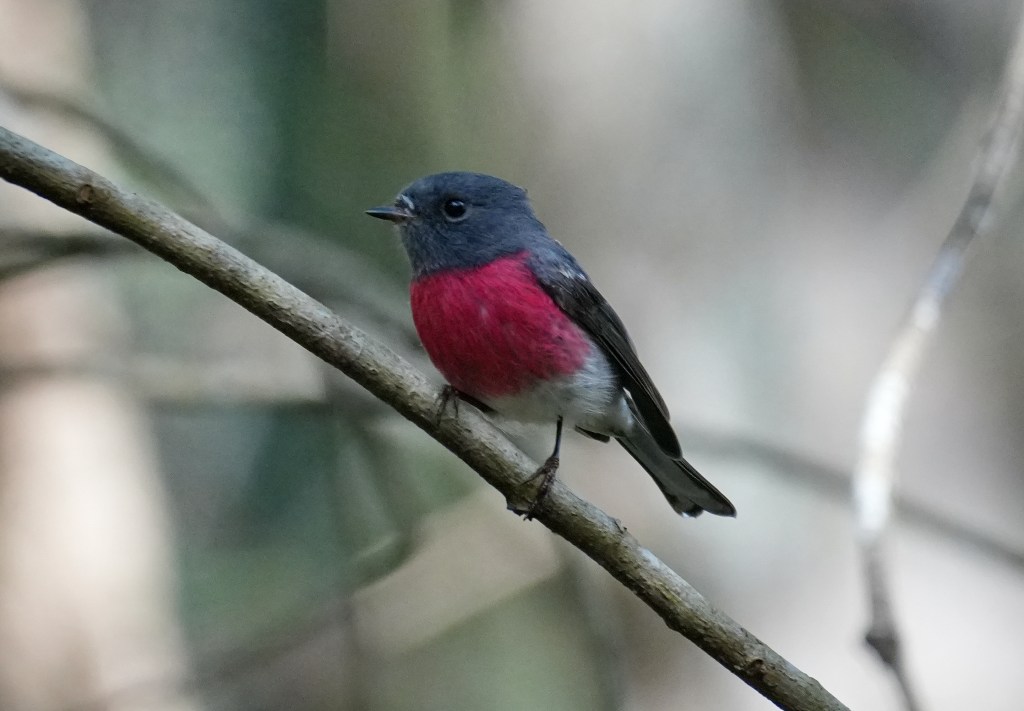
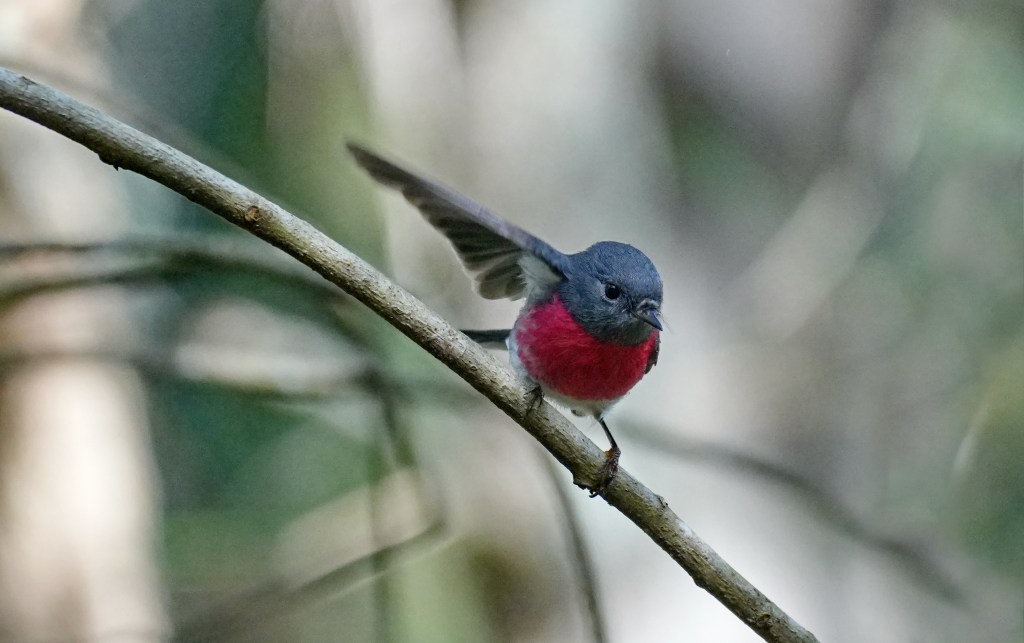
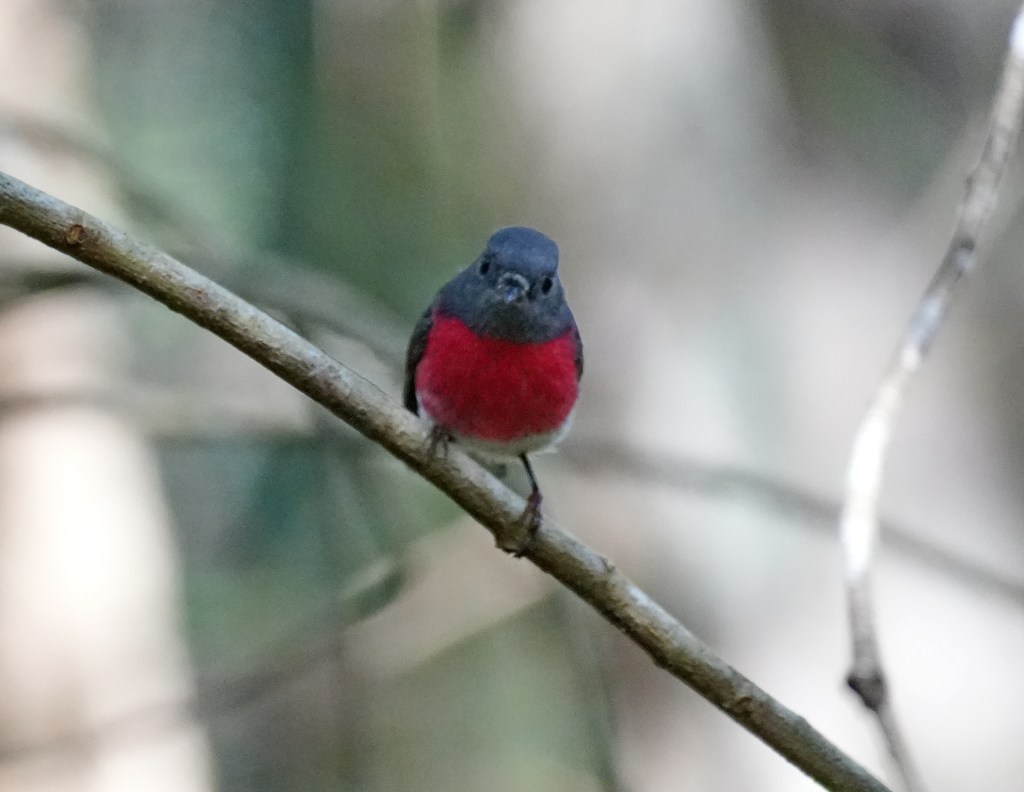
I came across several birders with very long and large lenses, which made my much smaller and lighter Sony look insufficient. But I knew this was not the case, you do not need a big heavy lens and camera to get good shots. I am suffering severe arthritis in my left thumb because of using the very heavy glass and steel L series Canon lens in the last ten years, which has placed limits on my guitaring and certain other tasks. They were observing a female Rose Robin which we all knew frequented the park during the winter months having travelled north from Victoria to escape the cold. Sightings of the male had been reported, but not seen on this occasion. I walked a little down the track and, what a gift ! the male Rose Robyn in all his beauty landed right in front of me on a branch only a few feet away. Thank you Lord ! Click on photos to enlarge them.

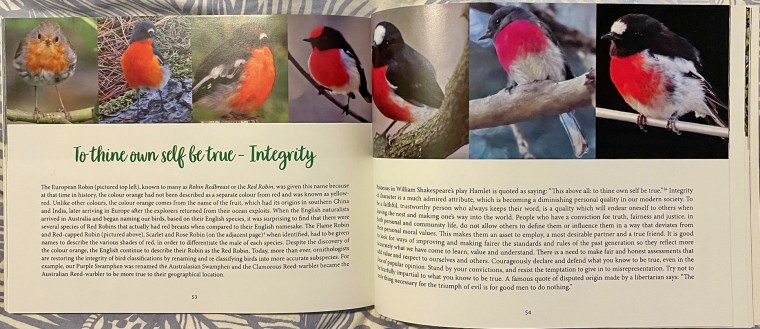
My book Flight of a Fledgling compares our many Australian red robins with the English. Over 160 beautiful photos of our Aussie birds spanning many species, some rare. This is an excellent book to learn about our birds and their interesting behaviours while learning how to do life better from them, as birds are very intelligent. An ideal gift for a young adult. Click on the side image to find out more.
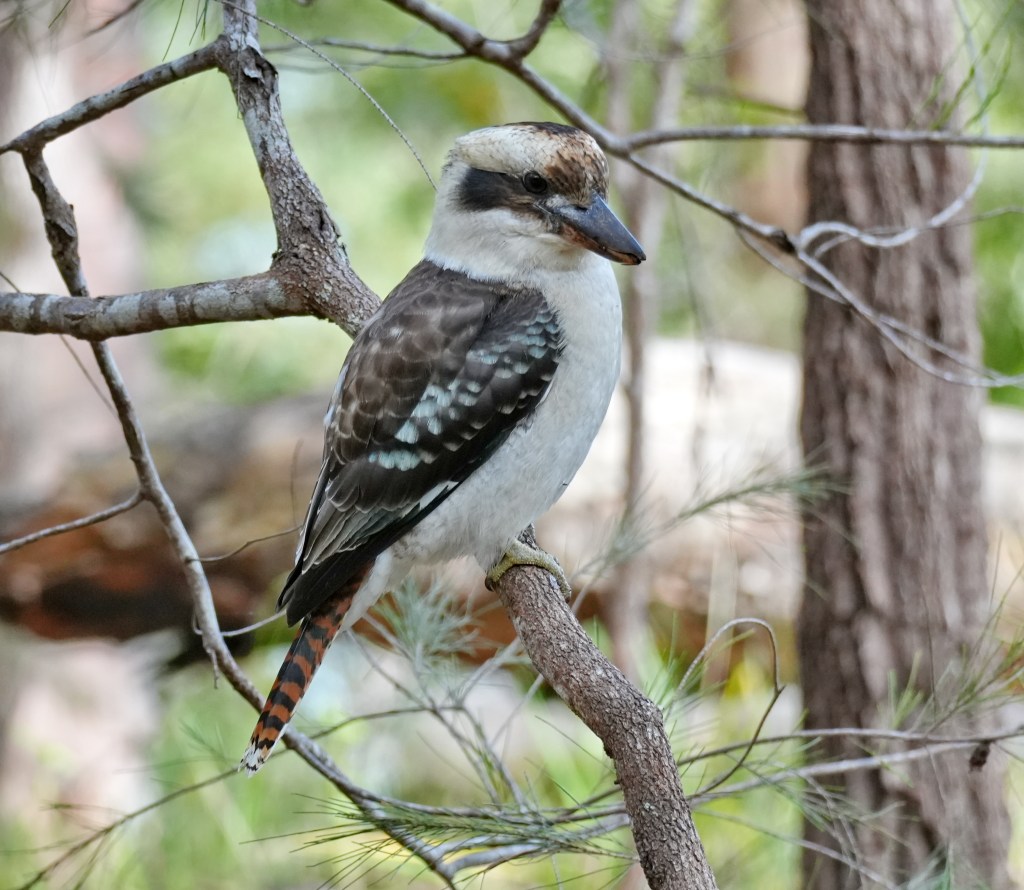
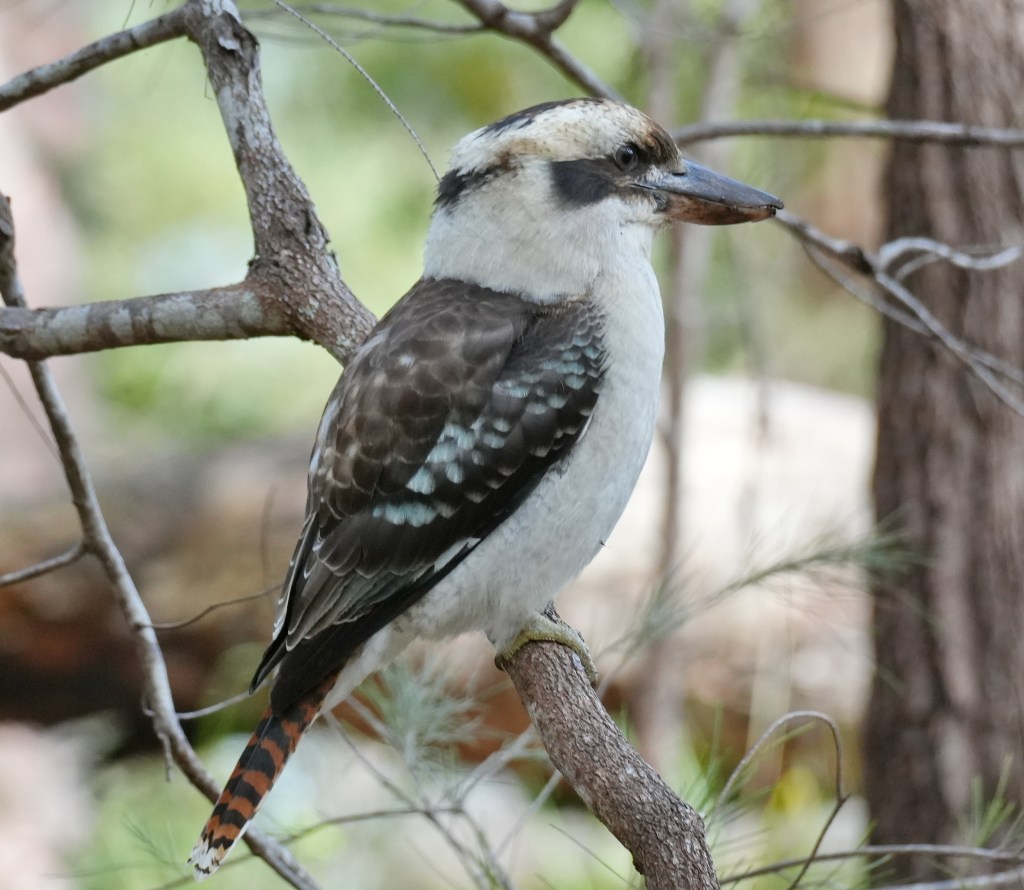
This bird unlike other Robins feeds from the trees not the ground, so it can be a challenge normally to get a good shot, as it is often up under the canopy. This was a magic moment shared with this bird as it sat and watched me for about 20 seconds. As I walked past duck-less ponds only a lone male Kookaburra sat quietly by the track. They are quite friendly and do not fear us, similar to Magpies.
I came to the site of the nesting tree for the Powerful Owl which I passed previously and to my surprise I saw the Powerful Owl sitting deep in among the mangroves opposite the nesting hole. At that stage when I was photographing I thought it was the male guarding the nest, and the female may have been in the nest. However, on viewing my photos at home found that a second owl was hiding close by behind a tree.


I wondered about this. Why were they both sitting observing the tree hole ? The next day my wife and her friend, who was quite excited to see the owls, came but they were gone.
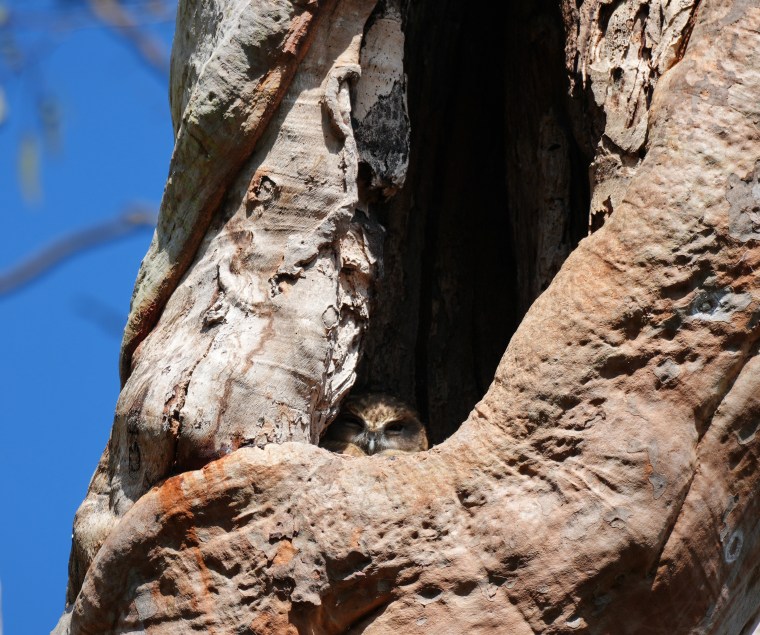
However, we thought a pair of Rainbow Lorikeet had taken the hole and were guarding it, but a few days later found that a Boobook Owl, a resident of the park, had taken it, as you can see it had beaten the Powerful Owls to the nesting site, which the owls had been using year after year. In terms of the unwritten code of bird respect, ‘If the hole is taken look elsewhere.’ I marvel at how Australia’s largest owl can fit down the hole, which is not round. The smaller Boobook is seen here peering out at me.
I was very pleased and thankful for the lovely unexpected gifts I encountered on my walk at a time when very few birds were about.
Have a wonderful week and enjoy the birds !


“Show proper respect to everyone,” – 1 Peter 2:17 (NIV)
“Give to everyone what you owe them: If you owe taxes, pay taxes; if revenue, then revenue; if respect, then respect; if honor, then honor.” – Romans 13:7
“Make it your ambition to lead a quiet life: You should mind your own business and work with your hands, just as we told you, so that your daily life may win the respect of outsiders and so that you will not be dependent on anybody.” – 1 Thessalonians 4:11,12

Adv. Dip. in Counselling and Family Therapy.
Member of Birdlife Australia
To introduce people to our unique Australian birds,
And learn from them how to live a healthy and happy life.
NOTE: All photos, videos and music used on this website are photographed, composed, performed by the site owner and remains his copyrighted property, unless otherwise stated. The use of any material that is not original material of the site owner is duly acknowledged as such. © W. A. Hewson 2015, 2016, 2017, 2018, 2019, 2020, 2021, 2022, 2023, 2024, 2025, 2026

My wife and I share a love of bird observing and bird photography which takes us all over Australia. We love sharing our experiences. Birds live in the beautiful parts of our country. We always get blessed with beautiful gifts of new birds and unexpected experiences each time we go out birding or just walking in the parks and reserves in our wonderful land. We love Australia, and the variety that each state and region offers in its wildlife and nature aspects. Join us in sharing our love. We have always found other birders enthusiastic and friendly people who appreciate the good things in life.
 Introduce your child to our amazing
and interesting birds.
Over 100 beautiful photos with
facts on how they do life, from
which we learn helpful life skills.
Click image above to Find out more and Buy the Beautiful Bird Book
Introduce your child to our amazing
and interesting birds.
Over 100 beautiful photos with
facts on how they do life, from
which we learn helpful life skills.
Click image above to Find out more and Buy the Beautiful Bird Book

Flight of a Fledgling similar to my first book uses the interesting lives of birds to teach valuable life skills.It is written expressly for teens and young adults as they prepare to leave the Nest. It helps them to better understand themselves and improve their personal relationships and better prepare for lifes challenges. Click on the above cover to find out more and purchase online.



 If you are a birder visiting the Sydney region for the first time, check out the many National Parks (NP) that surround it for the great variety of birds found there. The Visitor Information centres at The Royal NP, Botany Bay NP, Fitzroy Falls and Minnamurra NPs have information and also sell my Beautiful Bird Books. If you follow this blog, make a date with Aussiebirder before you arrive for info tips or a visit.
 aussiebirder
Hello Ashley,
You are so fortunate to have the Rose Robin in such good view.
We used to get several pair over the winter break, but now that generation has probably passed on and the next has found other places for winter over.
They do look so impressive, and their little tweet-squeak call is quite distinctive.
LikeLiked by 1 person
Thanks David, yes we have many birders coming to our local park looking for the apparently several Rose Robin couples that are wintering over as per usual this time of year. They look for the owl and the robin.. I have been blessed with amazing shots and am still looking to see both sexes in the coming weeks. It sad when they change their location. We had a few do that over the years. We use to see in winter the Rufus Fantail but only in the Nasho so far. Have a great week, hope the weather stays good.
LikeLike
They’re all so beautiful. The Rose Robin and Owl were special though. I’m so glad you’re loving your new camera rig, Ashley. All the images are wonderful.
LikeLiked by 1 person
Thanks Deborah, yes that was a walk full of unexpected blessings considering how few species were around this time of year. I have found that Sony is blitzing the camera market with its versatility better light sensitivity and cheaper price it has very different controls from the Canon and I still have some learning to do. Have a wonderful week. We are experiencing another deluge for the next 2 weeks. The rain just keeps coming.
LikeLike
That Rose Robin is absolutely beautiful!
LikeLiked by 1 person
Thanks Kathy, they are one of the most sought after birds here at present by birders as they only visit for a short season.
LikeLike
Hello Ash,
That a wonderful birding walk – I am happy you were blessed with special views! The male Rose Robin made me smile. I of course remember him from your bird books, but how exciting to see new images. I can imagine how this trip must have brought joy, especially after weeks of wet weather. (Our summer migratory birds (including waders) have been very sparse this year. Sadly, this trend continues from last winter) I can imagine your wife was delighted to see your images☺️
I am so happy you are enjoying your new camera and it works well for you. Many of my photographer friends have transitioned to Sony mirrorless cameras and all speak highly of it. As you say, a “big” lens doesn’t mean better photos (or photography skills).
Have a blessed week dear friends.
LikeLiked by 1 person
Thanks Takami, it was great to get out again, but we have had the rain return today and will stay another week. Delighted you enjoyed the Rose Robin, it was an amazing moment for me, as it is a bird every birder pursues in this short window it visits us. Yes, I have heard that Sony is taking Canon’s market as people discover it is a better lighter camera for a much better price. As for your waders, sadly part of the problem is that other nearby Asian nations are reclaiming wetlands for industry which the waders feed from when in migration, and many are not making it to their destination due to insufficient food and exhaustion. Birdlife International is trying to address this problem internationally. The other problems are windfarm power stations and poachers trapping birds for local markets, again Birdlife is engaged in trying to train these people to breed their own birds for market.
LikeLiked by 1 person
Hello again dear friends –
My husband & I couldn’t help but revisit this post, and also your thoughtful reply.
It is as you say, wetlands being ‘reclaimed’ has been a growing issue in our neighbouring countries. The scarcity of migrant birds has been glaringly apparent and cause for much concern. It also forces us to re-examine what is happening around us locally as well. It is sometimes difficult to keep faith in our human species but we’re trying to do our part.
We admired your Rose Robin photos again and so glad your new camera is a good companion to your birding trips.
LikeLiked by 1 person
It almost appears as if he is ready to take off for flight here☺️

LikeLiked by 1 person
Yes it does Takami, though many of our Robin species have a wing flip they do with their right wing which may be a signal of excitement, contentment, happiness or possible uncertainty with me as it landed wight in front of me and observed me.
LikeLiked by 1 person
Thanks again Takami for your further comment. yes it is mainly the Asian wetlands that are diminishing rapidly as they are being filled in and reclaimed for land to build on. These vital wetlands are and have been the vital part of the migration feeding chain, and the birds simply have no alternative on reaching these areas tired and hungry. They often take off under fed and die from exhaustion before reaching their destination. These Robin shots are some of my best of this bird. It was such a gift from God, as many have since come to the park in search of it but have left disappointed.
LikeLiked by 1 person
Great sightings on your walk Ashley! The rose robin is a little beauty. I also love the pic of the boobook owl peering out from the tree hole. I hope the powerful owls leave it alone and look elsewhere.
LikeLiked by 1 person
Thanks Sue, yes it was a great find to solve the mystery as to why the owls did not nest. I am thankful to the birder who showed me the Boobook peering out. It has been a very tumultuous two years for the female Powerful, having lost her partner last year, finding it dead in the park, and now with its new partner finding its nest taken. We are in for more very wet weeks, it is coming in as I speak.
LikeLiked by 1 person
Stunning and gorgeous.
LikeLiked by 1 person
Thanks Cindy 🙂
LikeLike