Australian Birds
Preparing for Take-Off – The Bar-tailed Godwit
It is that time of year again when the Bar-tailed Godwit and other migratory waders are fattening up for their epic journey back to the Arctic Circle to Siberia and […]
Welcome to our website for the study and appreciation of Australian birds and their interesting behaviours.
It is that time of year again when the Bar-tailed Godwit and other migratory waders are fattening up for their epic journey back to the Arctic Circle to Siberia and […]
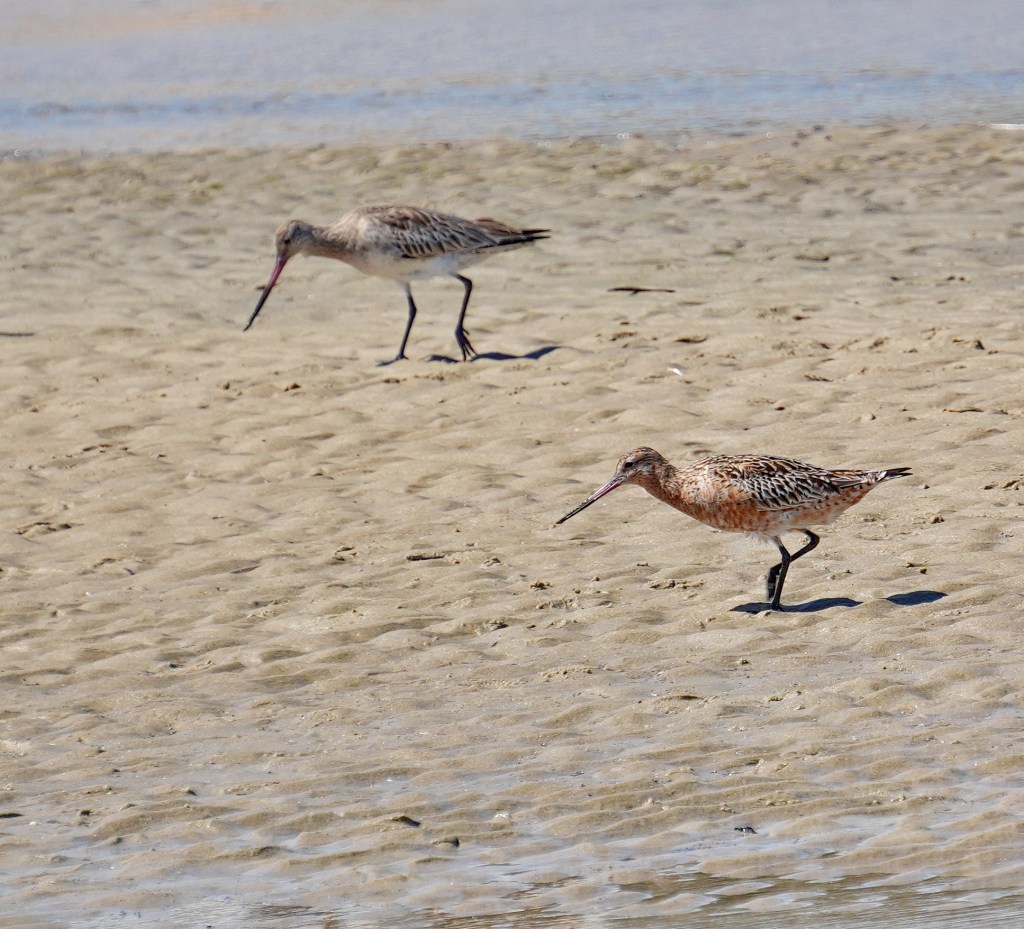
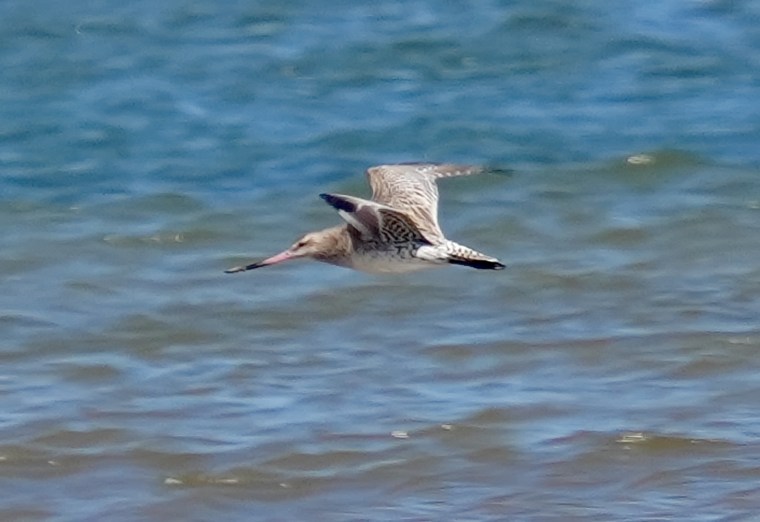
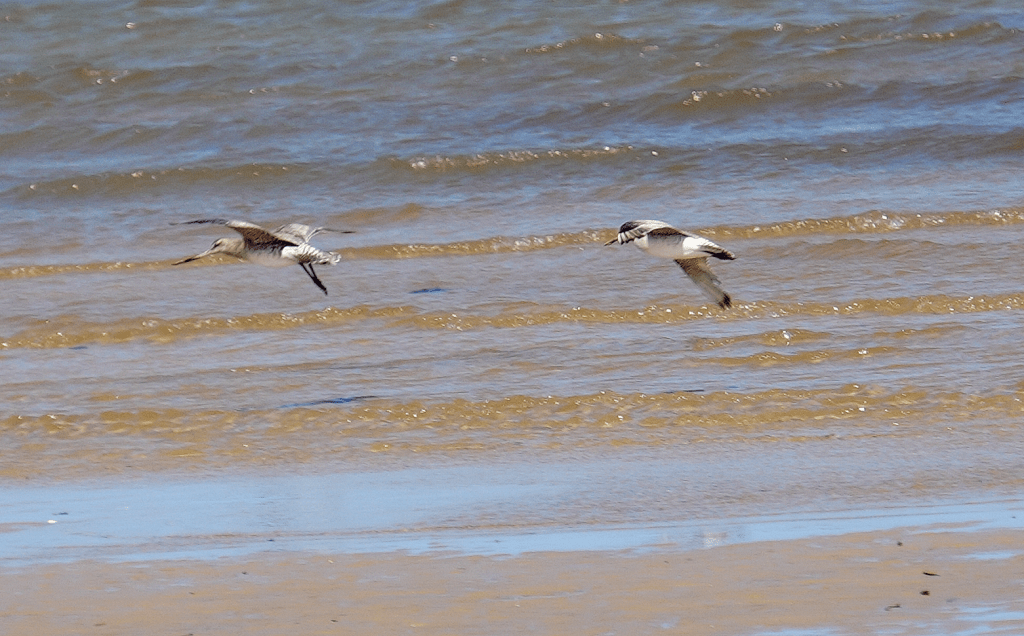
It is that time of year again when the Bar-tailed Godwit and other migratory waders are fattening up for their epic journey back to the Arctic Circle to Siberia and Alaska, travelling some 8.000 km (5,000 miles) to nest and give birth to their next generation. Notice the orange plumage of the above male Godwit as he is already breeding with females, who will also make the long journey to the shrimp rich waters from which they will return next Spring. You can see in our recent photos of a couple of weeks ago that not all are breeding yet. Click image to enlarge it.
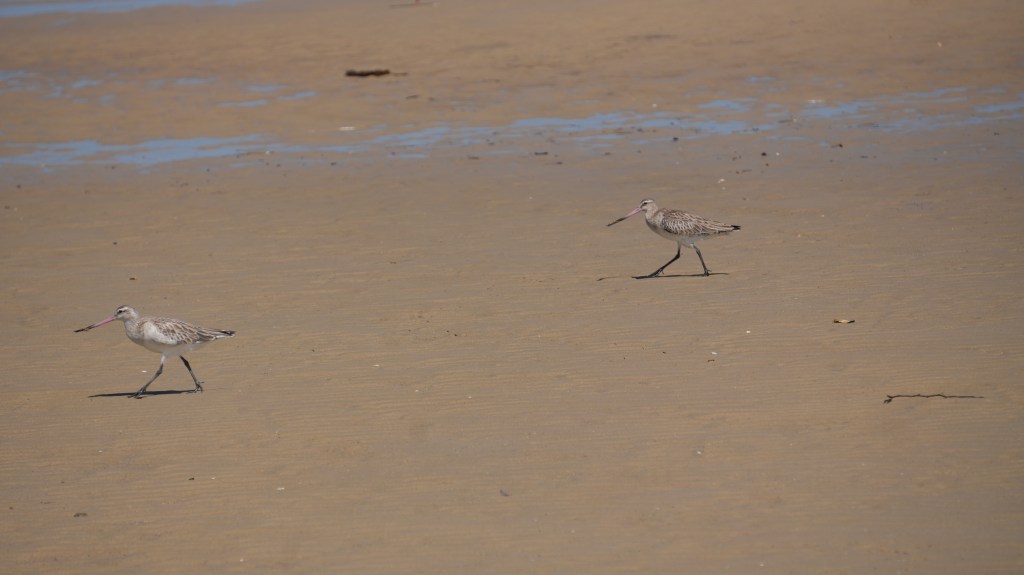

These little guys are quite fast on foot as this pair show as they run to Henri Mancini’s ‘Baby Elephant Walk’. Young (immature) Godwits resemble the non breeding adult, but only have pink on the base of their beaks whereas the adults have it half way down the beak or more.
I am not familiar with the foraging style of this one Godwit where it moves along the surface. I am not sure what it is looking for, maybe surface crabs ?
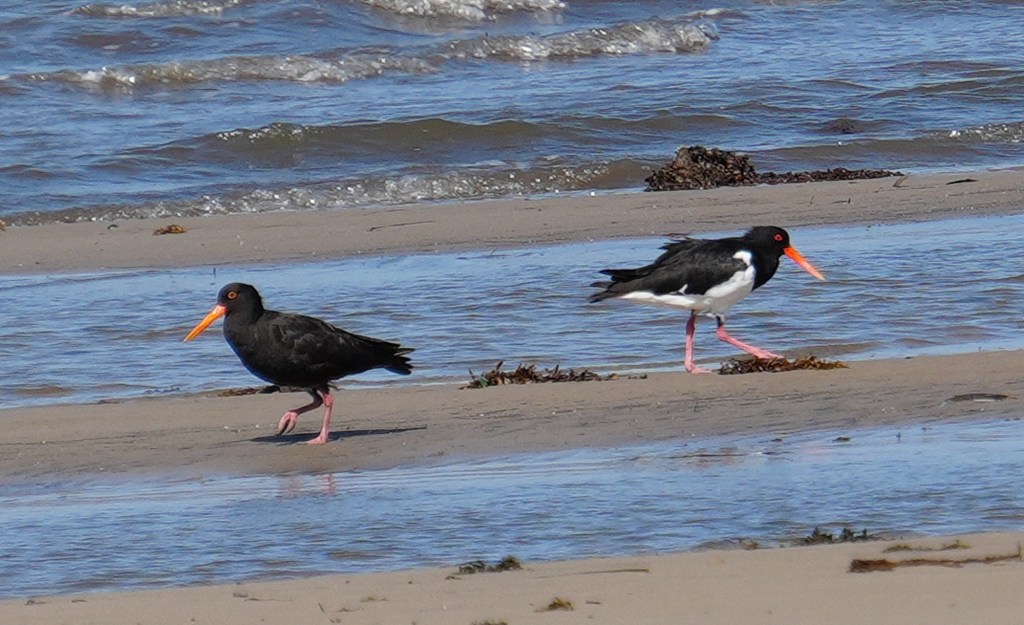
Also on the beach I captured this rare shot of our two species of Oystercatcher together. The Pied Oystercatcher and Sooty Oystercatcher. These two birds will sometimes squabble when in pairs for grazing territory, so the image of them facing away from each other is appropriate. The Pied Oystercatcher are are our local breeding pair.
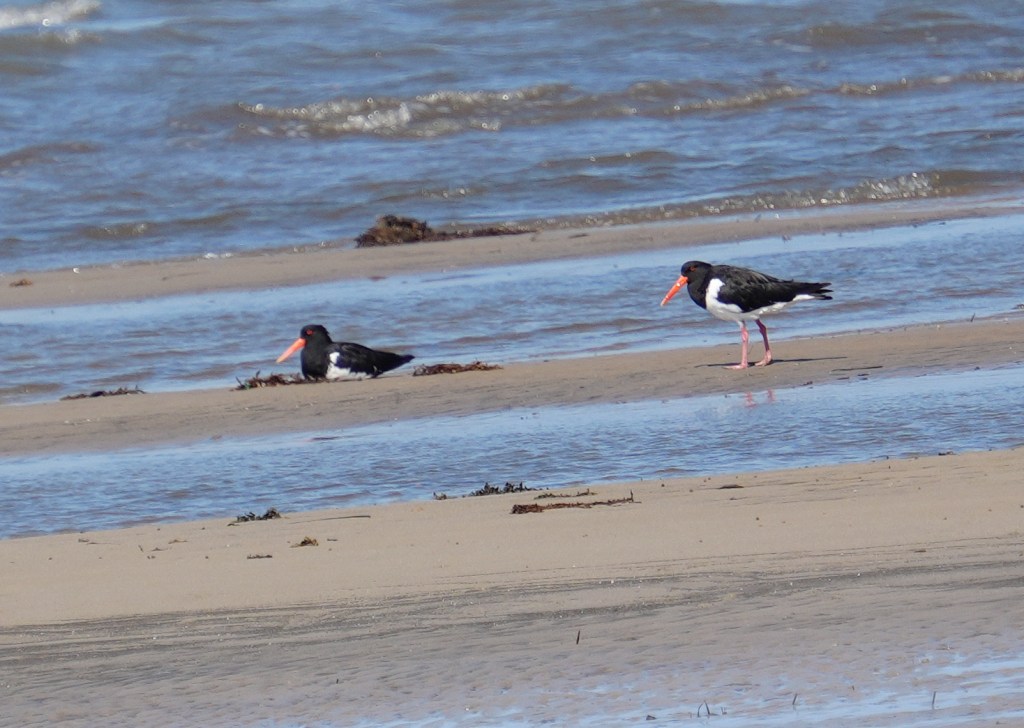
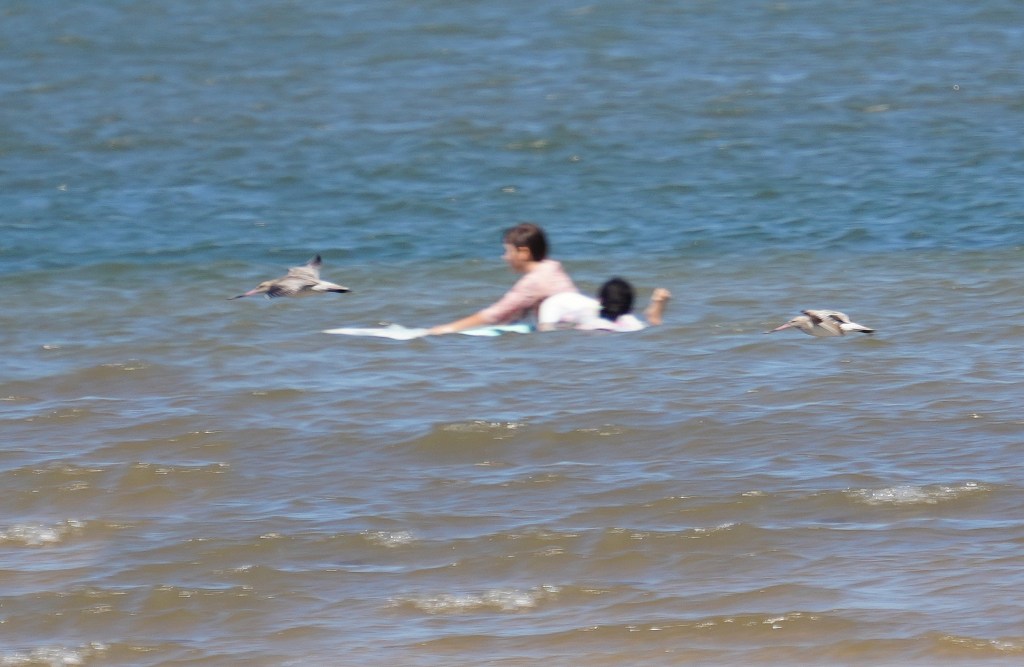
Most of the people swimming nearby are quite unaware of these amazing birds which fly quite close to them above the water as they move to new positions. Soon in the next week or two, on an appointed day at an appointed time they will take flight together high in the sky and make their epic journey via the Asian coastline back to the Arctic Circle.

Enjoy your week as we once more move through changing seasons, when once again the migratory birds are on the move, usually escaping Winter coldness in seek of Summer warmth. Spring and Summer also promises more food opportunities for many birds. The Bar-tailed Godwit is also features in my first book ‘What Birds Teach Us’ for their ability to Endure, pushing through difficult circumstances to achieve their goals, something we can all learn from them and be encouraged to do likewise. Click on the image below to find out how you can enjoy this book or give the most helpful gift to your child or grandchild and as a bonus, teach them about Australian birds.

Words prophesied by Jesus, very appropriate for our present age and time concerning fostering an enduring faith in Jesus for our salvation from the terrible times to come approaching the End Times:
“Jesus answered: “Watch out that no one deceives you. For many will come in my name, claiming, ‘I am the Messiah,’ and will deceive many. You will hear of wars and rumors of wars, but see to it that you are not alarmed. Such things must happen, but the end is still to come. Nation will rise against nation, and kingdom against kingdom. There will be famines and earthquakes in various places. All these are the beginning of birth pains. “Then you will be handed over to be persecuted and put to death, and you will be hated by all nations because of me. At that time many will turn away from the faith and will betray and hate each other, and many false prophets will appear and deceive many people. Because of the increase of wickedness, the love of most will grow cold, but the one who stands firm to the end will be saved. And this gospel of the kingdom will be preached in the whole world as a testimony to all nations, and then the end will come.” – Matthew 24:4-24 (NIV)

Adv. Dip. in Counselling and Family Therapy.
Member of Birdlife Australia
To introduce people to our unique Australian birds,
And learn from them how to live a healthy and happy life.
NOTE: All photos, videos and music used on this website are photographed, composed, performed by the site owner and remains his copyrighted property, unless otherwise stated. The use of any material that is not original material of the site owner is duly acknowledged as such. © W. A. Hewson 2015, 2016, 2017, 2018, 2019, 2020, 2021, 2022, 2023, 2024, 2025, 2026

My wife and I share a love of bird observing and bird photography which takes us all over Australia. We love sharing our experiences. Birds live in the beautiful parts of our country. We always get blessed with beautiful gifts of new birds and unexpected experiences each time we go out birding or just walking in the parks and reserves in our wonderful land. We love Australia, and the variety that each state and region offers in its wildlife and nature aspects. Join us in sharing our love. We have always found other birders enthusiastic and friendly people who appreciate the good things in life.
 Introduce your child to our amazing
and interesting birds.
Over 100 beautiful photos with
facts on how they do life, from
which we learn helpful life skills.
Click image above to Find out more and Buy the Beautiful Bird Book
Introduce your child to our amazing
and interesting birds.
Over 100 beautiful photos with
facts on how they do life, from
which we learn helpful life skills.
Click image above to Find out more and Buy the Beautiful Bird Book

Flight of a Fledgling similar to my first book uses the interesting lives of birds to teach valuable life skills.It is written expressly for teens and young adults as they prepare to leave the Nest. It helps them to better understand themselves and improve their personal relationships and better prepare for lifes challenges. Click on the above cover to find out more and purchase online.



 If you are a birder visiting the Sydney region for the first time, check out the many National Parks (NP) that surround it for the great variety of birds found there. The Visitor Information centres at The Royal NP, Botany Bay NP, Fitzroy Falls and Minnamurra NPs have information and also sell my Beautiful Bird Books. If you follow this blog, make a date with Aussiebirder before you arrive for info tips or a visit.
 aussiebirder
Hello Ash,
I smiled while watching the juveniles dance to the music.
The Pied Oystercatcher is more common here, we like to affectionately call them carrot sticks because their beaks remind us of them.
Japanese birders eagerly wait with anticipation the arrival of the Bar-tailed Godwits and others waders from your country. Winter birds were sparse and we hope more birds will come our way in Spring. I will be sure to let you know when the Godwits arrive.
Praying you and your wife are having a blessed week. Thanks always for your uplifting posts.
LikeLiked by 1 person
Thanks Takami, it would be nice to know how long it takes for the Godwits take to arrive in Japan. Delighted you enjoyed my video, have a good weekend my friend 😊
LikeLike
The Bar-tailed is beautiful in breeding plumage! Fabulous photos and videos, I loved the music in the first video with them running, that made it even more enjoyable!! We don’t normally see the Bar-tailed, only the Marbled & Hudsonian Godwits, but rare sightings of the Bar-tailed have showed up along the Atlantic coast. Your Pied Oystercatchers look identical to our American Oystercatcher but we don’t see the Sooty, it’s lovely in it’s pop of leg and beak colors with the all black body. Great post on some lovely shorebirds, Ashley!
LikeLiked by 1 person
Thanks Donna for your most welcome comments. So delighted you enjoyed my brief post. We always love seeing the breeding plumage change this time of year before they prepare to leave. Yes the difference between the Pied Oystercatchers is the differ in location. Henri Mancini’s Baby Elephant Walk was written for the 1962 adventure comedy movie Hatari, which was one of the first movies I ever saw at the cinema as a lad. Have a great spring weekend my friend.
LikeLiked by 1 person
Lovely photos Ashley. I’ve not seen them with their breeding plumage, will have to keep an eye out for the small flock here before they leave. Great capture too of the bird with the unusual foraging technique. Maybe it was copying another bird to see if it got better results. I also think the Baby Elephant Walk music is very fitting for these birds as they trot along the beach! Loved the video! 🙂
LikeLiked by 1 person
Thanks Sue, I have to add that several of the flock may decide to to take a year off flying and spend the winter in the south. The youngest will do this sometimes after their first flight to the south. We always see a small flock of youngsters around during the winter months, sometimes with an adult or not. They will return next after next summer season here with the others. Hopefully you will see some changes soon. Remember the changes may be later in Tassie due to climate differences, though that is my assumption, and also only the males will show initial breeding changes, it can be difficult to see in females at first. They often leave while only partially changed. Have a great week my friend.
LikeLiked by 1 person
Love them all!
LikeLiked by 1 person
Thanks Cindy 🙂
LikeLike
They’re so pretty in their breeding plumage. I’ve never seen them that color before.
LikeLiked by 1 person
Thanks Deborah, we only get to see this colour change just a few weeks before they depart. Sometimes one or two will be almost fully changed, but usually they are still in process, particularly the females which may change later but will be less vibrant in colour than the males.
LikeLike
I always learn so much from your posts Ashley! You invite us into explore the hidden and most beautiful parts of nature ☘️🌿☘️
LikeLiked by 2 people
Thanks so much Karen for your encouraging comment. I am so delighted you enjoy the showcase of God’s wonder and beauty displayed in creation as I do. I also enjoy and appreciate what you share in your posts, I am sure your empathetic heart and wisdom from experience is a helping many including myself. Enjoy the rest of your week my friend.
LikeLiked by 1 person