Spring also brings back our migratory shorebirds or waders from the uppermost northern hemisphere of the breeding and feeding grounds of Siberia and Alaska. Many of the birds come back […]
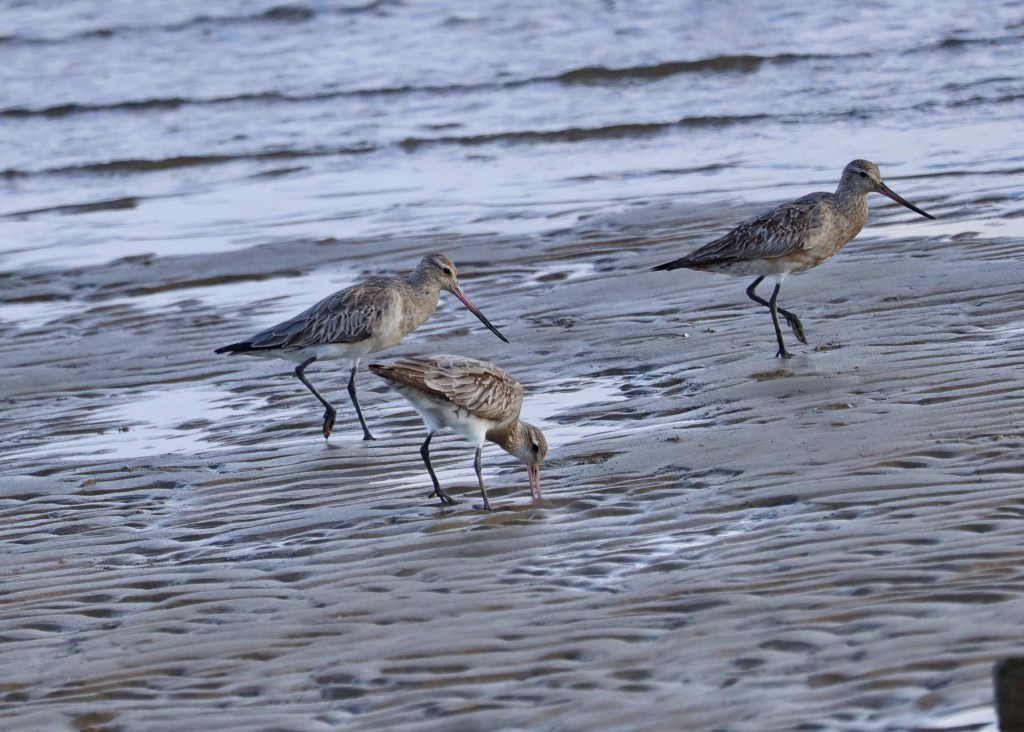
Spring also brings back our migratory shorebirds or waders from the uppermost northern hemisphere of the breeding and feeding grounds of Siberia and Alaska. Many of the birds come back to Australia via the Asian coastlines but also the Bar-tailed Godwit which inhabit the east coast of Australia and New Zealand come by direct non stop flight over the Pacific Ocean, taking some 6 to 8 days. This is the longest journey recorded for a bird non stop and they do it each year, with an occasional year off when young or injured. It is always a delight to see them back poking around for tiny sand crabs on our tidal river mud flats.
They feature a slightly upturned beak and a bar striped tail which is more evident in flight and are usually in small to large family or clan flocks. They will have brought back their juvenile young with them, having been born during our winter months in the northern spring. Click on images to enlarge them.
Bar-tailed Godwit family
Notice this Godwit with a fracture to its beak.
fractured beak in the left hand GodwitIt looks fine now it is closed
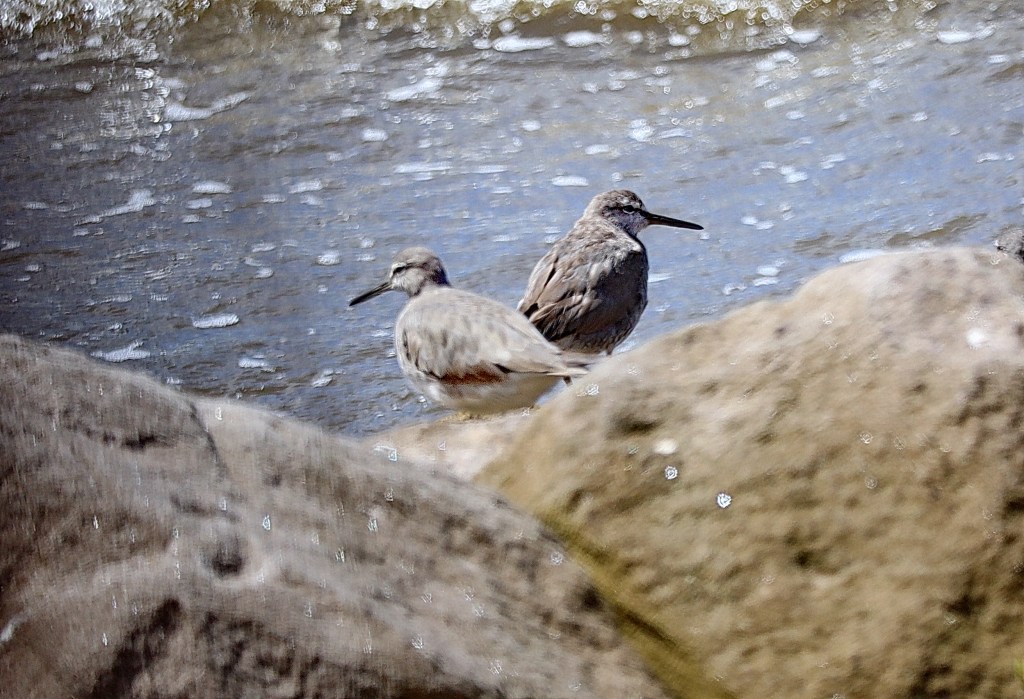
The prime excitement for my wife and I was to see a small flock of Grey-tailed Tattler further around the river banks in the Shorebird Reserve. We usually only see one or two each year, but here we see over a dozen birds of which many are young juvenile and immature. Notice the chest striping of the juvenile resting beside parent.
Grey-tailed Tattler flock
This small wader is also a returning migrant which arrives via the Asian coastline each Spring. They are resting by the shore as the tide comes in, waiting for the next tide or instruction from their flock leader.
juvenile with parents
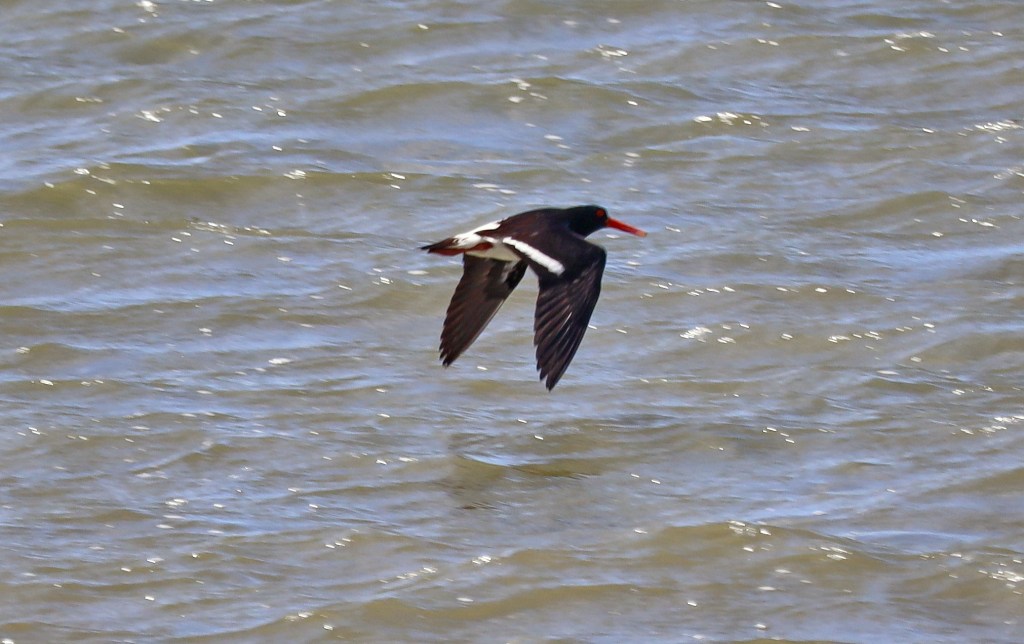
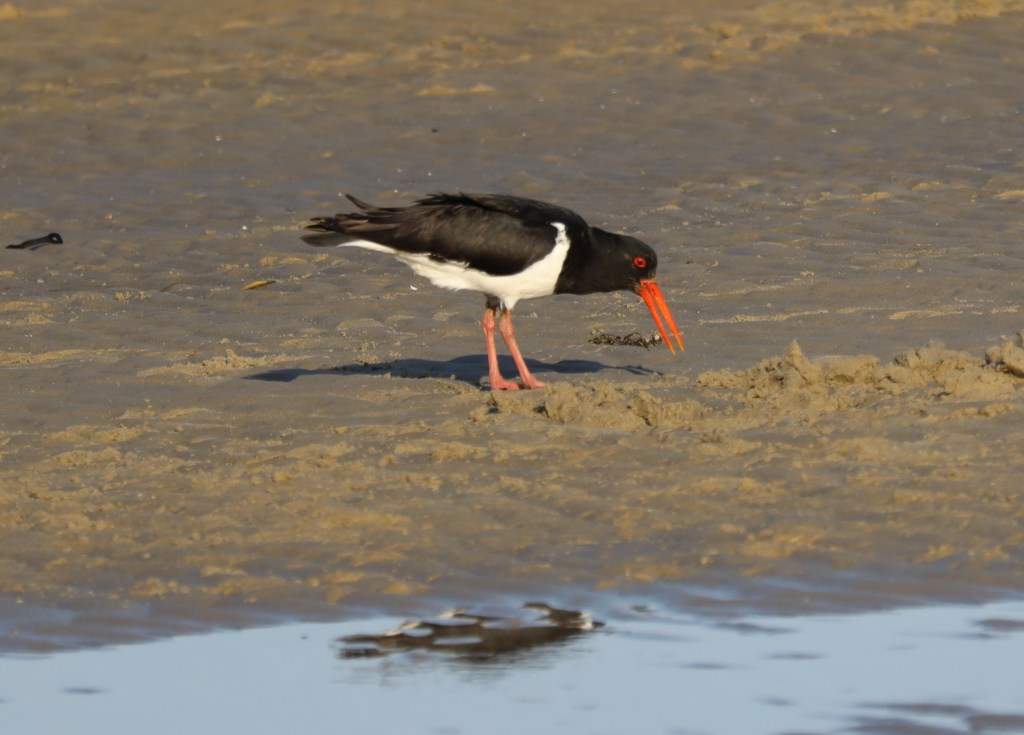
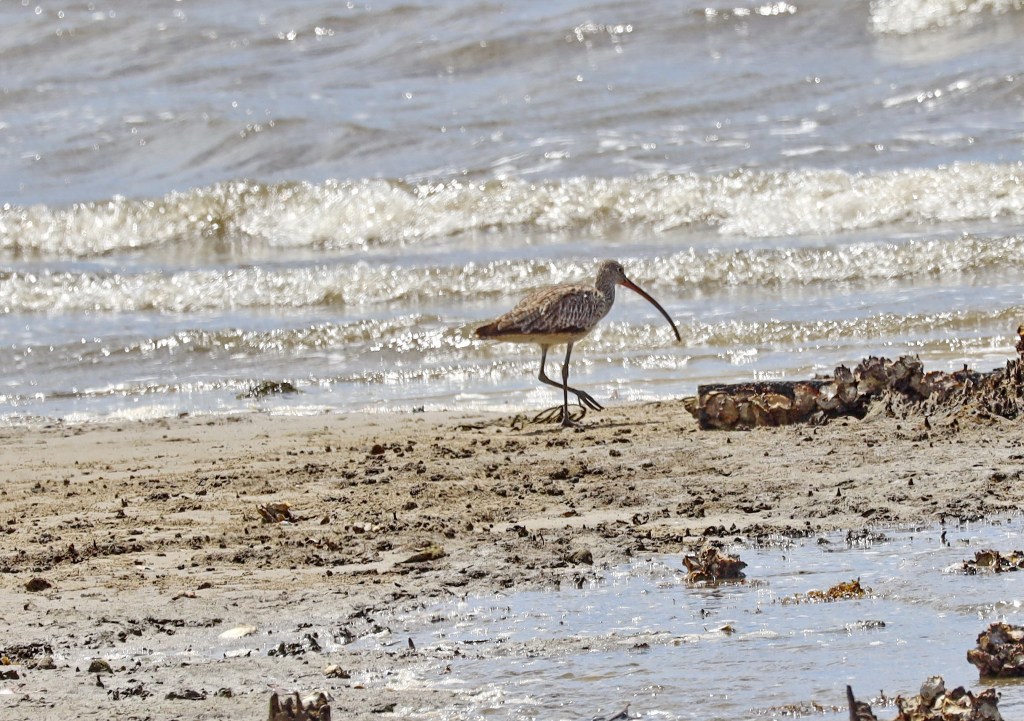
It was lovely seeing the Pied Oystercatcher pair grazing on the same beach with the Godwits. This is an endangered species in our state due to its nesting habits colliding with beach usage by humans and dogs. One Eastern Curlew, a very vulnerable and endangered bird we seldom see return each year, was seen. These birds are extremely human afraid.
Pied OystercatcherEastern Curlew
The man-made bird breeding island was being well use by the Silver Gull. I managed to catch this family of Australian Pelican fly off with great effort. We also saw this very juvenile Silver Gull resting alone on a rock well away from the nesting island and very vulnerable.
The Kelp Gull with the injured leg is still frequenting our beach and appears to have found something, but not sure what. The Kelp Gull is not a usual sighting on our beaches. Notice it has a red lipstick marking on its lower lip. It is a larger gull than our common Silver Gull and is built for the colder windier climates of the southern Australian waters. Kelp Gulls are known to eat almost anything and are so named because they are often seen feeding around the kelp where they feed on limpets and other accessible shell fish. They predator other birds nesting and will use their strong bills to tear both live and dead mammal carcases. They are known to bite chunks out of various see mammals to eat. Their main predators are sharks swimming near the surface.
Kelp Gull
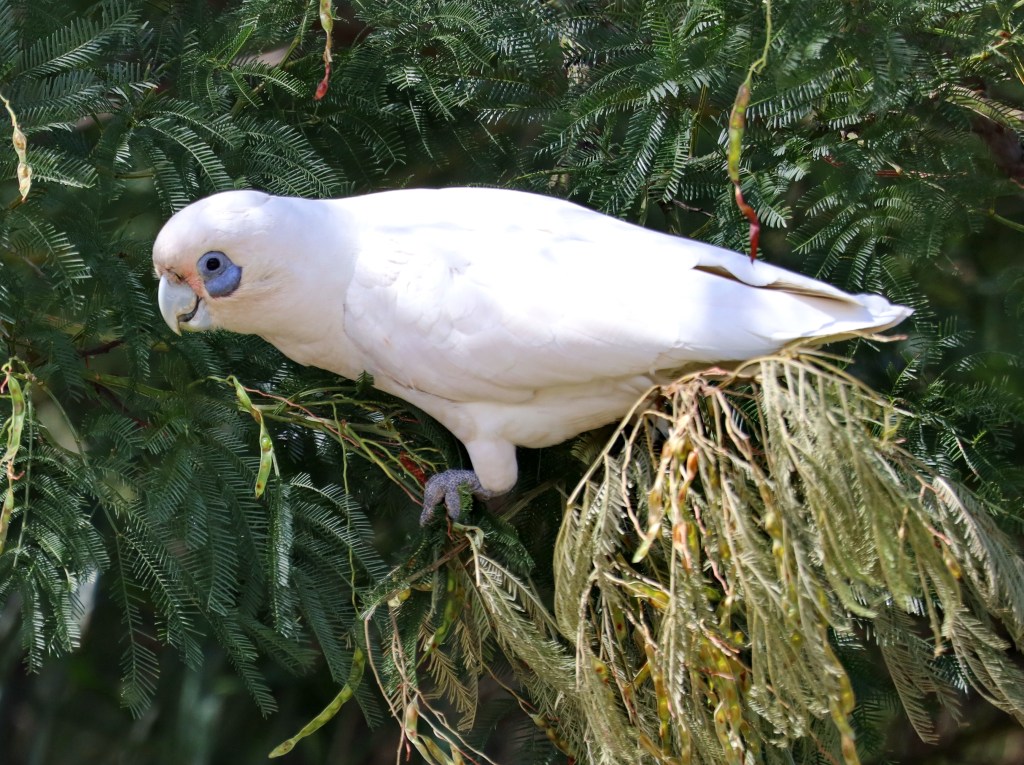
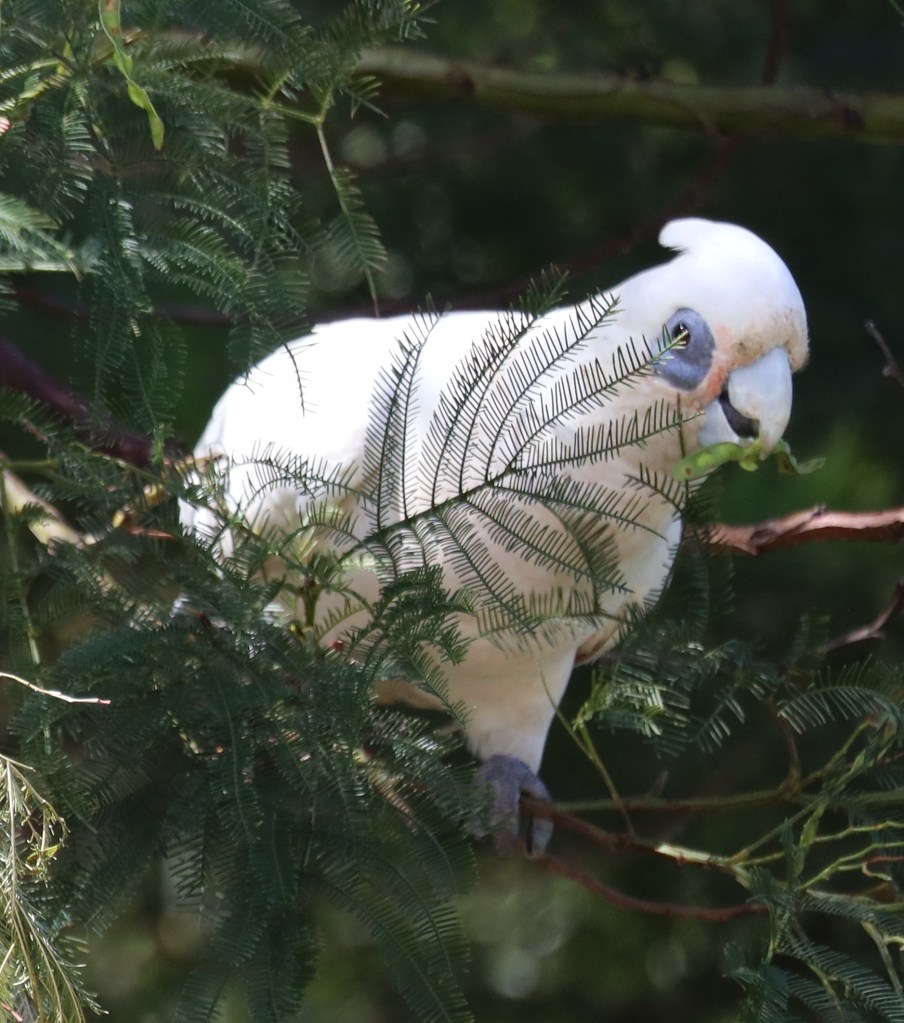
Lastly while we were coming back to our car we sighted this pair of Little Corella feeding on wattle seeds. Corella, similar to most Parrot family birds pair for life. They are form the largest flocks of any Australian bird and are essentially a flock bird interbreeding only separating in pairs to nest.
Have a wonderful week exploring your local birds and getting out-n-about.Remember my books are an excellent gift for your beloved child or bird loving friend or overseas family member.Click image below to find out more.
In a similar way to the Little Corella, mentioned above, God created man and woman to find a life long partner to enjoy each other and procreate as a shared expression of God’s love reflected in their joint love relationship commitment to one another. The above proverb echos the importance of keeping the marriage bed undefiled and relationships intact and trust unbroken, by not cheating on the partner. Much of the grief borne today is from broken relationships due to divisive selfish disrespectful behaviours. We are broken people living in a broken world, coming together, bringing our own personal baggage, from different dysfunction family backgrounds. It takes much Mercy and Grace from God, with a growing love and devotion to one another to bring understanding and trust to build a relationship that is a safe haven of healing peace and love that both can enjoy together.
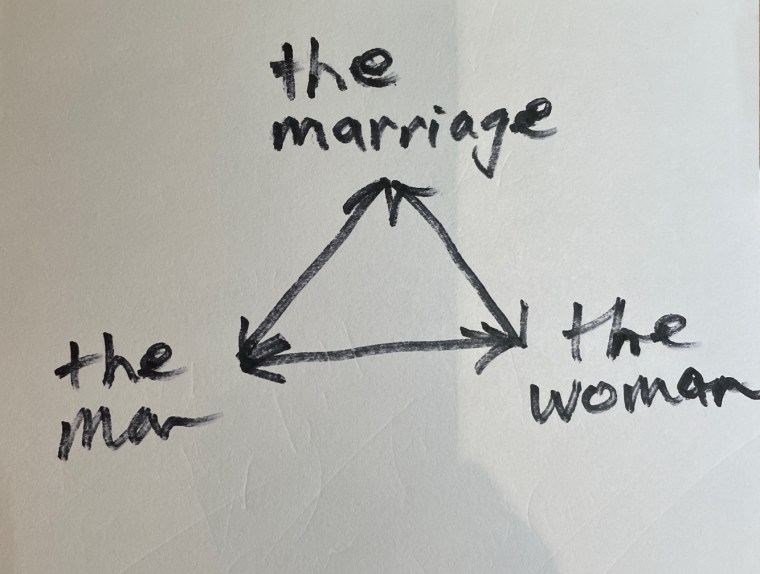
The marriage relationship is pictured as the pinnacle of a triangle shown below. Both partners need to focus on what is best for the marriage relationship rather than themselves, which will usually bring peace and happiness to both. It is about giving to one another in love over and above our own desires. The greatest joy and and fulfilment in life is found in fulfilling others and bringing joy to them.
“Do nothing out of selfish ambition or vain conceit. Rather, in humility value others [your life partner] above yourselves, not looking to your own interests but each of you to the interests of the other [your life partner].” – Philippians 2:3,4 (NIV)
My wife and I share a love of bird observing and bird photography which takes us all over Australia. We love sharing our experiences. Birds live in the beautiful parts of our country. We always get blessed with beautiful gifts of new birds and unexpected experiences each time we go out birding or just walking in the parks and reserves in our wonderful land. We love Australia, and the variety that each state and region offers in its wildlife and nature aspects. Join us in sharing our love. We have always found other birders enthusiastic and friendly people who appreciate the good things in life.
Love your video of the godwits foraging along the beach, they look very enthusiastic in their endeavours! Interesting to read about the grey tailed tattlers, I’ve never seen or heard of them before, they probably don’t come this far south. I always like seeing the oyster catchers on the beach, there are a few pieds and also sootys on the local beach here.
Thanks Sue, the Tattlers can be easily missed as they are smaller than the Godwits and tend to be very human shy. I think you have more Oystercatchers in Tassie than us, especially Sooties. Enjoy your week, hope the Spring weather brings on more birds for you.
Thanks BJ, yes man-made bird islands are quite the thing for birds breeding in populated areas where they can no longer nest near the shore without the threat of people and dogs. We are seeing more of these constructions as conservationists are given funds to build them. Most of the music I use for backing is my own compositions from some years ago, made for this purpose to avoid using other other peoples and attempt to not borrow from others.
Thanks Deborah, yes they are remarkable birds, and they go quite unnoticed by most people on the beaches. Sometimes people ask us what we are looking at, and why these birds, as they appear smaller than a gull. Thanks for your well wishes my friend, may your week bring many delights and much joy also. 🙂
Thanks Takami, we do enjoy seeing the return of our shorebirds each Spring and the number of Tattlers we saw was quite surprising, though Godwit numbers have dropped. Yes seasons of change certainly is the way to view life since nothing stays the same and everything is but for a time as God intended.
Introduce your child to our amazingand interesting birds.Over 100 beautiful photos with facts on how they do life, from which we learn helpful life skills.Click image above to Find out more and Buy the Beautiful Bird Book
Teens and Young Adults
Flight of a Fledgling similar to my first book uses the interesting lives of birds to teach valuable life skills.It is written expressly for teens and young adults as they prepare to leave the Nest. It helps them to better understand themselves and improve their personal relationships and better prepare for lifes challenges.Click on the above cover to find out more and purchase online.
Visit Broome Bird Observatory
Include in your next visit to Broome WA a couple of days on bird tours in Australia's Shorebird Capital at Broome Bird Observatory (BBO) in conjunction with Birdlife Australia, it is well worth it. Enjoy a self guided tour through their new and beautiful interactive discovery centre. Accommodation is available. Tours to various bird habitats: mangroves; bush and shoreline. BBO Wardens Sebastian and Jamie will make you welcome. While you are there check out the Beautiful Bird Book 'What Birds Teach Us'.
Help Save Our Birds
Where Can I Buy The Beautiful Bird Books?
BirdLife Australia’s Discovery Centre
When in Sydney, take a visit to BirdLife Australia's Discovery Centre and learn more about our birds at Newington Armory, 1 Jamieson St, Sydney Olympic Park NSW 2127.The Discovery Centre is open on Sundays from 10 AM to 3 PM, with free Bird Walks the last Sunday of each month @ 10:00 AM (no need to book!). For more info Phone: (02) 96471033.
Birding Around the Sydney Region
If you are a birder visiting the Sydney region for the first time, check out the many National Parks (NP) that surround it for the great variety of birds found there. The Visitor Information centres at The Royal NP, Botany Bay NP, Fitzroy Falls and Minnamurra NPs have information and also sell my Beautiful Bird Books. If you follow this blog, make a date with Aussiebirder before you arrive for info tips or a visit.













 aussiebirder
Love your video of the godwits foraging along the beach, they look very enthusiastic in their endeavours! Interesting to read about the grey tailed tattlers, I’ve never seen or heard of them before, they probably don’t come this far south. I always like seeing the oyster catchers on the beach, there are a few pieds and also sootys on the local beach here.
LikeLiked by 1 person
Thanks Sue, the Tattlers can be easily missed as they are smaller than the Godwits and tend to be very human shy. I think you have more Oystercatchers in Tassie than us, especially Sooties. Enjoy your week, hope the Spring weather brings on more birds for you.
LikeLiked by 1 person
Something about shorebirds is truly exciting! Beautiful photos, Ashley!
LikeLiked by 1 person
Thanks Donna, I agree !
LikeLiked by 1 person
A man-made bird island?! How unique! I love the musical 🎶 accompaniments and videos with the sounds of the waves. Delightful!
LikeLiked by 1 person
Thanks BJ, yes man-made bird islands are quite the thing for birds breeding in populated areas where they can no longer nest near the shore without the threat of people and dogs. We are seeing more of these constructions as conservationists are given funds to build them. Most of the music I use for backing is my own compositions from some years ago, made for this purpose to avoid using other other peoples and attempt to not borrow from others.
LikeLiked by 1 person
Fascinating! Both about the bird islands and about your music!!🎶
LikeLiked by 1 person
What an incredible flight they make each year to get there!!
Enjoy your Spring birds, Ashley and happy birding!
LikeLiked by 1 person
Thanks Deborah, yes they are remarkable birds, and they go quite unnoticed by most people on the beaches. Sometimes people ask us what we are looking at, and why these birds, as they appear smaller than a gull. Thanks for your well wishes my friend, may your week bring many delights and much joy also. 🙂
LikeLike
Hello Ash,
So delighted to see the shorebirds have returned and you and your wife were blessed with wonderful birding encounters.
Seeing our avian friends each season remind us that that the seasons do change and there is a presence greater than us…
Will be updating you soon, always in our thoughts.
LikeLiked by 1 person
Thanks Takami, we do enjoy seeing the return of our shorebirds each Spring and the number of Tattlers we saw was quite surprising, though Godwit numbers have dropped. Yes seasons of change certainly is the way to view life since nothing stays the same and everything is but for a time as God intended.
LikeLiked by 1 person