Australian Birds
‘Spring On The Nesting – Eastern Rosella
Yes Spring has cycled around again and lots of courting, mating and nest construction is under way in our part of the world, as the most industrious productive time of […]
Welcome to our website for the study and appreciation of Australian birds and their interesting behaviours.
Yes Spring has cycled around again and lots of courting, mating and nest construction is under way in our part of the world, as the most industrious productive time of […]
Yes Spring has cycled around again and lots of courting, mating and nest construction is under way in our part of the world, as the most industrious productive time of year for many birds, particularly the passerines gets underway. However, let it be known that many Australian birds nest in the colder Winter months also, for example the Superb Lyrebird. While we were in Wagga Wagga again by Lake Albert we sighted a pair of Eastern Rosella checking and guarding their next in a River Gum by the lake. These extremely human shy birds usually fly off on our approach, but because they are nesting they are captive to the hole on the tree. Parrots, similar to owls, Kookaburras and Kingfishers choose to nest in tree holes.
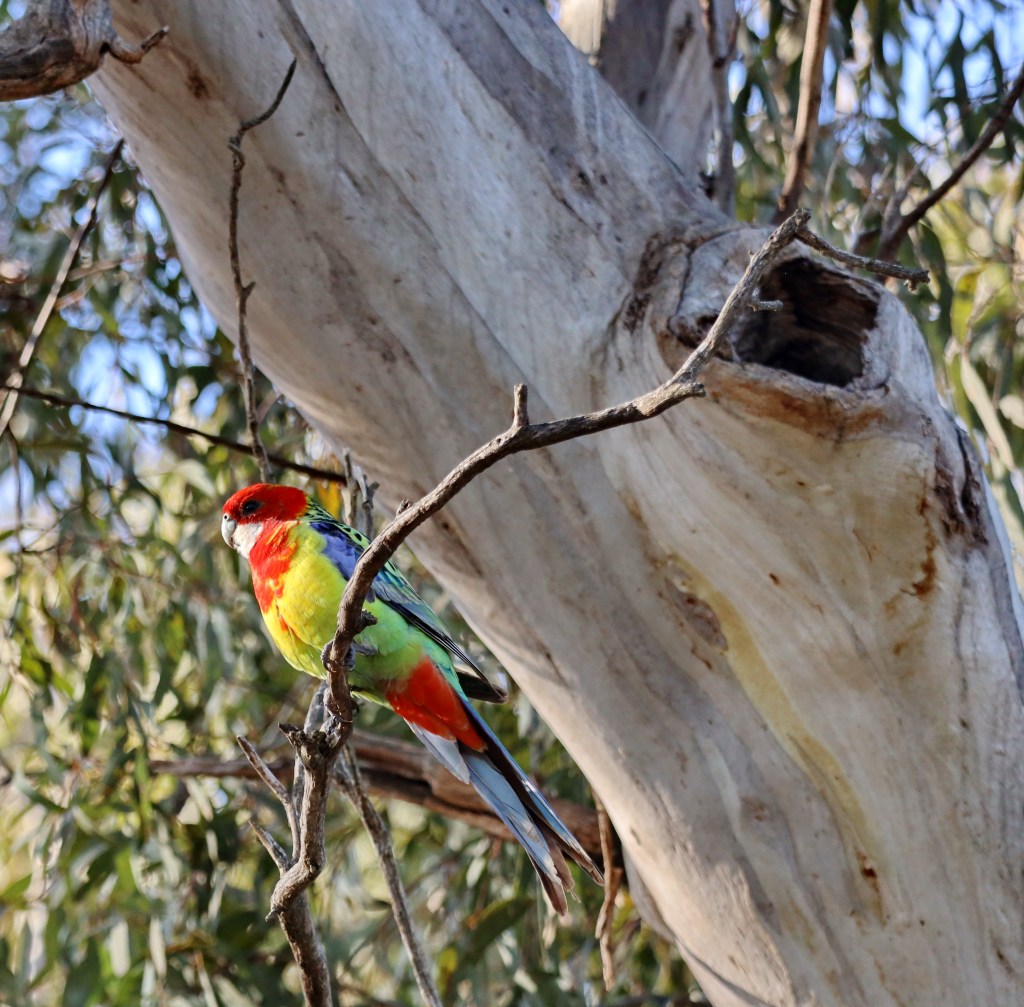


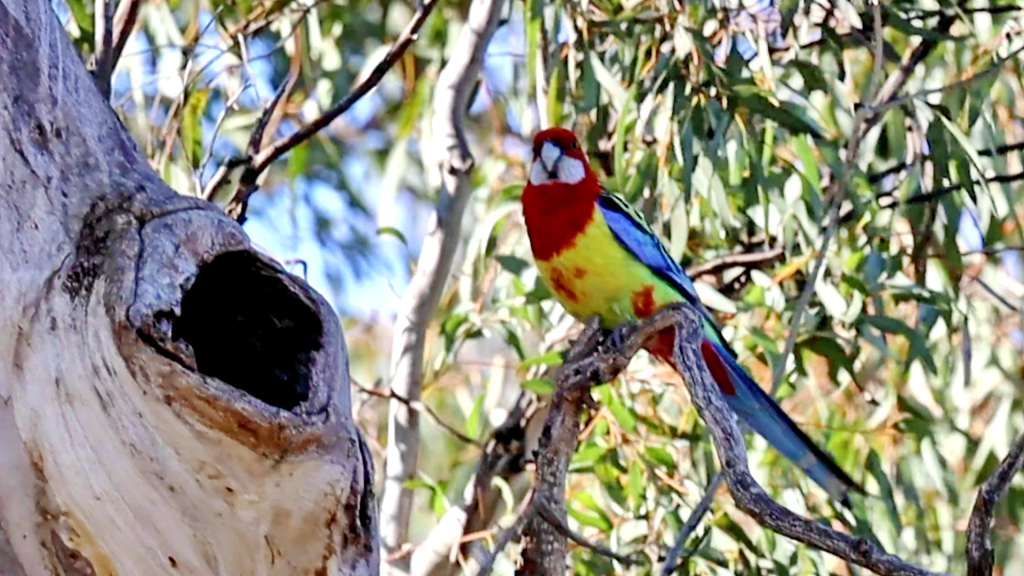

Look carefully at this video clip note firstly the lovely call of the female calling from a branch from behind the tree and also the wing and tail flicking which is a classic warding off behaviour of many of the Parrot family and performed with much more aggressive vigor by the Rainbow Lorikeets when they are nesting. Eastern Rosella are found only in the south eastern Australian mainland including NSW and Victoria,
Some of the other species seen by the lake were the Dusky Woodswallow, which we find nesting here each Spring and Summer.


The sound of our only warbler, the tiny Australian Reed Warbler can be heard calling from their nests deep within the reeds as their clamorous sound warding off other reed warblers, hence its previous name Clamorous Reed Warbler. They are a challenge to photograph as they fly rapidly from the reeds to nearby trees in search of food for the nest.


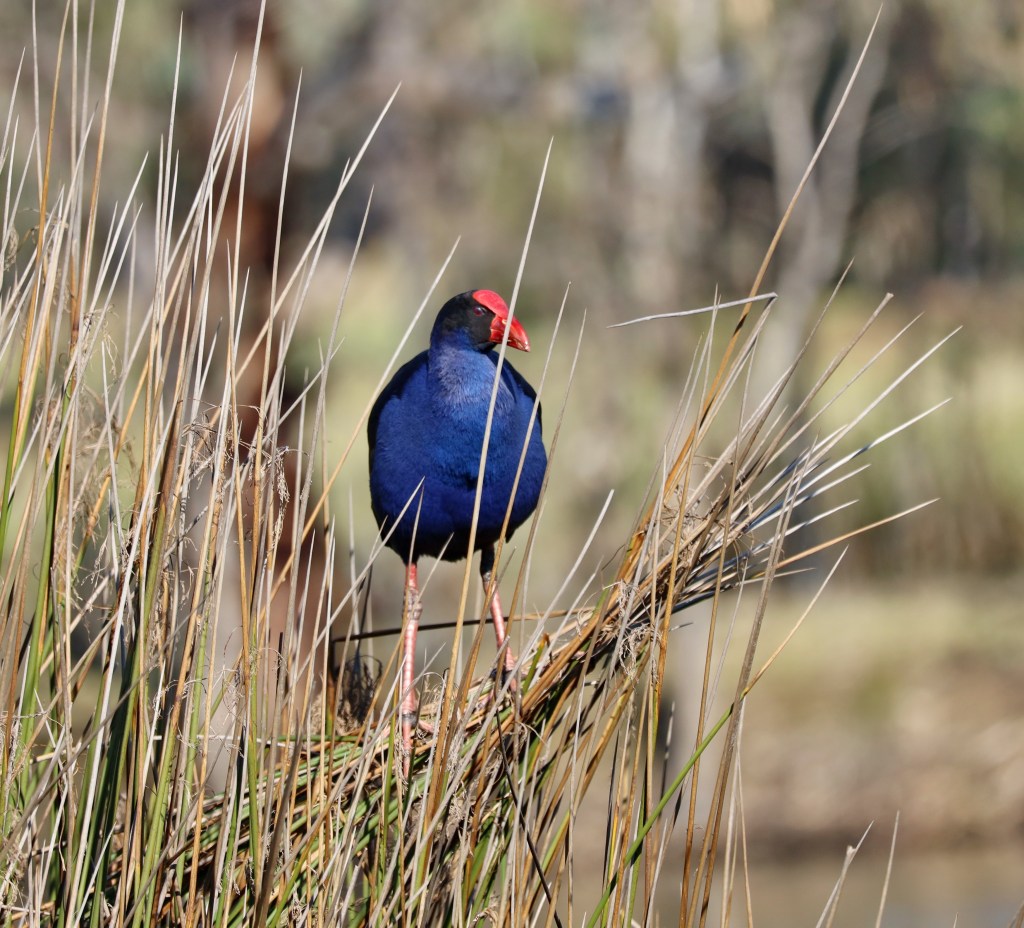
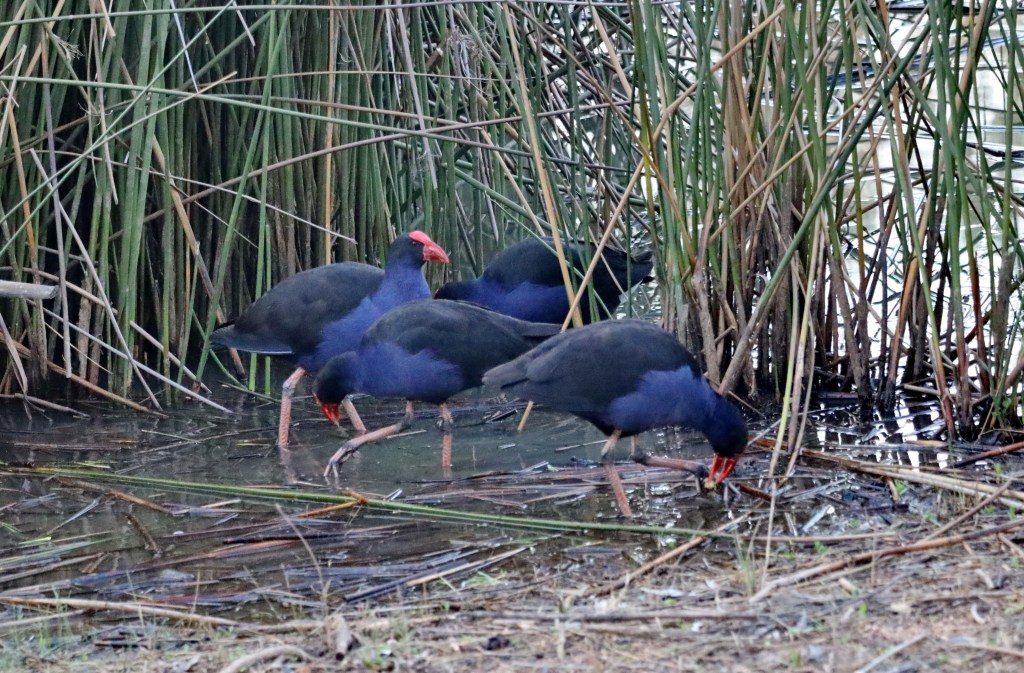
Australasian Swamphen previously the Purple Swamphen are feeding by the waters edge, as one keeps lookout on top of the reeds.
The Superb Fairy-wren male is in his beautiful breeding plumage again as another sign of Spring, accompanied by his not so fancy female. There are many families of Fairy-wren on the waters edge in amongst the reeds.


The tiny White-plumed Honeyeater are also present high in the blossom of the trees. This honeyeater is the main honeyeater found west of the ranges in the dryer regions of the west.
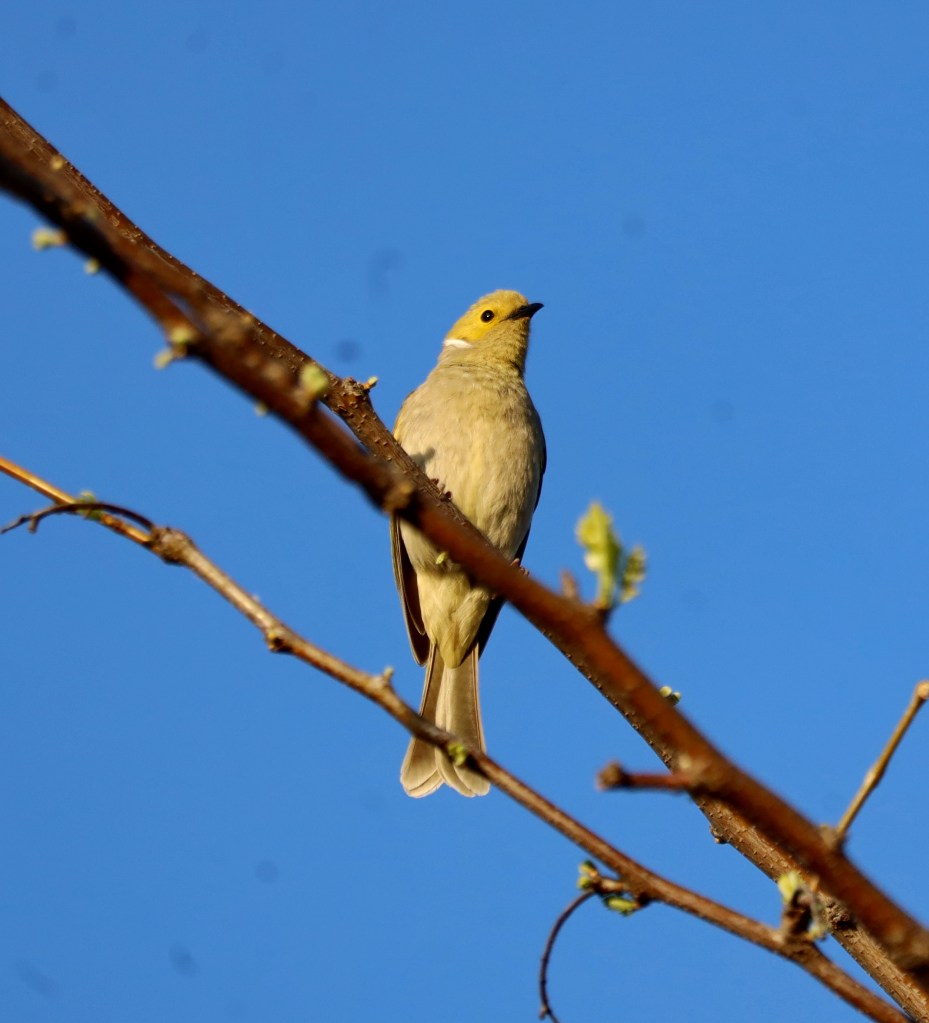
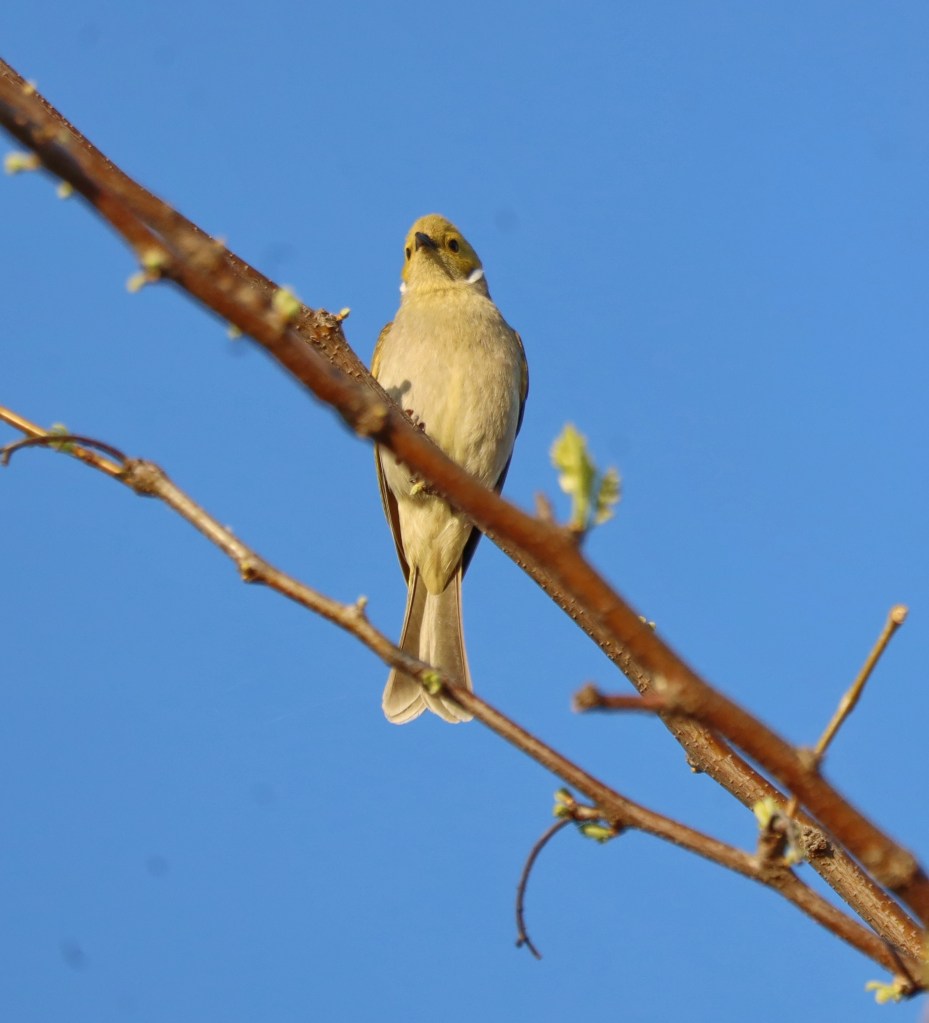
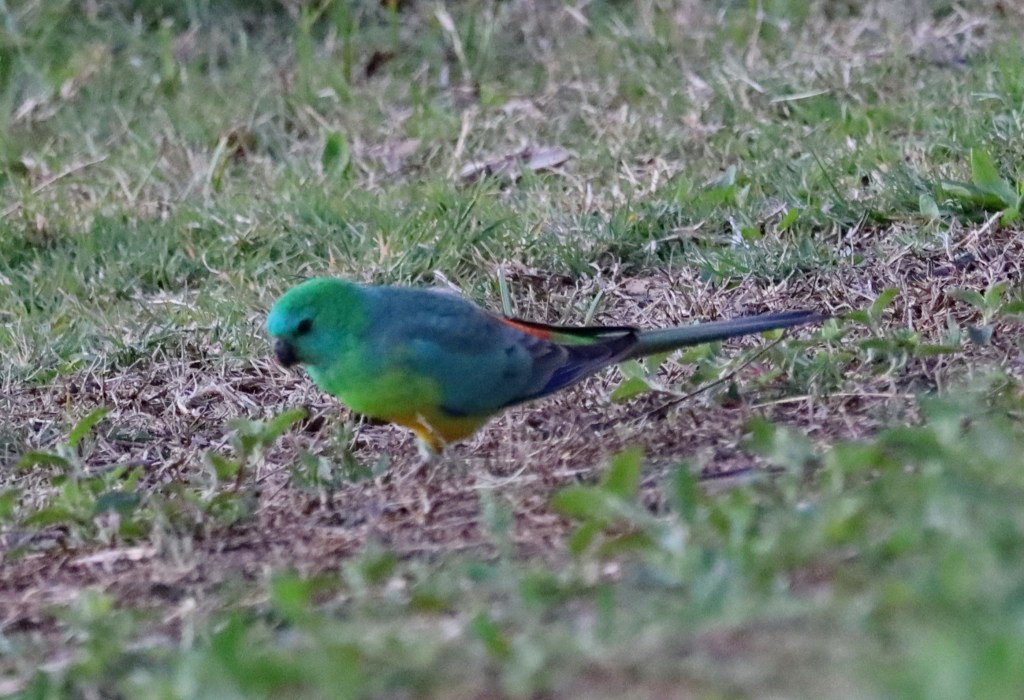
Sadly on this occasion we did not have success in seeing the Yellow Rosella found in this area, but we did see the beautiful male Red-rumped Parrot, a parrot prolific to the areas west of the Ranges. These are often seen grazing on grass seed around the grassy banks of the lake.

Enjoy a wonderful week of birding and adventure as you get out and about. More studies are confirming what we knew all along: that birding is a very healthy pastime for maintaining physical, emotional, mental and even spiritual wellbeing. It ground us and helps lower blood pressure, ease stress and clear burdened and depressed mind states, restoring a sense of peace and wholeness. Find out more on my Benefits of Birding page here.

These above qualities are God’s own loving character, which was lost to the human race when sin (selfishness) entered our beautiful world, resulting in many feeling broken, fearful, insecure and rejected. How we model love to our children, spouse and friends will help restore what was lost, Jesus came for this very purpose. To seek and to save the lost (Luke 19:10)
Sadly we are all born lost from relationship with our loving heavenly Father Creator God, because of the lostness of our parents and teachers in our life who are also lost, and unable due to their brokenness to model God’s perfect love to us.Unless they/we come into the light of God’s saving mercy and grace being found by Jesus and restored to the loving relationship with our One True God, we are left to personally discover God through Jesus for ourselves.

The Good Shepherd currently seeks out his lost sheep here on earth, those who realise they are broken and can not fix or save themselves. They realise that mankind does not hold the answers to life, and that there is a great deception in the secular humanistic worldly philosophy and its so called ‘sciences’. Science can examine but cannot make whole what is lost and broken in the hearts and minds of people. It is only when Jesus the Good Shepherd finds and rescues us, that we find him, that we are restored and made truly whole, secure through faith in his death and resurrection, to a life of eternal hope and fulfilment. Christians aren’t perfect, they are just forgiven. Each one is a work in progress, which will be perfectly completed and restored at Jesus return to earth.
““I am the good shepherd. The good shepherd lays down his life for the sheep.” – John 10:11 (NIV)


Adv. Dip. in Counselling and Family Therapy.
Member of Birdlife Australia
To introduce people to our unique Australian birds,
And learn from them how to live a healthy and happy life.
NOTE: All photos, videos and music used on this website are photographed, composed, performed by the site owner and remains his copyrighted property, unless otherwise stated. The use of any material that is not original material of the site owner is duly acknowledged as such. © W. A. Hewson 2015, 2016, 2017, 2018, 2019, 2020, 2021, 2022, 2023, 2024, 2025.

My wife and I share a love of bird observing and bird photography which takes us all over Australia. We love sharing our experiences. Birds live in the beautiful parts of our country. We always get blessed with beautiful gifts of new birds and unexpected experiences each time we go out birding or just walking in the parks and reserves in our wonderful land. We love Australia, and the variety that each state and region offers in its wildlife and nature aspects. Join us in sharing our love. We have always found other birders enthusiastic and friendly people who appreciate the good things in life.
 Introduce your child to our amazing
and interesting birds.
Over 100 beautiful photos with
facts on how they do life, from
which we learn helpful life skills.
Click image above to Find out more and Buy the Beautiful Bird Book
Introduce your child to our amazing
and interesting birds.
Over 100 beautiful photos with
facts on how they do life, from
which we learn helpful life skills.
Click image above to Find out more and Buy the Beautiful Bird Book

Flight of a Fledgling similar to my first book uses the interesting lives of birds to teach valuable life skills.It is written expressly for teens and young adults as they prepare to leave the Nest. It helps them to better understand themselves and improve their personal relationships and better prepare for lifes challenges. Click on the above cover to find out more and purchase online.


 When in Sydney, take a visit to BirdLife Australia's Discovery Centre and learn more about our birds at Newington Armory, 1 Jamieson St, Sydney Olympic Park NSW 2127.The Discovery Centre is open on Sundays from 10 AM to 3 PM, with free Bird Walks the last Sunday of each month @ 10:00 AM (no need to book!). For more info Phone: (02) 96471033.
  If you are a birder visiting the Sydney region for the first time, check out the many National Parks (NP) that surround it for the great variety of birds found there. The Visitor Information centres at The Royal NP, Botany Bay NP, Fitzroy Falls and Minnamurra NPs have information and also sell my Beautiful Bird Books. If you follow this blog, make a date with Aussiebirder before you arrive for info tips or a visit.
 aussiebirder
What amazing gorgeous birds you have there. The coloration of the Roselle is similar to our painted bunting, though a much larger bird than ours. Thank you for sharing the fantastic photos, video, and descriptions.
LikeLiked by 1 person
Thanks Donna, we are blessed with much colour in our birds, especially our Parrots of which we have so many species. The sad thing is that most of them live in dry arid inland regions of our vast country.
LikeLike
They are beautiful birds. I enjoyed the video, Ashly. Thanks for sharing these wonderful birds with us. I hope your upcoming week is a good one!
LikeLiked by 1 person
Thanks Deborah, I enjoy sharing our beautiful birds they are such a delight to us. Praying your week is enjoyable also my friend 🙂
LikeLiked by 1 person
Your rosellas are such a bright delight, fabulous photos, and I much enjoyed your video too. Of course, I loved your other birds too, Ashley!
LikeLiked by 1 person
Thanks Donna, they are so beautiful in the sunlight. Thanks again for your encouraging comment my friend.
LikeLiked by 1 person
Beautiful photos of the eastern rosella Ashley, they are quite stunning in their bright colours. I occasionally get to see one or two flying overhead here where I live. And of course there are many bright blue wrens to be seen hopping about on the grassy areas in the parks with their harem in tow!
LikeLiked by 1 person
Thanks Sue, my apologies for overlooking the presence of the Eastern Rosella in Tassie. You have the third subspecies race: diemenensis there, so it may have some miner differences to ours which is the nominative race. It is wonderful that the Fairy-wrens do so well when they are victim to much predation by raptors and other omnivorous large birds. Thankfully they are prolific breeders. Enjoy your weekend my friend.
LikeLiked by 1 person
Thanks Ashley, you too. 🙂
LikeLiked by 1 person
Wow, you have such colorful birds over there!!
LikeLiked by 1 person
Thanks Lisa, we are blessed with much colour in our birds, the Parrot family in particular of which we have many species. Sadly most of them prefer living in the safety of the hot arid and desert regions rather than the coast, as most do not prefer humans, and their seed sources are more plentiful where humans have not cleared.
LikeLiked by 1 person