Australian Birds
Purpose Built Nests – Intelligent Design 2
As the weather has not been the best for birding I thought it good to continue my thread on Intelligent Design, only this time with nesting variations among species. We […]
Welcome to our website for the study and appreciation of Australian birds and their interesting behaviours.
As the weather has not been the best for birding I thought it good to continue my thread on Intelligent Design, only this time with nesting variations among species. We […]
As the weather has not been the best for birding I thought it good to continue my thread on Intelligent Design, only this time with nesting variations among species. We may wonder how birds know what kind of nest to build as there are so many variations. Birds learn from observation, watching their parents, they also are given a wisdom that their particular species passes on genetically, just like us. Our great Creator God has granted the wisdom for nest building, which is the single most complex task a bird must complete in order to nest. As with us humans, there are those that are wise and have learned attentively and thought carefully about where to build and what materials to use and where to source them from, and those of lesser skill which sometimes leads to nesting failures.
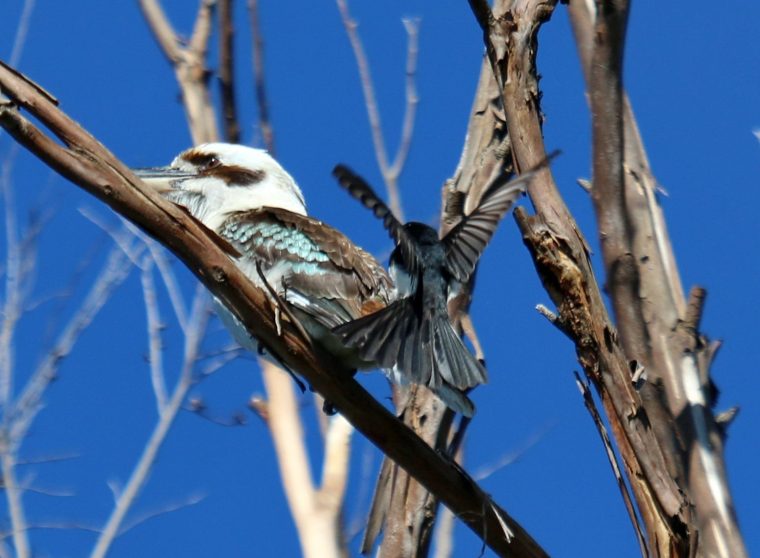
In my feature photo the Willy Wagtail (a fantail flycatcher) has a bowl nest securely covered in spider’s web, able to hide the nestlings well. It has placed the nest in a sheltered area. They have a high success rate and become quite brave, bold and aggressive during nesting season, driving off much larger nestling predators such as Laughing Kookaburras. Have you ever thought how difficult it must be to form a perfectly round nest with just a beak, collecting and sealing it with spider’s web ?
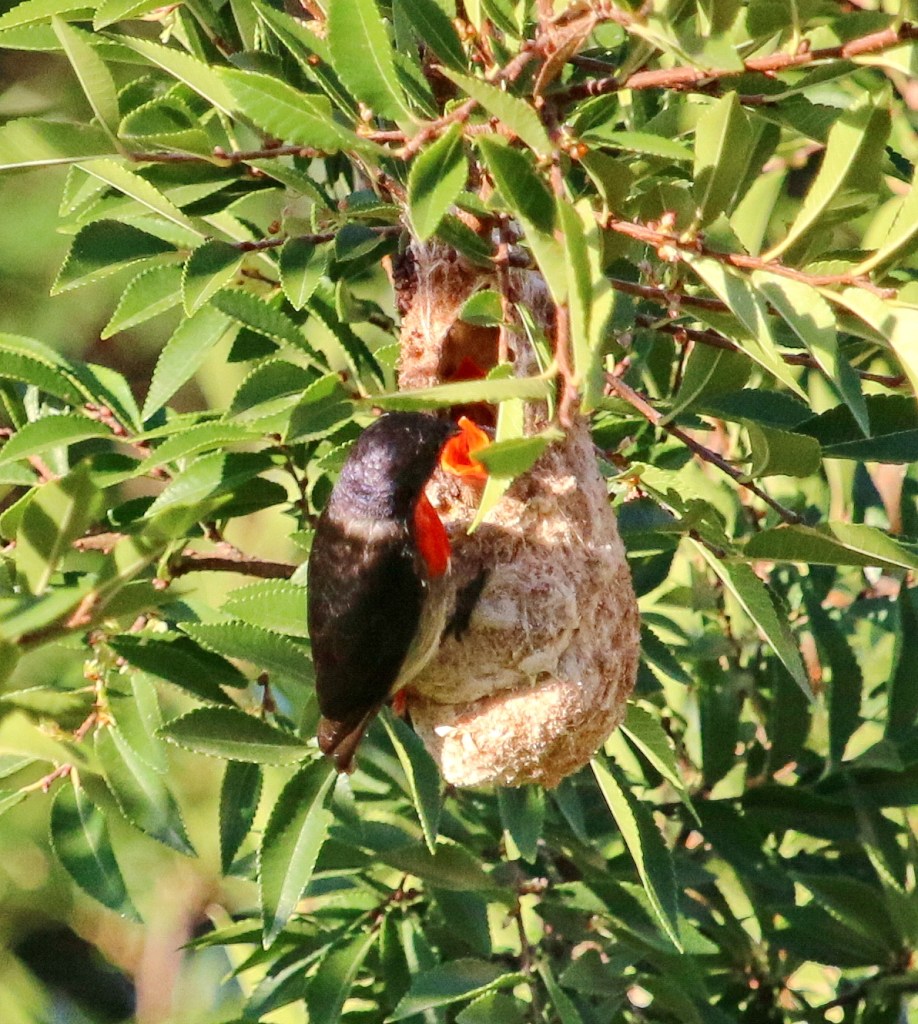
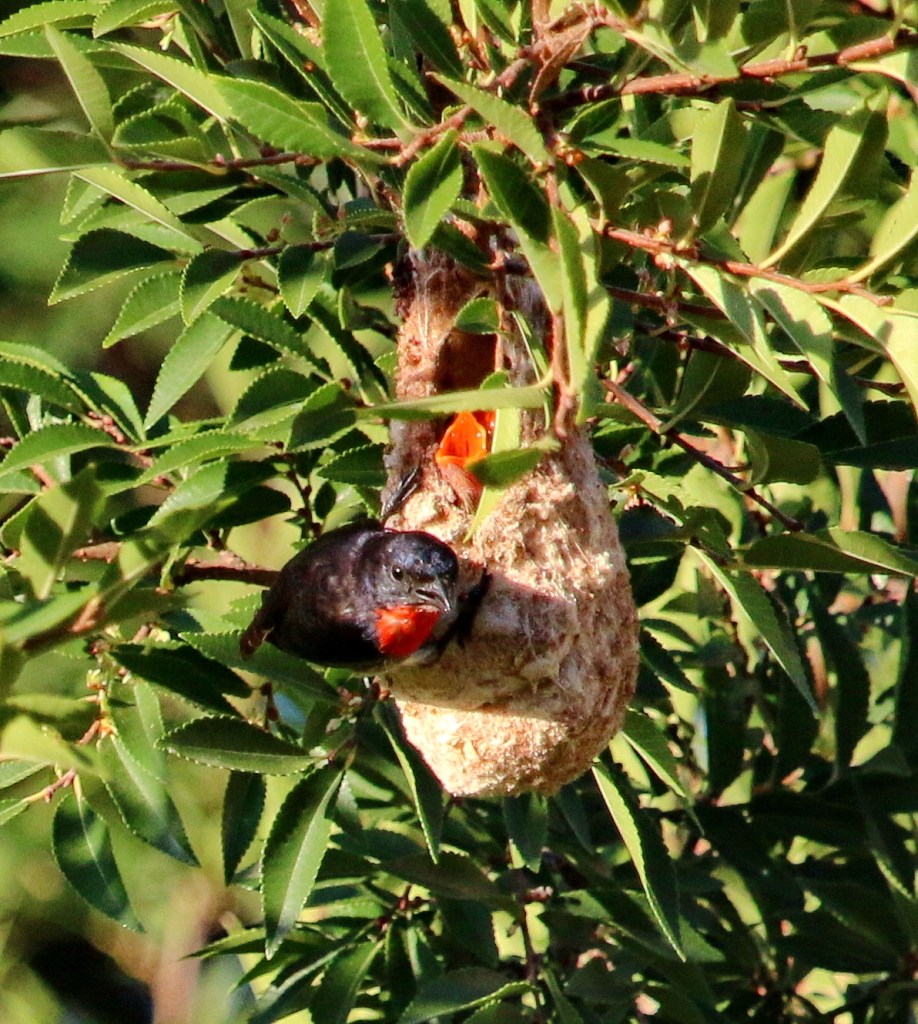
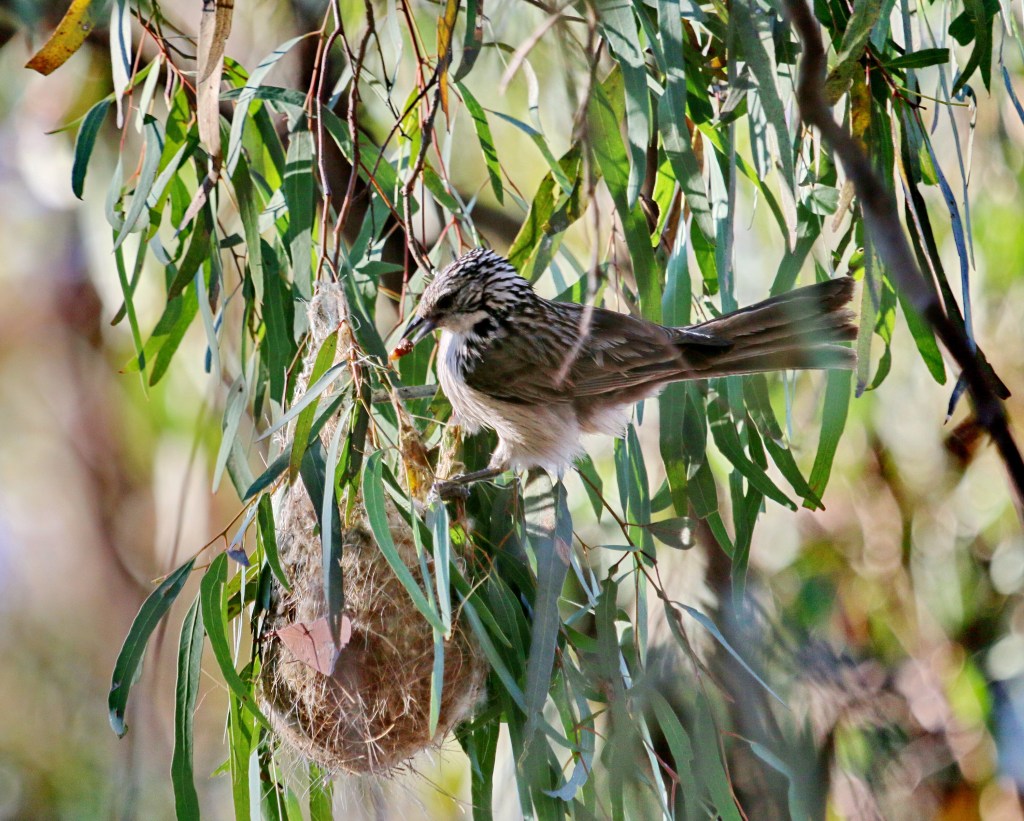
Pocket nests are similar nests for very small birds, which are difficult for larger predator birds to access, having a tiny opening at the top. The Mistletoebird and Striped Honeyeater are good examples. You can see the red open mouths of the chicks in the nest.
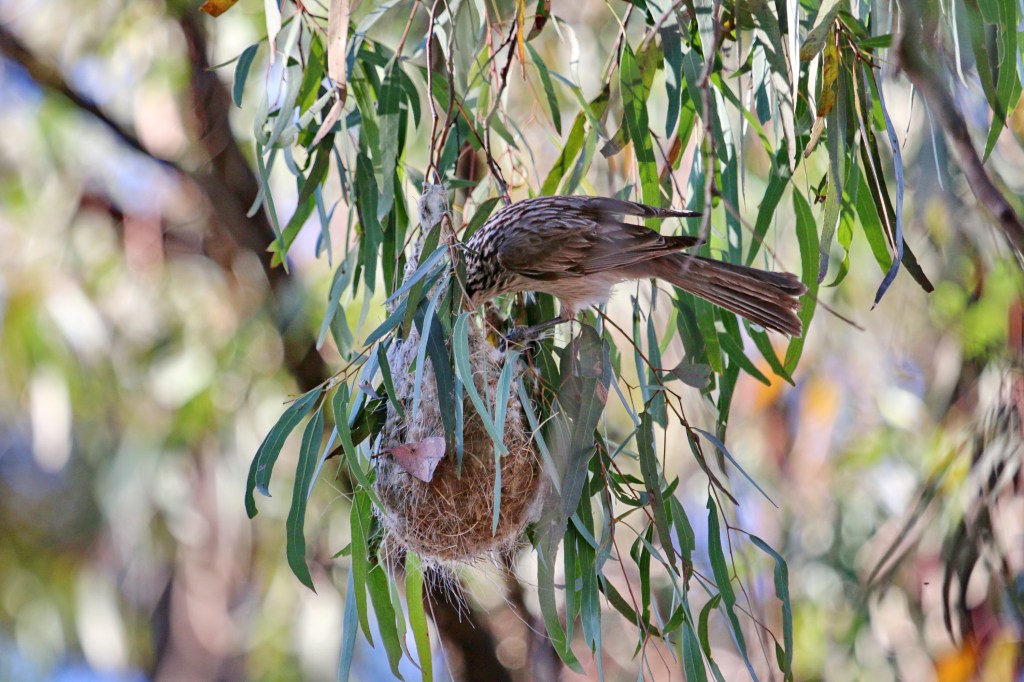
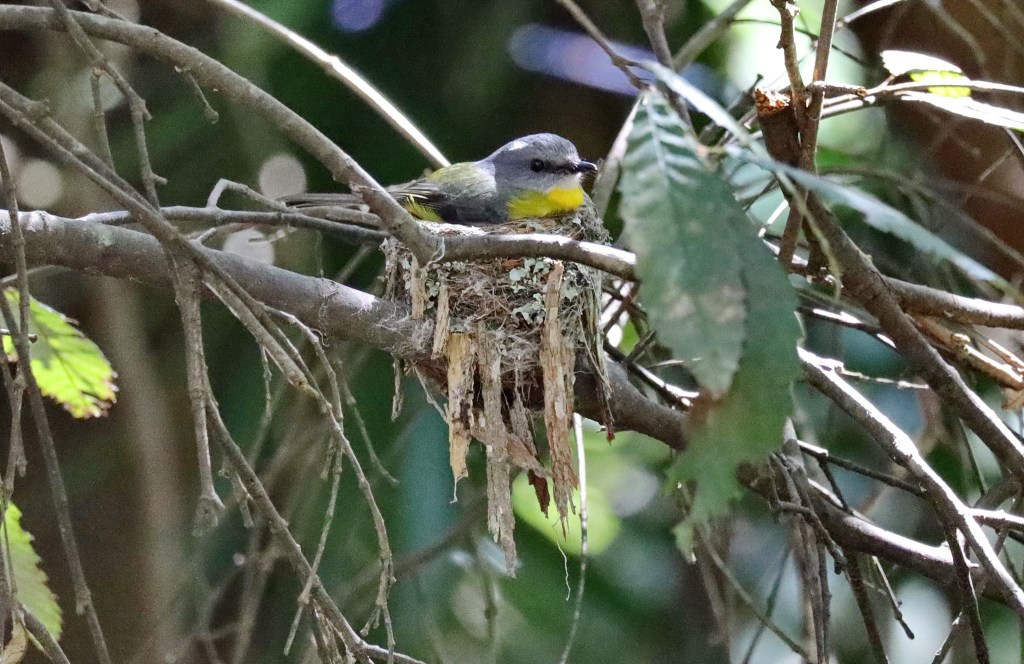
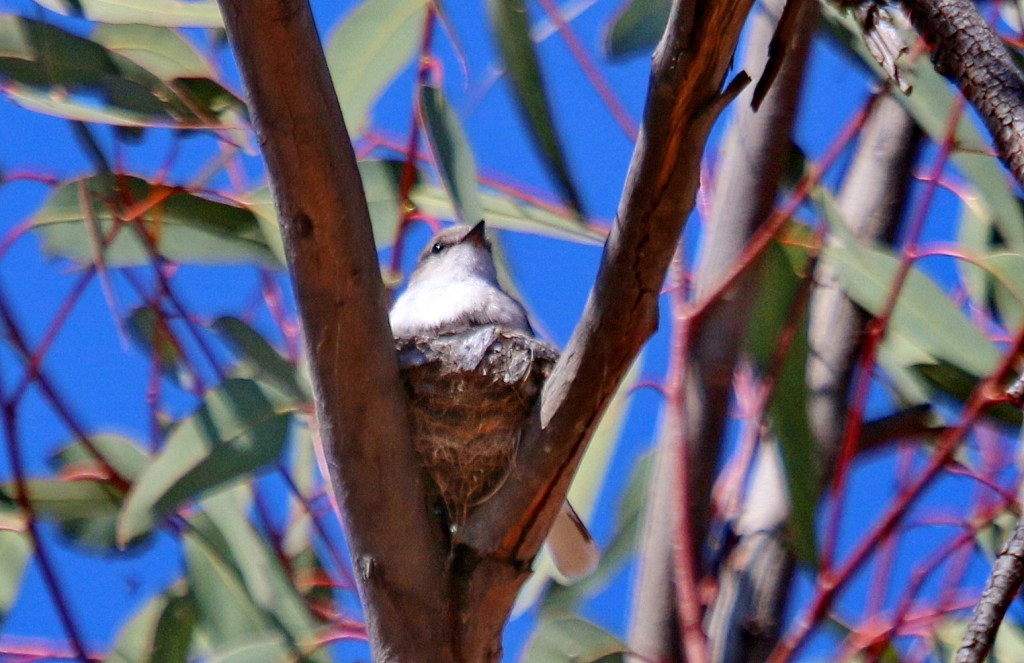
The simple bowl nest is one of the most popular for Australian bush passerines which is well exampled by the Eastern Yellow Robin and Jacky Winter. In the following video I use the nest of the Eastern Yellow Robin to show how birds keep their nest clean. Have you ever wondered why bird nests are always clean and never full of bird poo from the nestings ?
How birds keep their nests clean
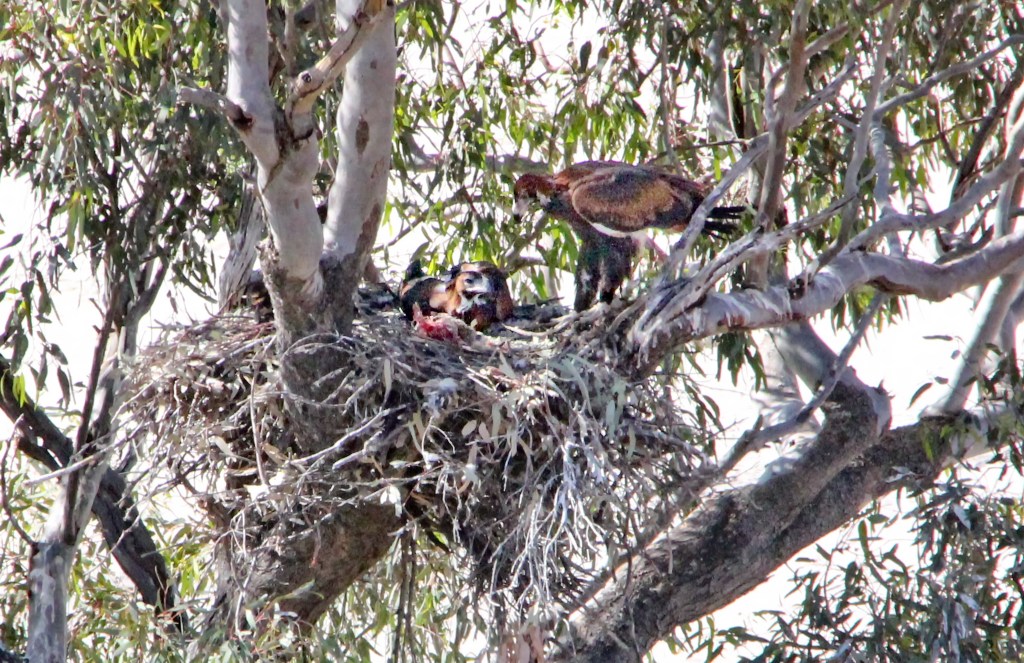
Larger Stick nests lined with feathers and grasses are popular for larger birds. Large tree birds such as Australian Magpie, Currawong and also some large waterbirds such as Black Swan, Wedge-tailed Eagle, White-bellied Sea-Eagle, Grey-crowned Babbler, Southern Osprey and Magpie Goose. In recent years clever Magpies have incorporated manmade items such as wire into nest building.
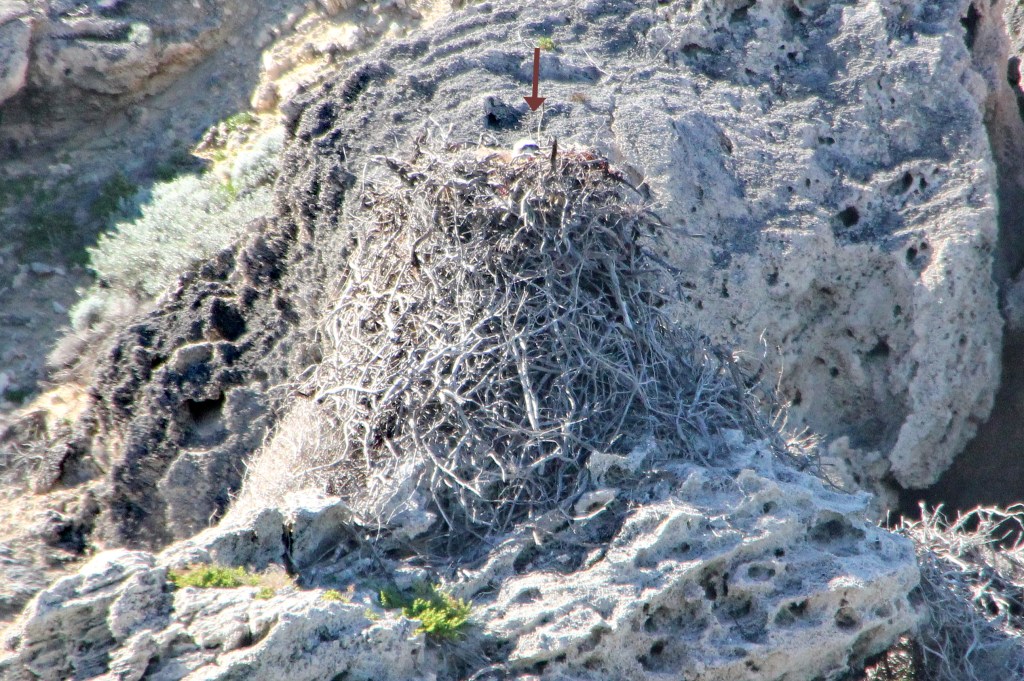
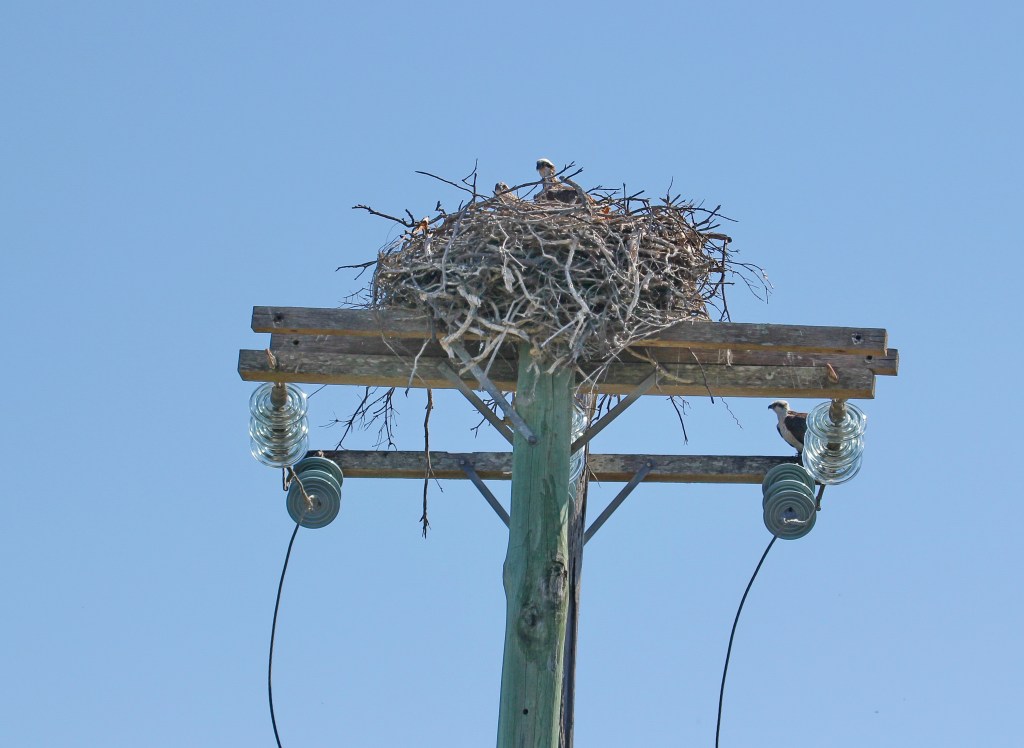
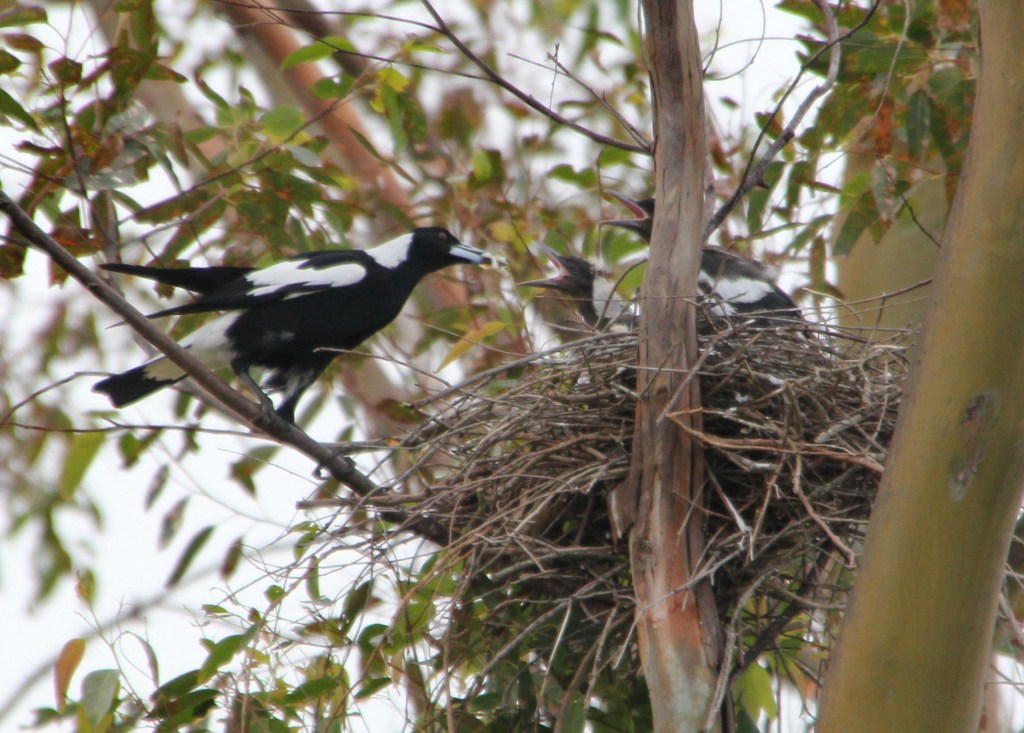
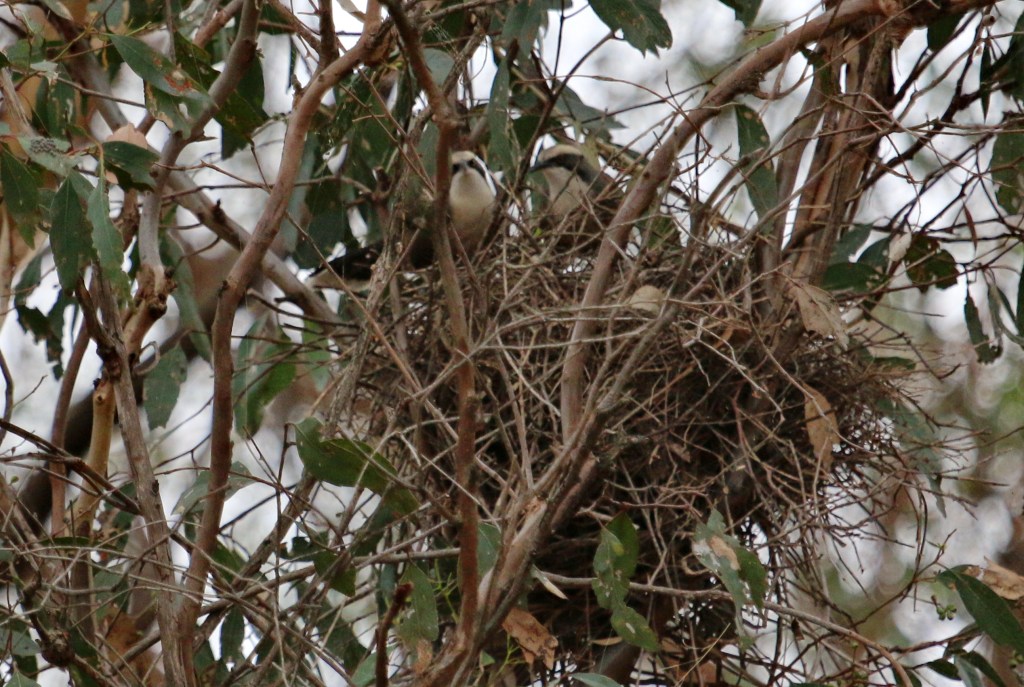
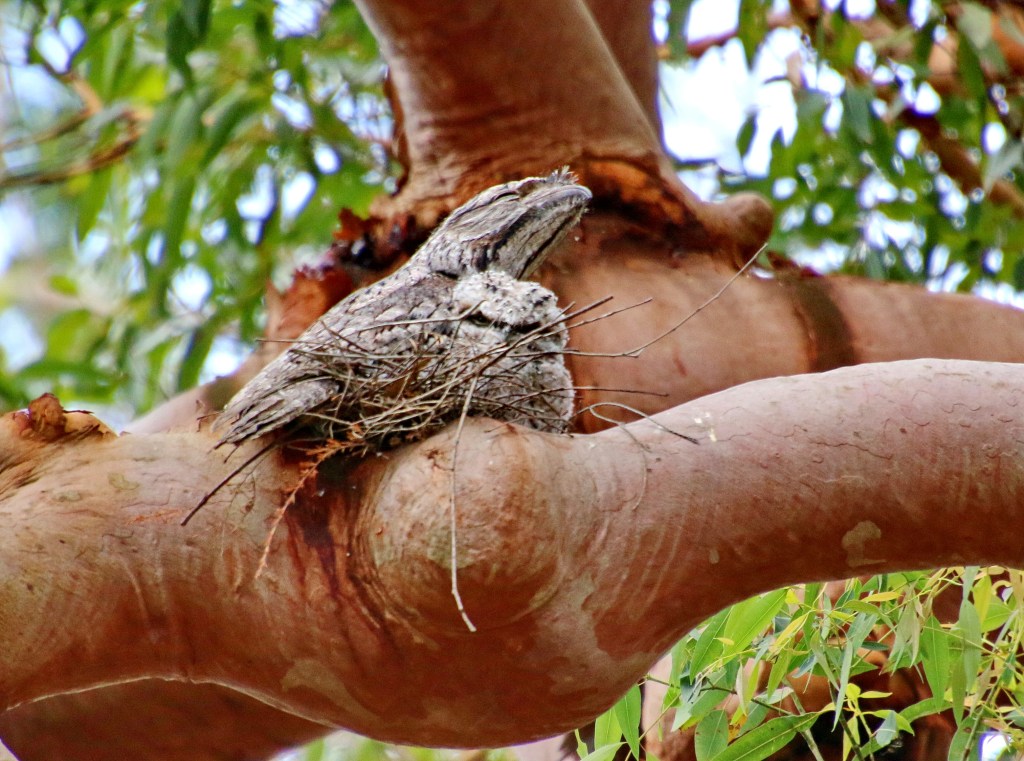
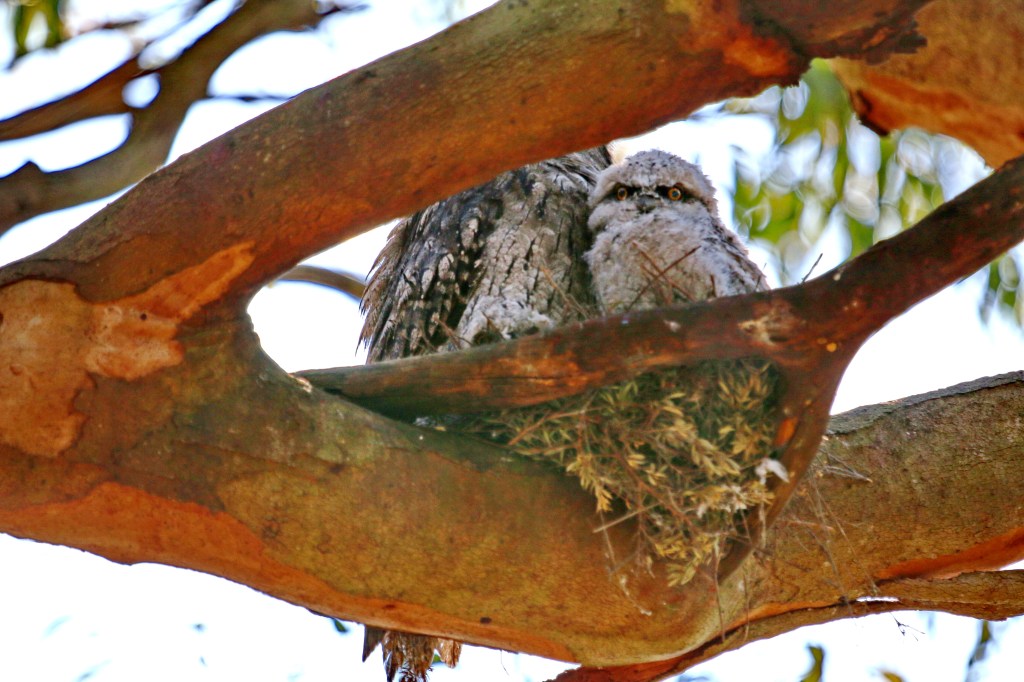
Some birds are very poor nesters and often their babies may fall from the tree to the ground requiring human intervention to replace them to the nest. The Tawny Frogmouth is a good example having a very simple nest on a few sticks balanced in a tree fork, or even worse just balanced on the branch of an angophora tree
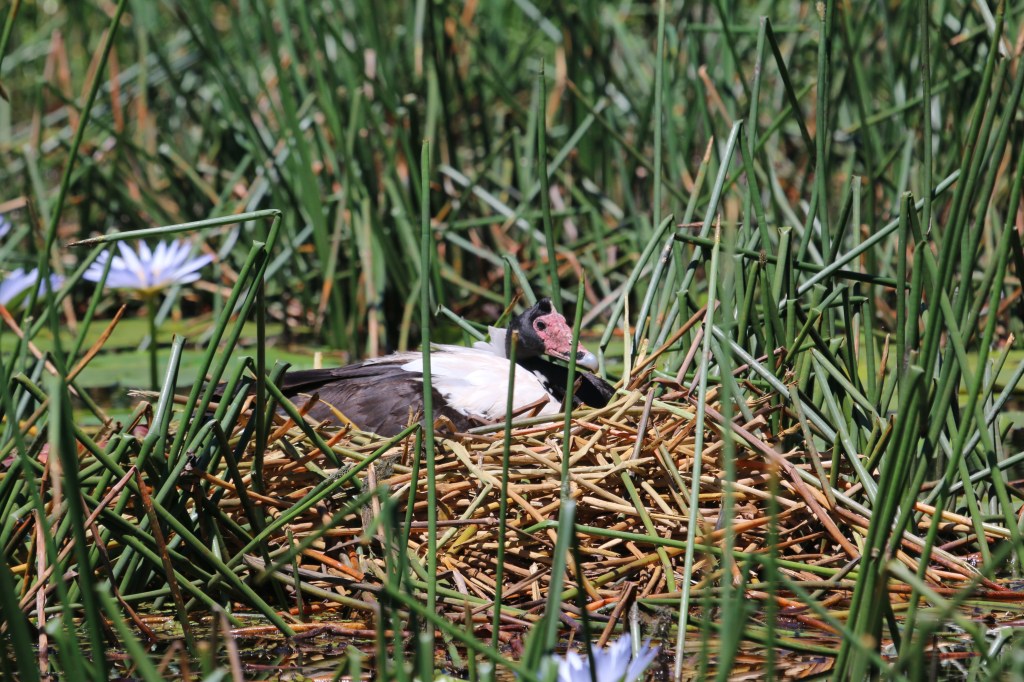
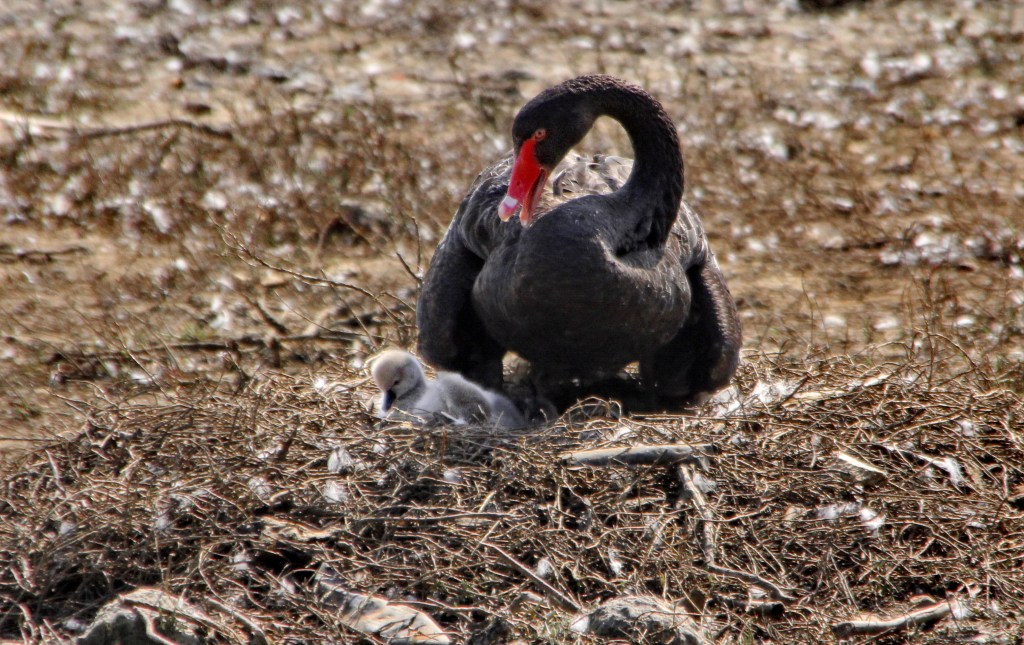
Many ducks and other shorebirds and ocean birds nest near their food source as do all birds as they need fresh water, easy digesting foods, and reasonable protection from the elements for their young. However, the term ‘sitting duck’ is well placed for many waterbirds that nest exposed in the open by the river or lake hey feed from and are subject to frequent threat of predation by raptors including Falcons, Harriers, Kites and Eagles and also Currawong, Butcherbird, Kingfisher and Kookaburra.
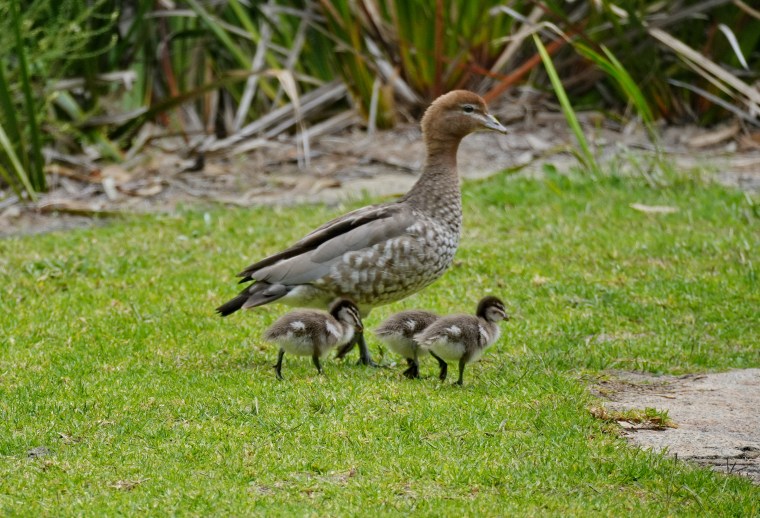
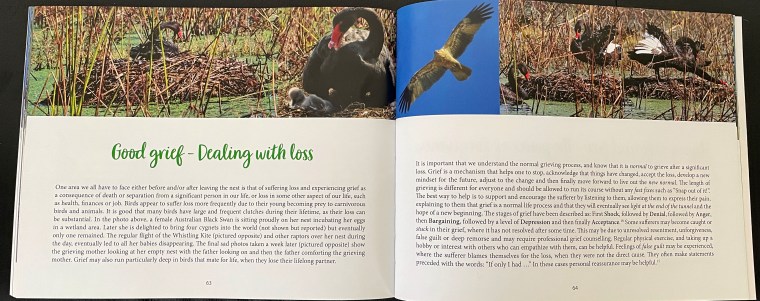
Hence, it is wise that our All Wise Intelligently Designing Creator gives large clutches of young to many of these birds. For example Wood Ducks may have 12 to 14 young at a time and may only have one to six raise to maturity. Despite the protective parents efforts, bird eating predators will succeed. My book “Flight of a Fledgling” deals with loss (grief) which is a very important experience we all will experience in our lifetime.
The Australian Black Swan is used as my example of predation by a Whistling Kite when it looses all of its signets, and the visible grief of mother Swan is real and observable, as father swan seeks to comfort her. This chapter is very helpful for teaching us to deal with our grief. Click on the page example below to find out more, as this book can be purchased securely online. It will open in a new tab.
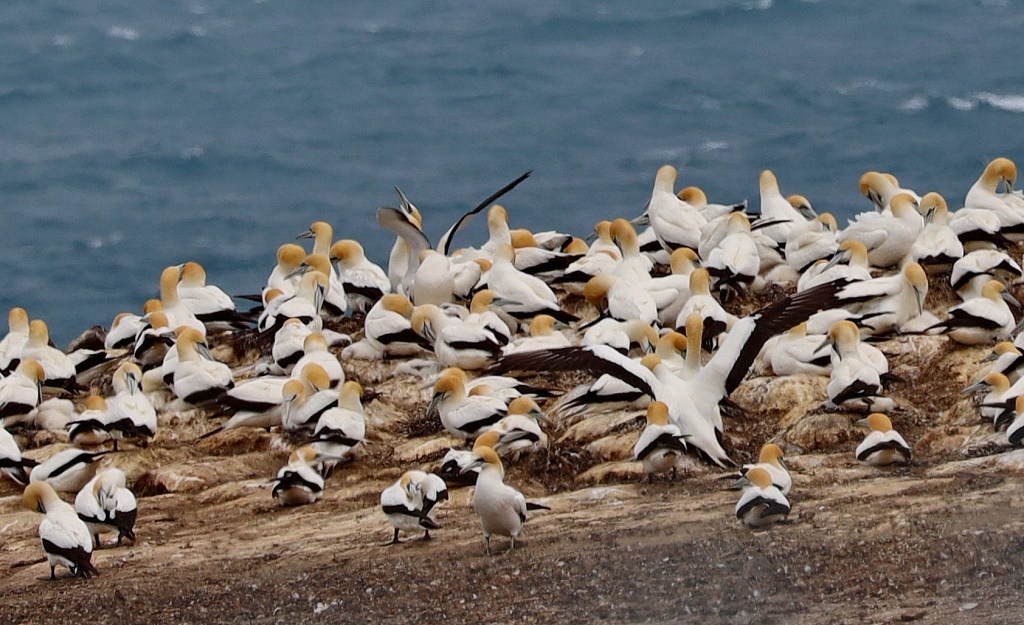
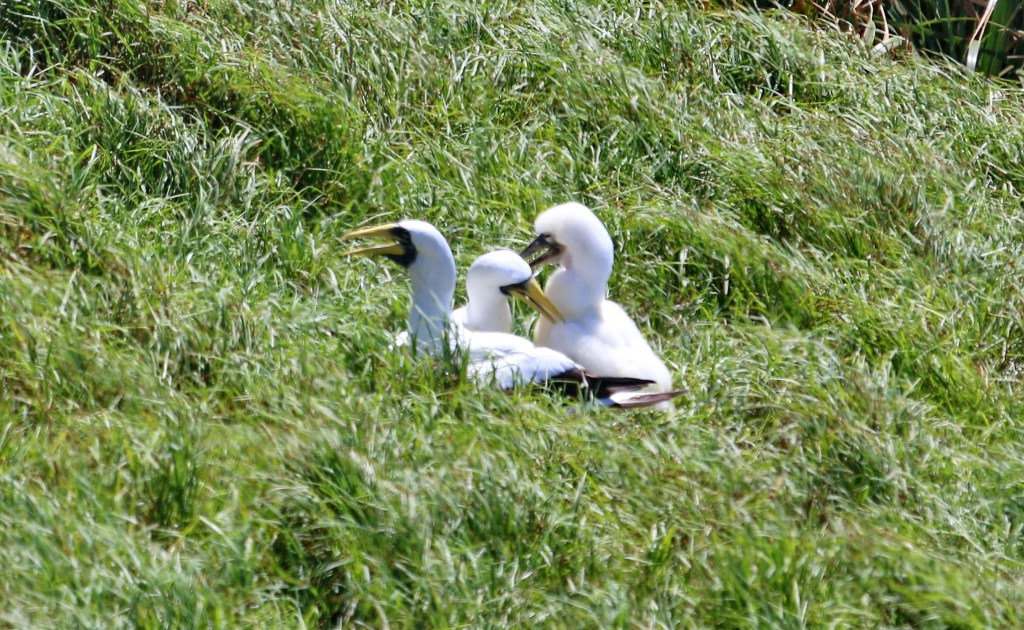
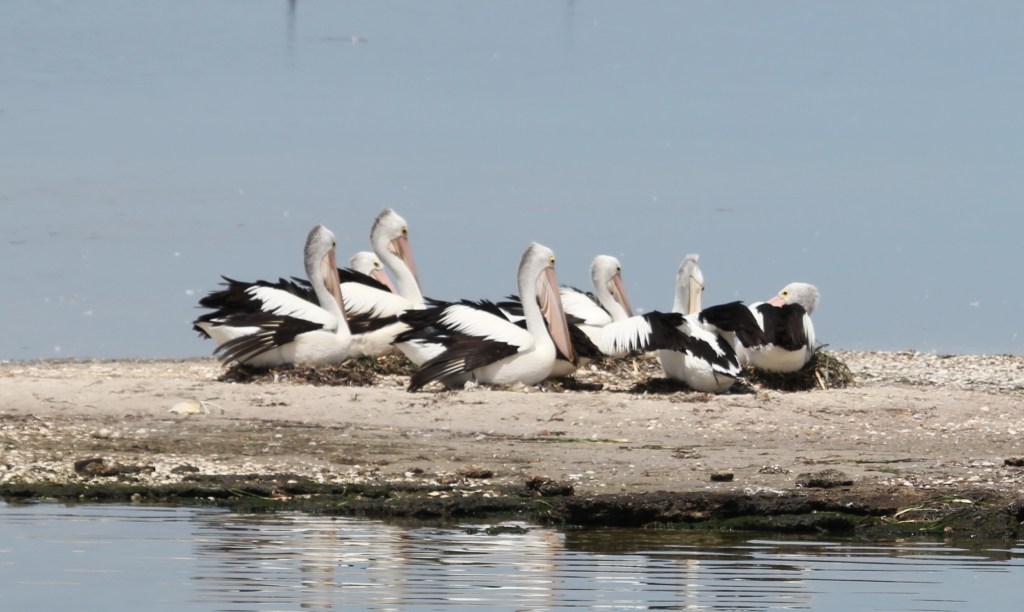
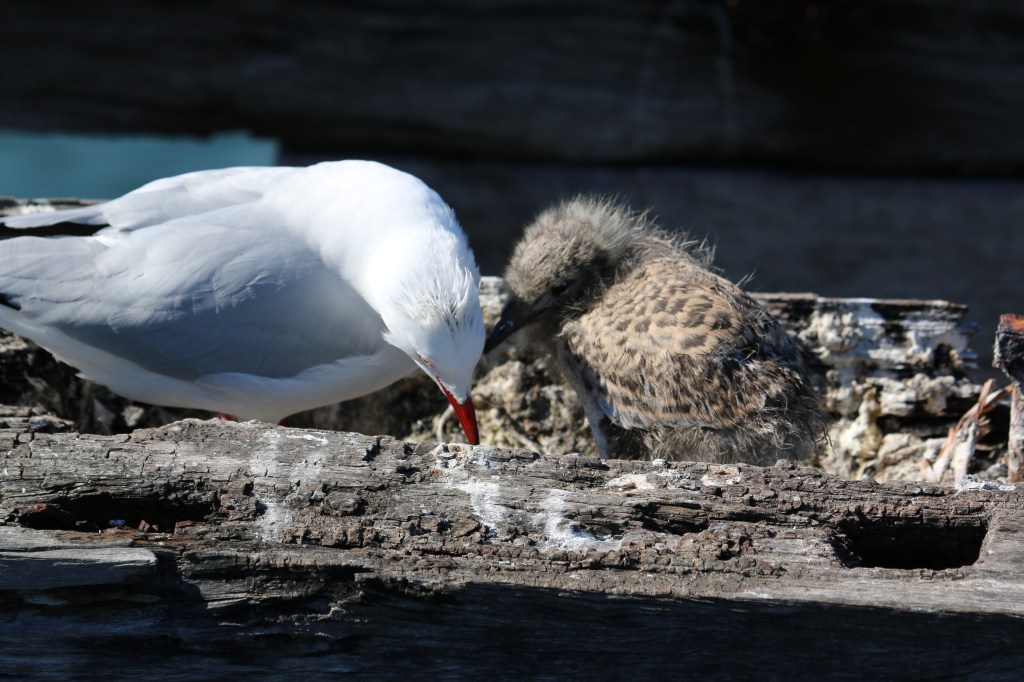
Many ocean birds and waders use a small bedding of grass in the open on cliffs and rock faces close to their food source. A good example is the Australasian Gannet. Many flock birds including Gannets, Pelicans, Ibis, Spoonbill and Boobies nest together for security. They have very simple nests which are easily reached by predators including reptiles after their eggs. Notice how the males glide overhead guarding the nesting females from predation.
Gannets nesting at Point Danger
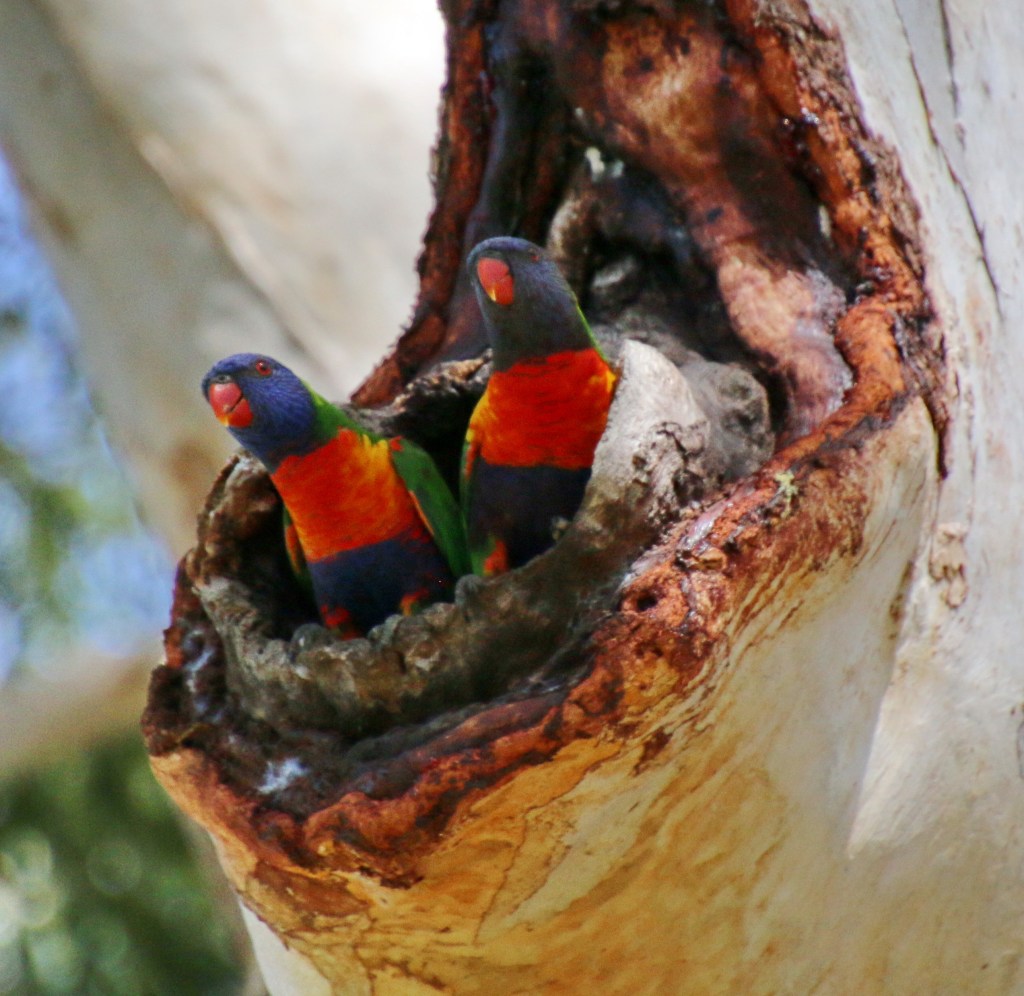
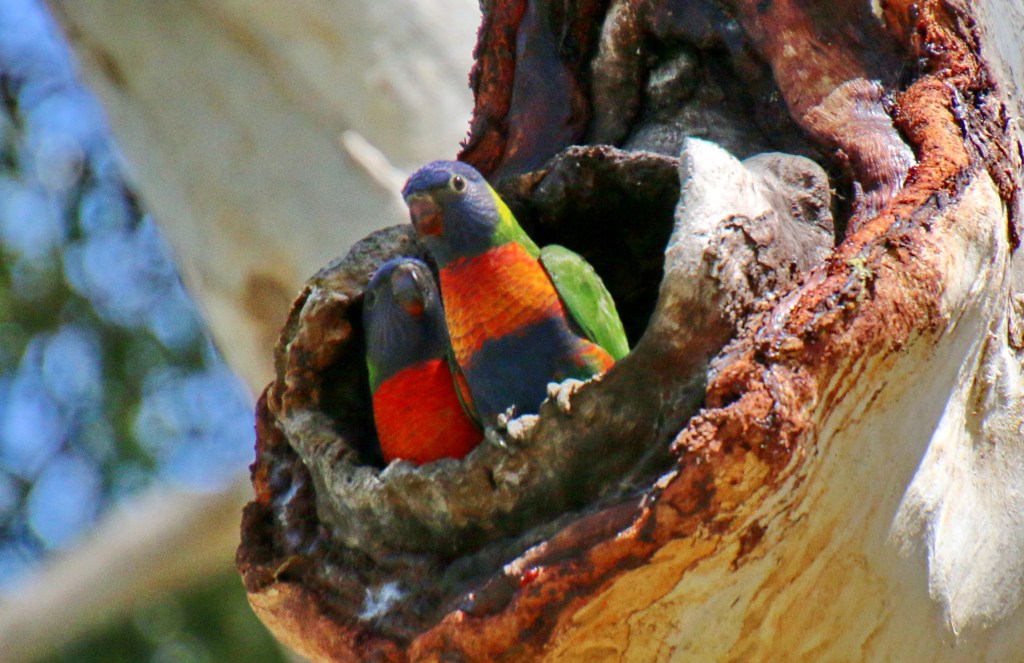
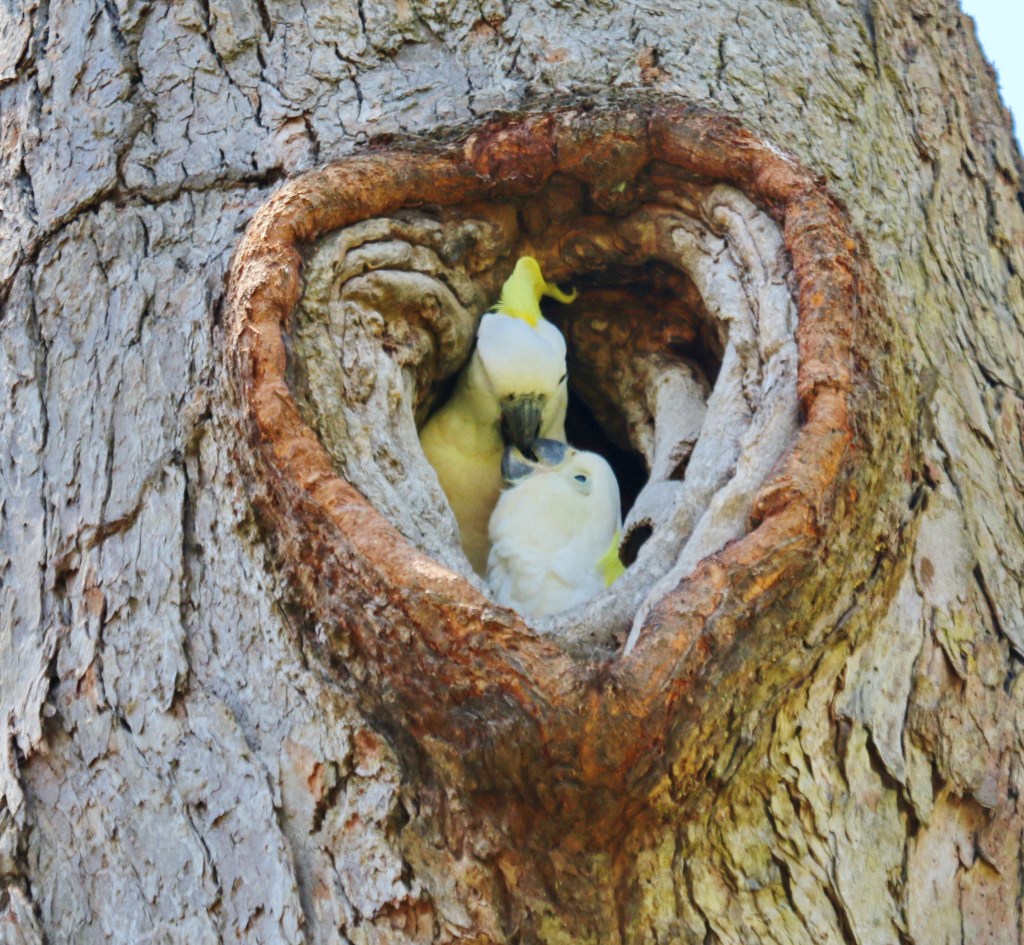
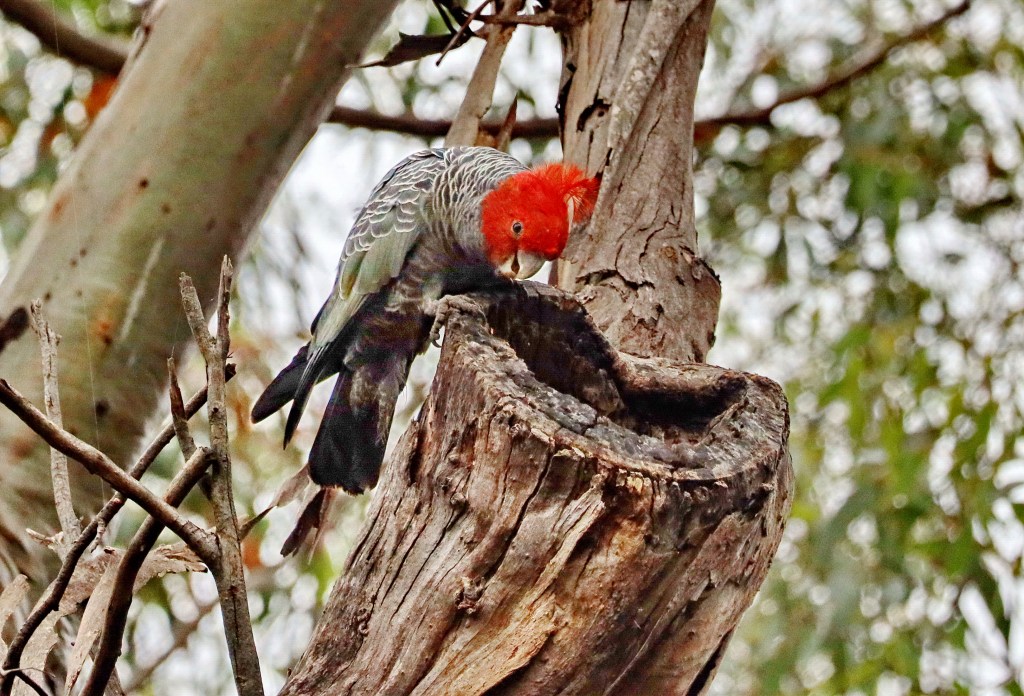
A common form of nesting is the tree nesting hole, which is only possible in very old forest trees, which are being logged constantly and causing many species to delay breeding. The holes for natural protection for many species including the Parrot/ Cockatoo family, Owls, Kingfisher and Wood Ducks. The Sulphur-crested Cockatoo will find a hole and using its strong beak, will chick out the remainder of the tree hole to enlarge it for the family. Here is an example of a male Cockatoo chipping out the nest while his female watches on.
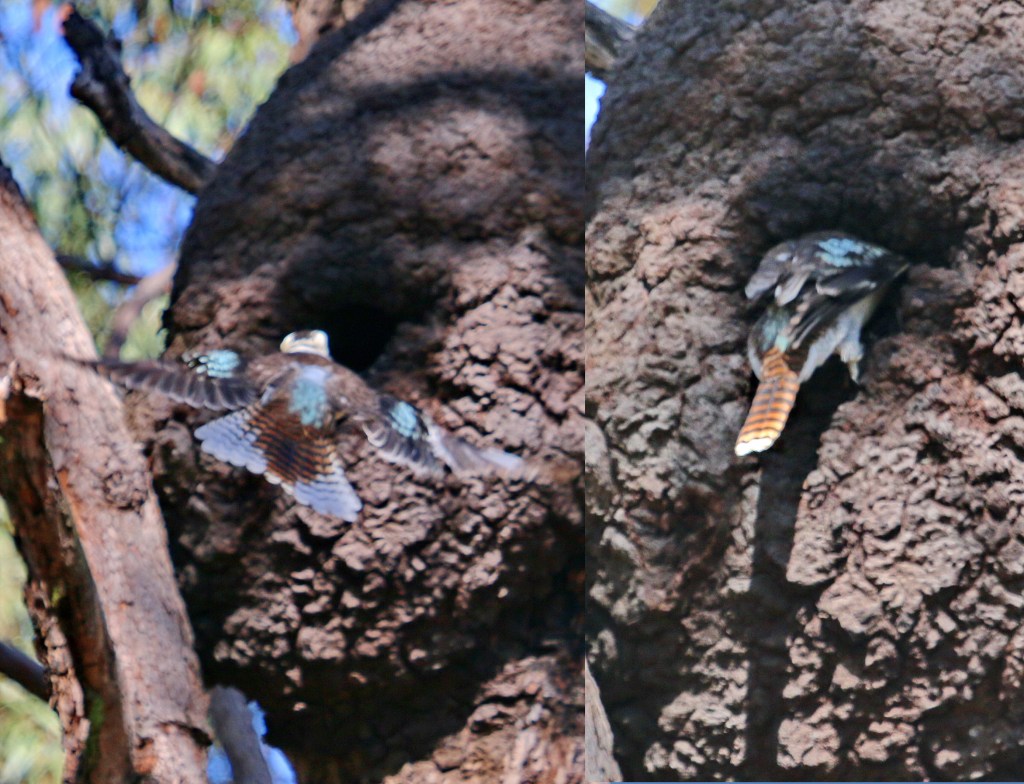
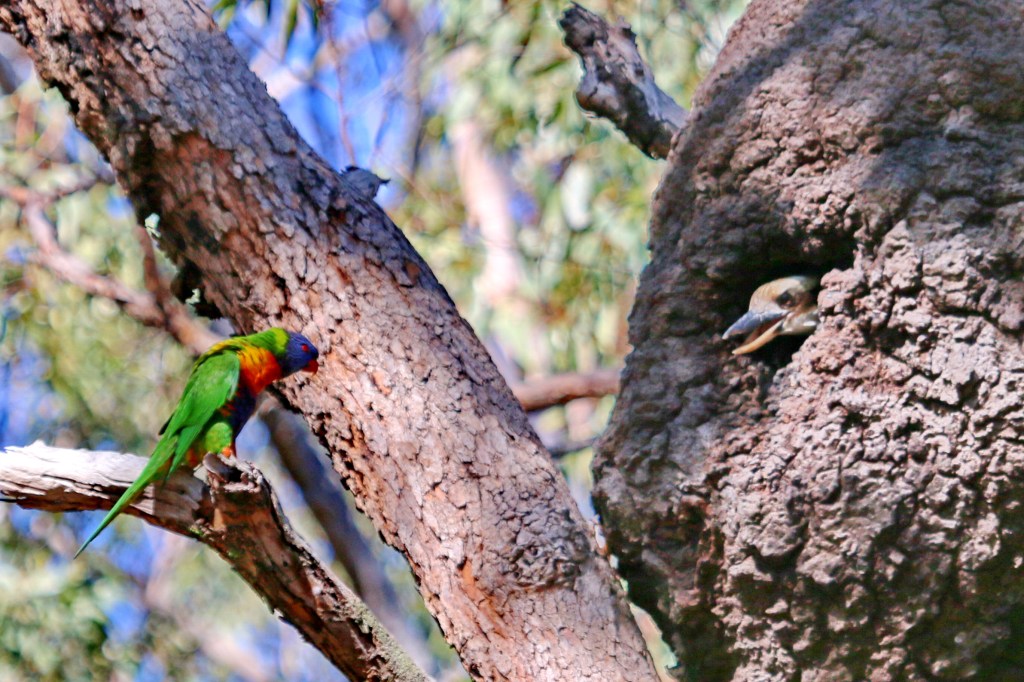
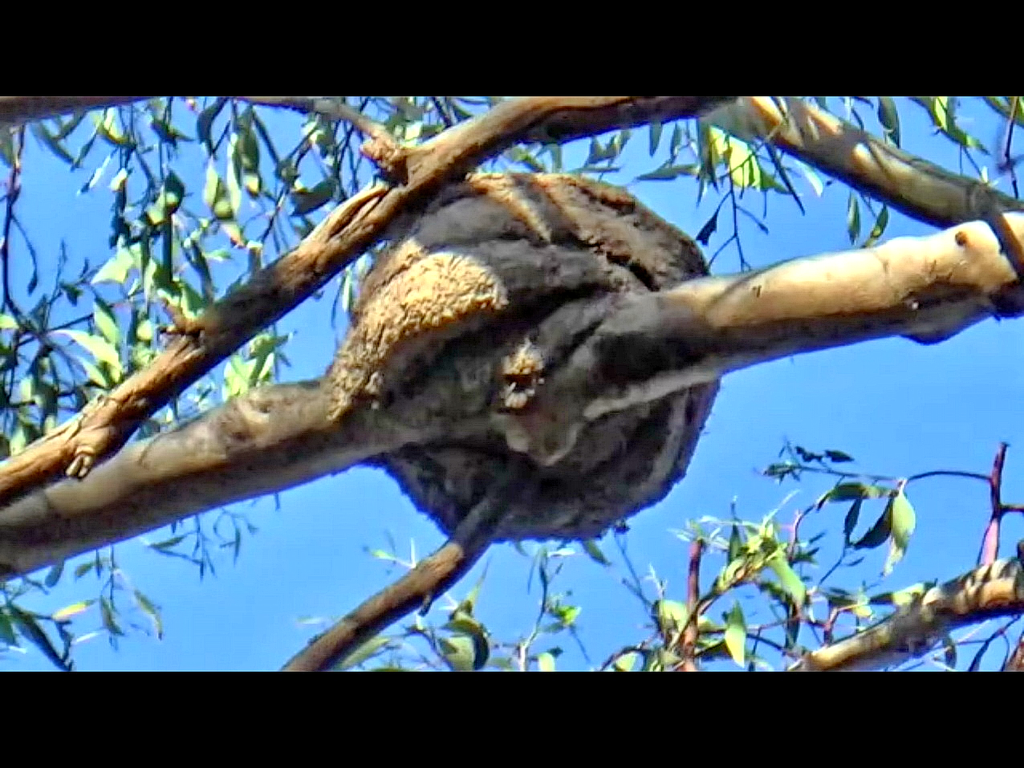
Clever birds of the Kingfisher family including the Kookaburra, Forest and Sacred Kingfisher may choose to nest in arboreal termite nests high in eucalypt trees. They initially charge at the nest and create a hole only large enough for the bird to push through. In the nest they will have their young. This is a common practise with these birds. Note the special photo below where an angry aggressive Rainbow Lorikeet is attempting to compete with the Kookaburra, which has already taken occupancy, for the same arboreal termite nest. Everyone is looking for breeding nests in forests where more trees are being felled and less breeding holes remain to go around.
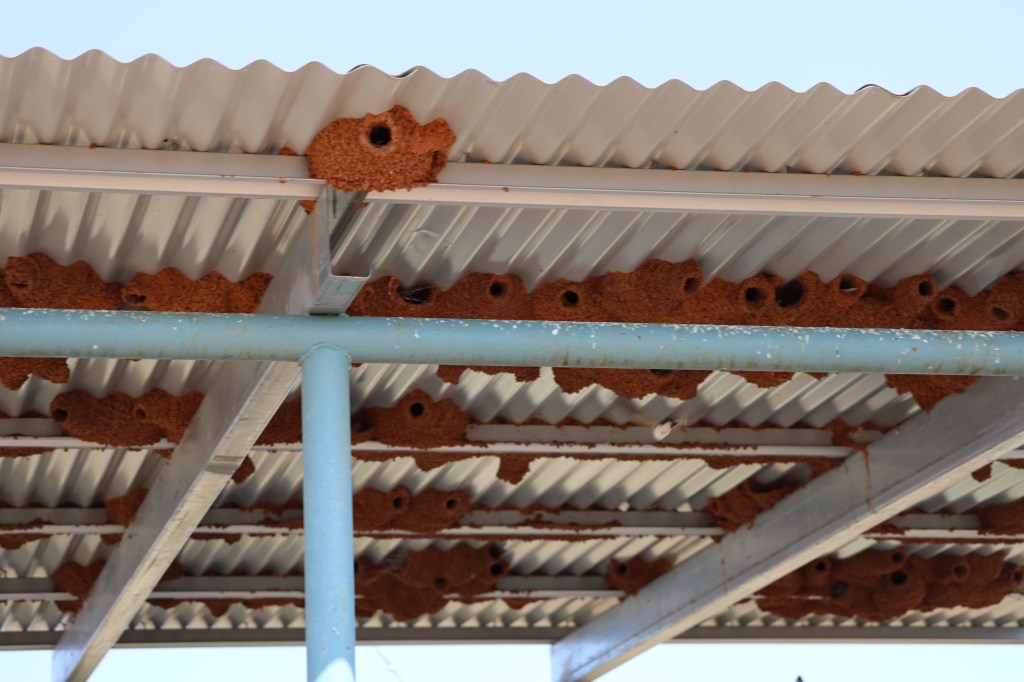
Last of all, the mud nest is another important nest type where the bird has to make hundreds of trips to mud to bring back tiny portions to build their perfectly round mud nests, which they line with grasses and soft feathers. The White-winged Chough, Welcome Swallow and Fairy Martin.
Have a wonderful week. It was so great to see posts capturing the aurora in both the northern and southern skies. Much appreciated, I would love to see it myself one day.
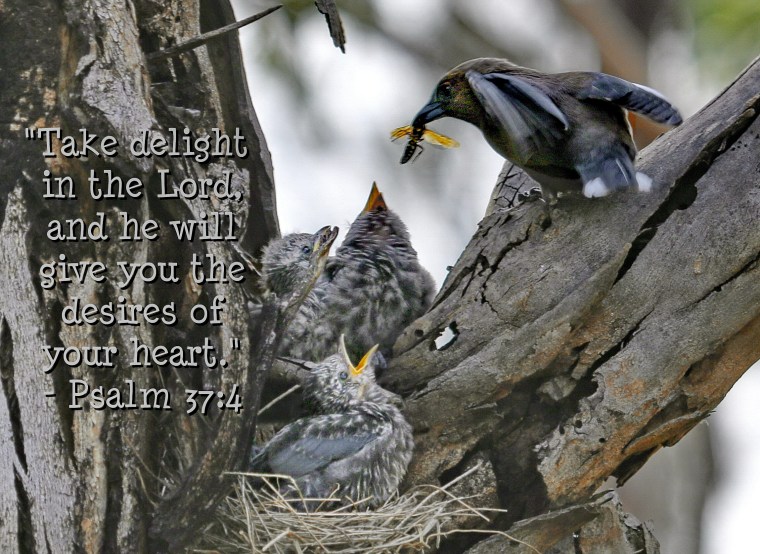
It takes much patience and skill to build a trustworthy nest that will stand up to wild weather. It takes even more patience and skill to raise a family. It is not a matter to just put a roof over their heads and feed, educate and shower with possessions. It takes the personal commitment of both parents working together in harmony and love with the same goals. If you want your children to grow up feeling secure and confident behaving affectionately and responsibly – model it in your love as parents to one another. Children feel and absorb emotions long before they understand what we say.
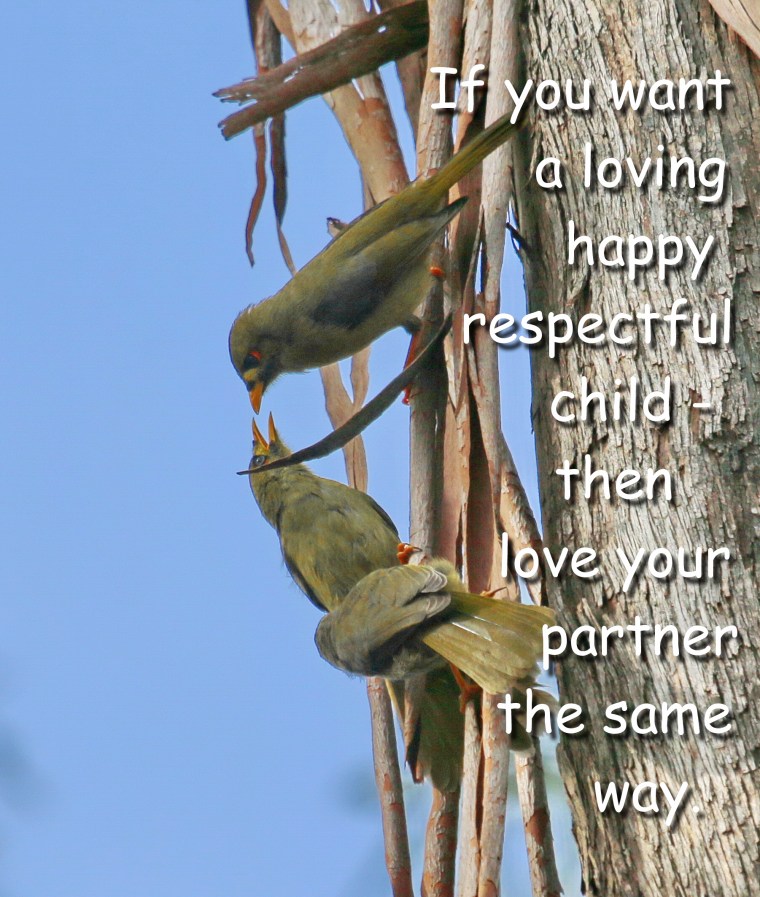
This is why it is known that it is imperative that during a child’s Formative Years that love and respect is modeled by parents between each other in an atmosphere of peace, joy, love, affection and respect. They will take what they have absorbed from these first 7 years into their adult life and it will make or break them for their future. God our Creator seeks to reflect his loving character through our relationships, especially our marriage and parent to children. Much of modern counselling today is dealing with the affects of dysfunctional relationships modeled by broken, often selfish, hurting and damaged parents.
“Be completely humble and gentle; be patient, bearing with one another in love.” – Ephesians 4:2 (NIV)

Adv. Dip. in Counselling and Family Therapy.
Member of Birdlife Australia
To introduce people to our unique Australian birds,
And learn from them how to live a healthy and happy life.
NOTE: All photos, videos and music used on this website are photographed, composed, performed by the site owner and remains his copyrighted property, unless otherwise stated. The use of any material that is not original material of the site owner is duly acknowledged as such. © W. A. Hewson 2015, 2016, 2017, 2018, 2019, 2020, 2021, 2022, 2023, 2024, 2025, 2026

My wife and I share a love of bird observing and bird photography which takes us all over Australia. We love sharing our experiences. Birds live in the beautiful parts of our country. We always get blessed with beautiful gifts of new birds and unexpected experiences each time we go out birding or just walking in the parks and reserves in our wonderful land. We love Australia, and the variety that each state and region offers in its wildlife and nature aspects. Join us in sharing our love. We have always found other birders enthusiastic and friendly people who appreciate the good things in life.
 Introduce your child to our amazing
and interesting birds.
Over 100 beautiful photos with
facts on how they do life, from
which we learn helpful life skills.
Click image above to Find out more and Buy the Beautiful Bird Book
Introduce your child to our amazing
and interesting birds.
Over 100 beautiful photos with
facts on how they do life, from
which we learn helpful life skills.
Click image above to Find out more and Buy the Beautiful Bird Book

Flight of a Fledgling similar to my first book uses the interesting lives of birds to teach valuable life skills.It is written expressly for teens and young adults as they prepare to leave the Nest. It helps them to better understand themselves and improve their personal relationships and better prepare for lifes challenges. Click on the above cover to find out more and purchase online.



 If you are a birder visiting the Sydney region for the first time, check out the many National Parks (NP) that surround it for the great variety of birds found there. The Visitor Information centres at The Royal NP, Botany Bay NP, Fitzroy Falls and Minnamurra NPs have information and also sell my Beautiful Bird Books. If you follow this blog, make a date with Aussiebirder before you arrive for info tips or a visit.
 aussiebirder
Your posts always give me a deeper perspective into the life of our beautiful birds in nature. I am grateful you take the time to teach us Ashley. 🌿☘️🙏🏻
LikeLiked by 1 person
Thanks Karen for your appreciative comment it is most encouraging and I do appreciate greatly your posts. I enjoy sharing my insights from studying bird behaviour both on and offline through my books and talks. We both share a gift that resonates from the deep wisdom and emphatic emotional histories enabling us to encourage others on the path following up the hill behind us. Enjoy your week my friend.
LikeLiked by 1 person
Hello Ash,
Very sorry to hear the weather has not been ideal for birding, but it is a treat to learn more about the ingenuity and resourcefulness of our feathered friends. It never ceases to amaze, how most birds can create such intricate (and practical) designs with their beaks. Always in our thoughts, have a lovely weekend.
LikeLiked by 1 person
Thanks Takami, today has been the first really good day in a while so we went on a birding date to our favorite park, but because of the heat not many birds around. We are in for a week of very hot days again, Have a wonderful weekend my friend.
LikeLiked by 1 person