This week we travel further north up Cape York Peninsular through the town of Laura to the Lotus Bird Lodge where we stayed in a special retreat accommodation by the […]
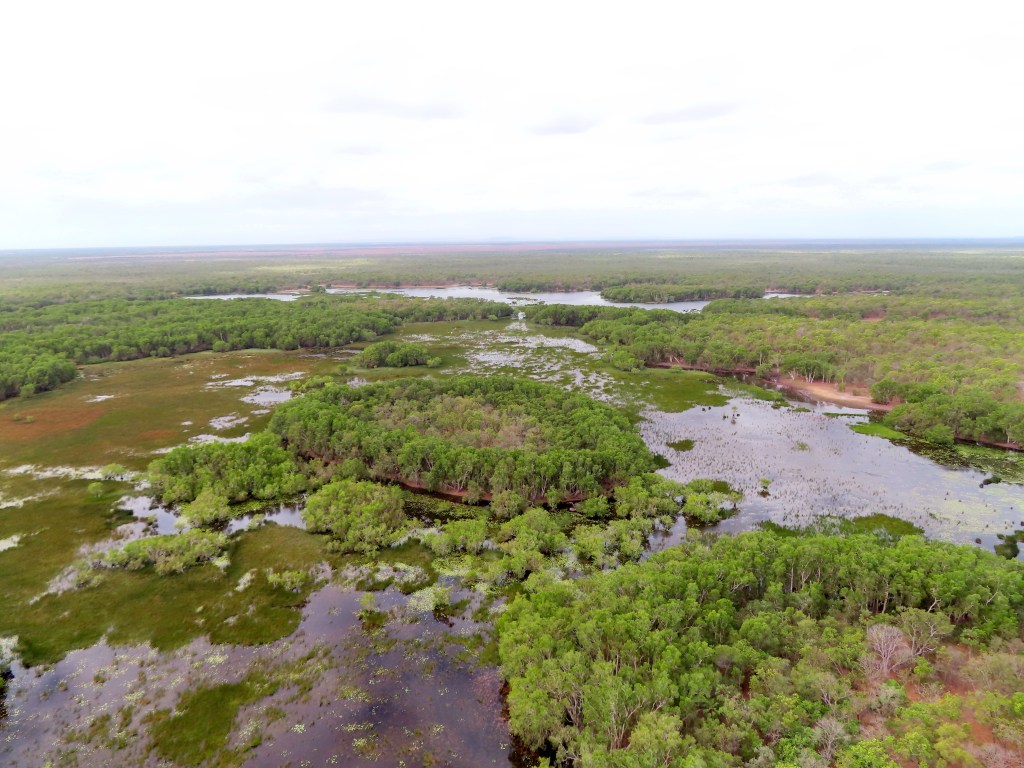
This week we travel further north up Cape York Peninsular through the town of Laura to the Lotus Bird Lodge where we stayed in a special retreat accommodation by the small lake known in Australia as a billabong where thousands of water birds of many species gather during the dry season and harmoniously dwell together, resting on and by the water. Crocodiles can also be present at times though we did not see any on our visit. Here we rested from travelling and were well fed and cared for by Dan and Jasmine as we enjoyed a view of the lake. We also had a one hour helicopter flight over the extensive Lakefield National Park which extends out to the ocean. Click on images to enlarge.
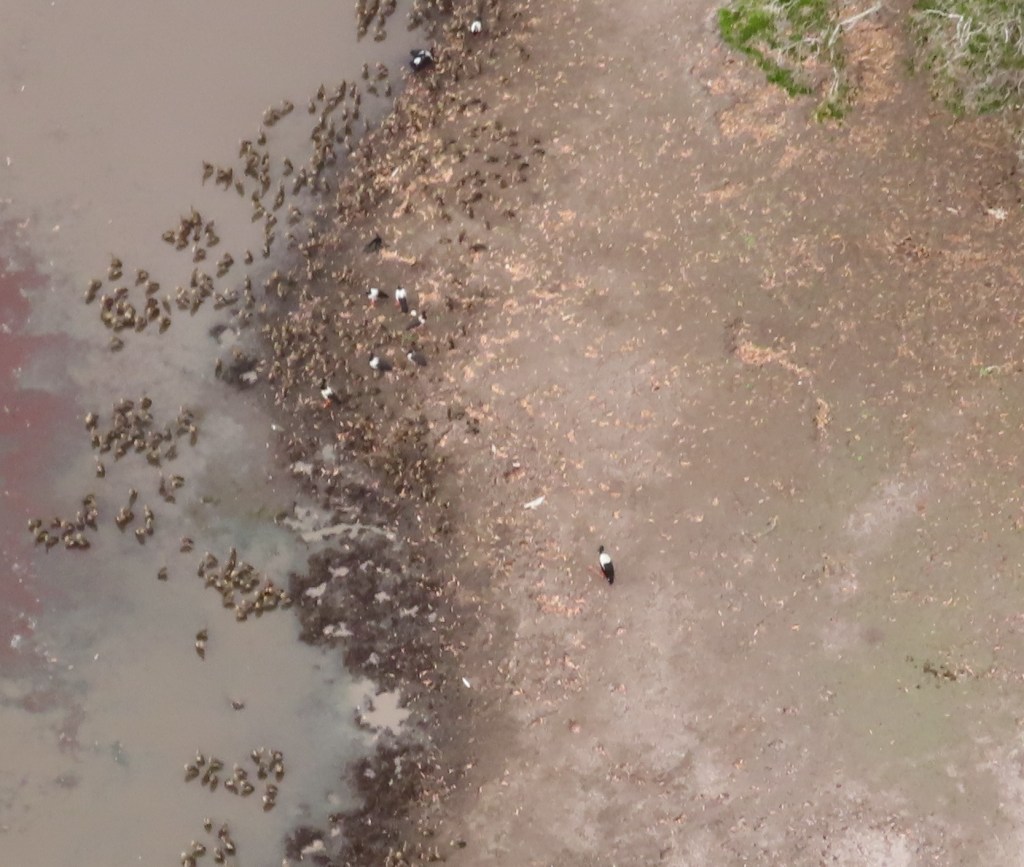
Several Jabaru (Black-necked Stalk) seen from airLakefield NP from air
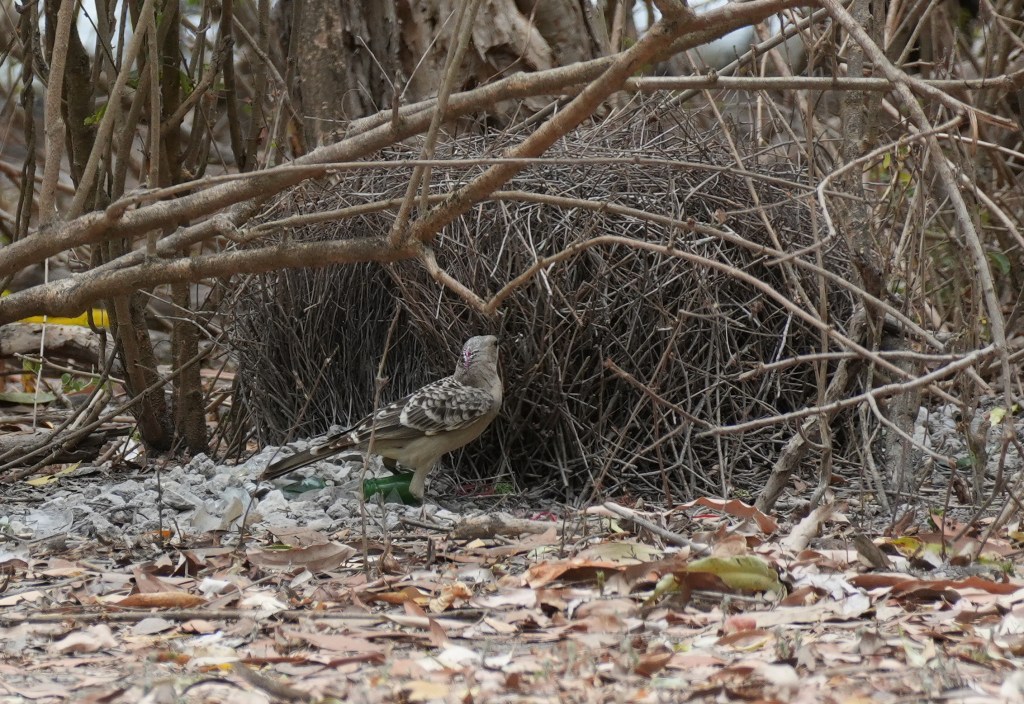
In addition to the waterbirds we also saw the bower of the male Great Bowerbird which is found across the Top End. He collects white objects (mostly shells and stones) to decorate his bower as they match his plumage colouring. He does allow some green objects also, but if a leaf, of another colour falls into his bower he quickly removes it. He is constantly repairing and improving his bower to be at its best for a female who may visit to inspect it with intent to mate. The female does all the nesting on her own, he is merely a bower building, performing, mating machine. Note the pink neck nape marking of the active male. He did not like us being near his bower.
Great Bowerbird bowerMale Great Bowerbirdnote pink neck nape crest
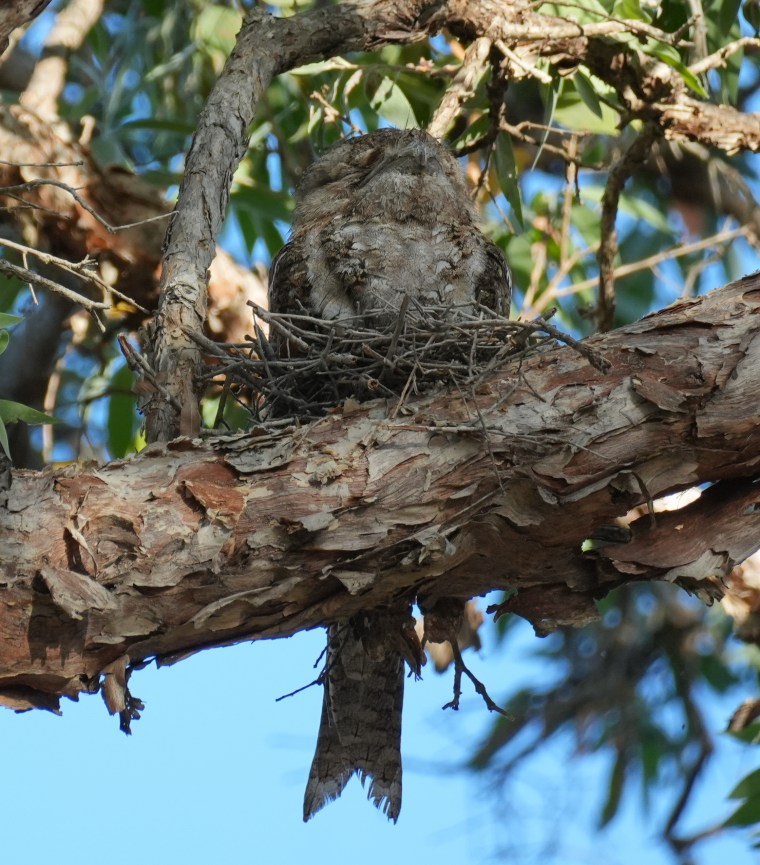
We also saw a Papuan Frogmouth sleeping in a tree nearby. This was another lifer, and is a larger frogmouth with a longer tail than our own Australian Tawny Frogmouth. He has flown from Papua New Guinea north of Cape York to nest.
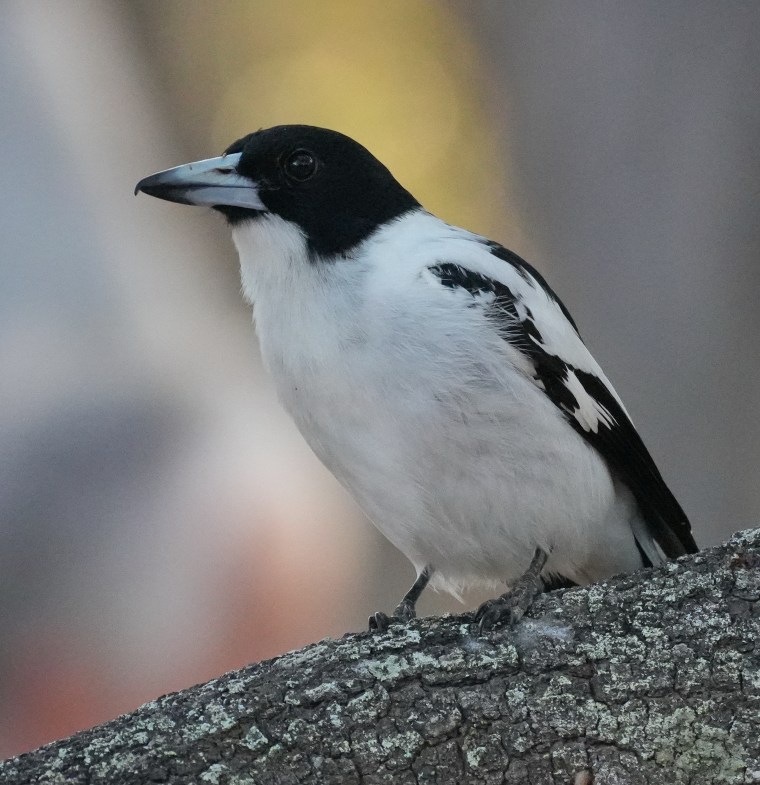
Another lifer for us was this Black-backed Butcherbird though unfortunately we did not get a photo of it from the back. We are quite assured that its plumage identifies it well.
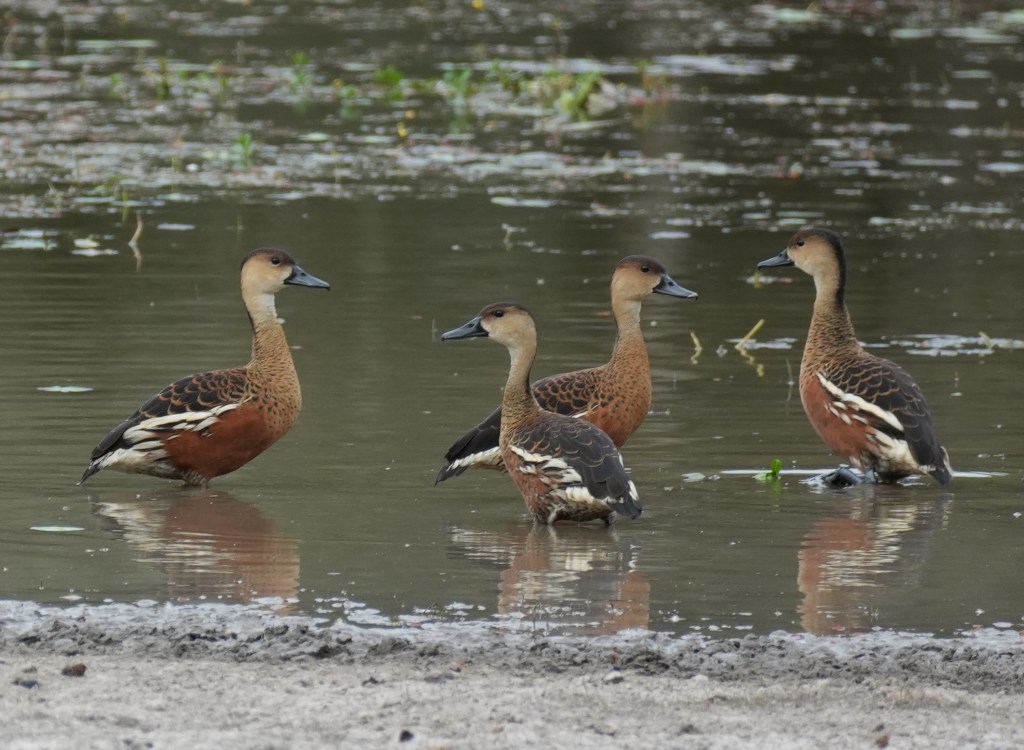
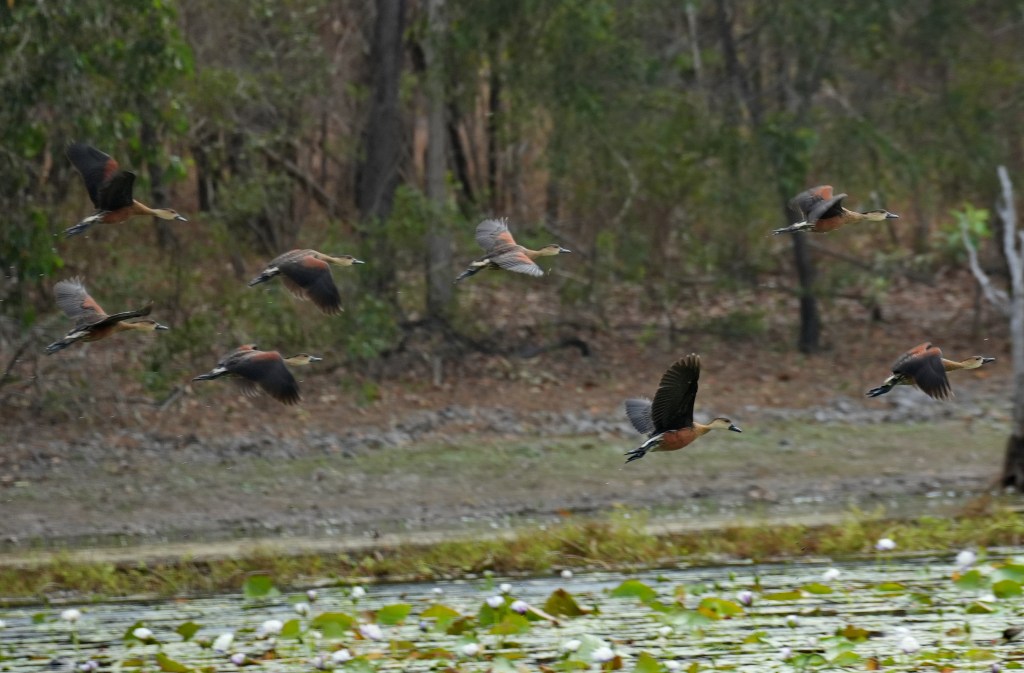
Now to the lake where the main attraction was. The flocks of birds tended to roost in the forest and return each morning to the same areas on the lake. The Wandering Whistling Duck tend to be more nomadic and follow their food source, as do many Top End birds in the dry season. Whistling Ducks do not quack they emit a loud high pitched whistle which can be deafening when you have a large flock. We have had to leave a lake because we could nt tolerate the whistle of the hundreds of Plumed Whistling Duck some years ago.
Wandering Whistling Duckwandering whistling duck in flight
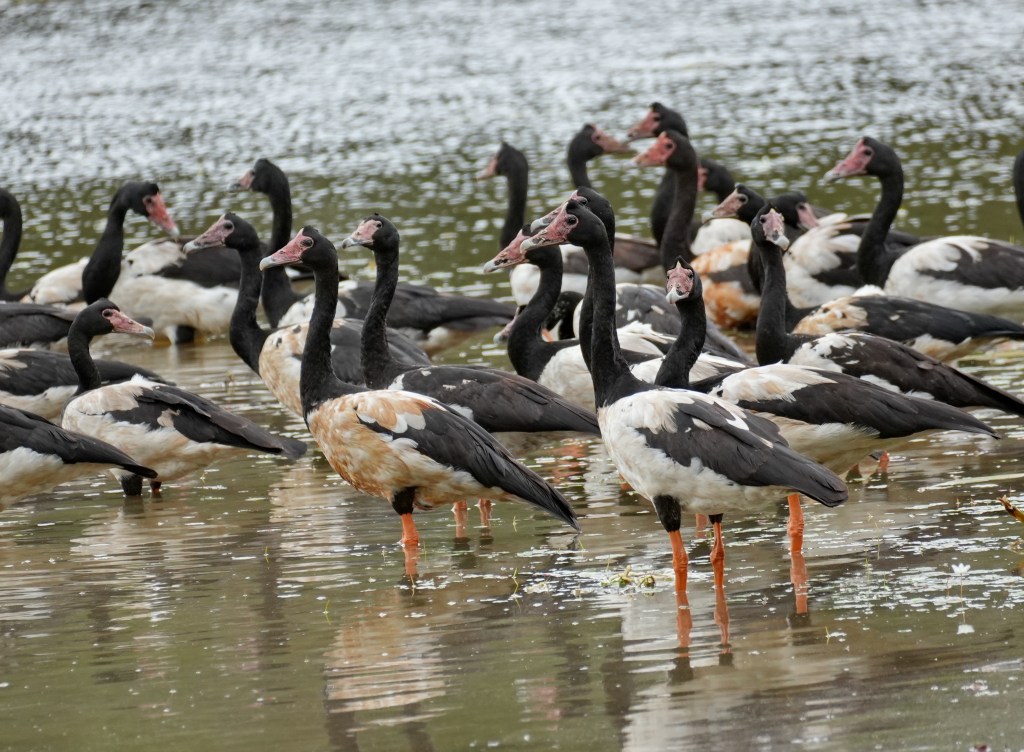
The large flocks were made up mainly of Magpie Geese which nest in the wet season on floating platforms of reeds, so they spend their days together in flock caring for their young. As I have shared previously these birds are in a family of their own as they are neither duck nor goose but a unique combination. They make a honking sound.
Magpie Geese
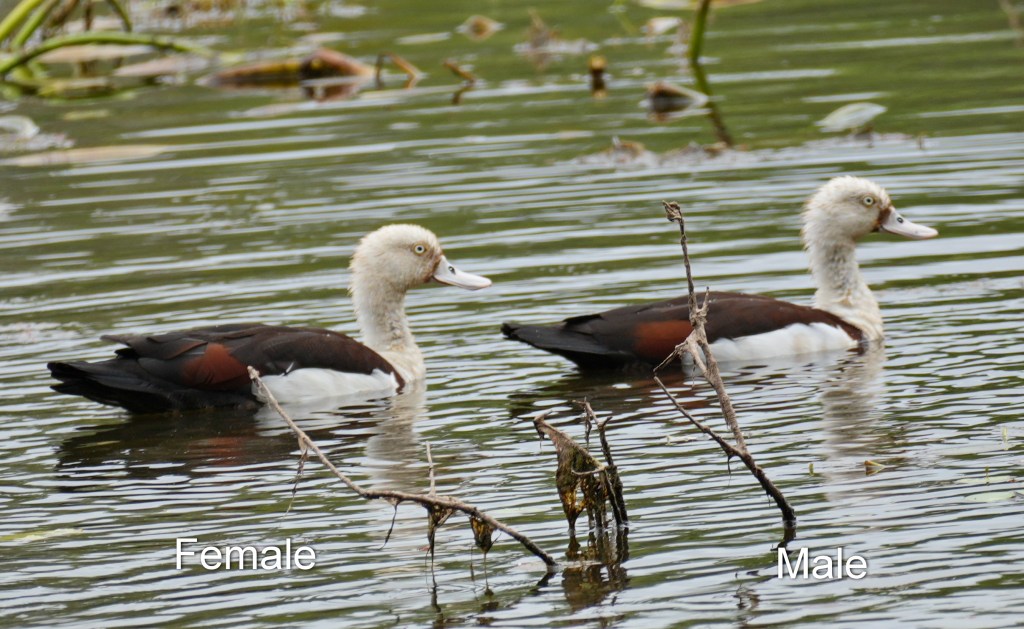
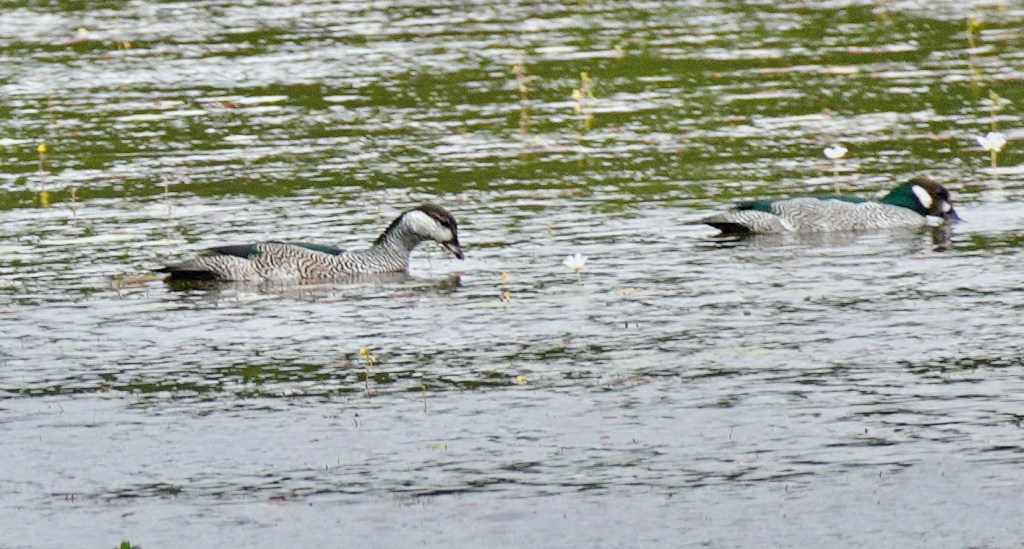
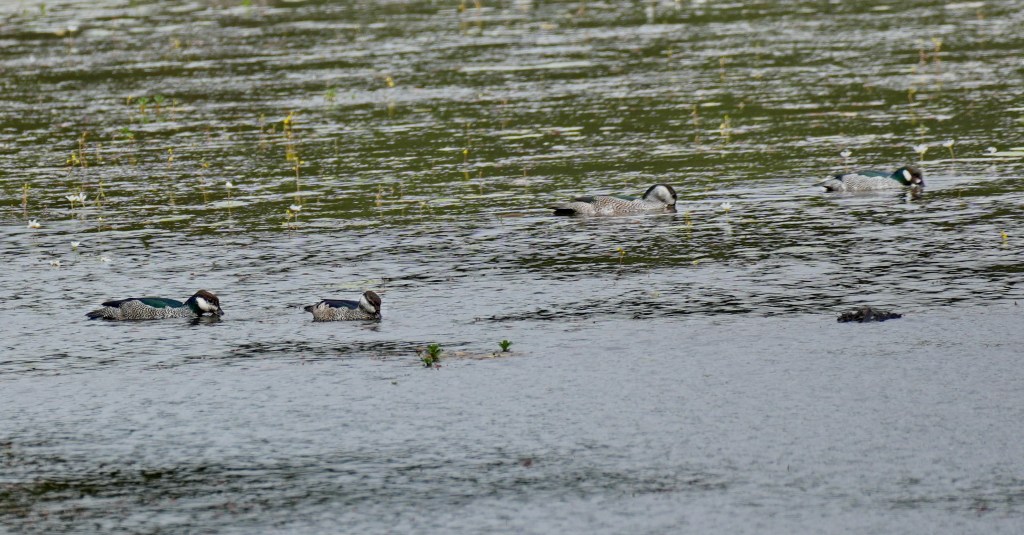
We were very blessed to see pairs of Radjah Shelduck and Green Pigmy-Goose both birds unique to the top end.
Radjah Shelduck pairGreen Pigmy Goose pair led by male2 pair of Green Pigmy Geese
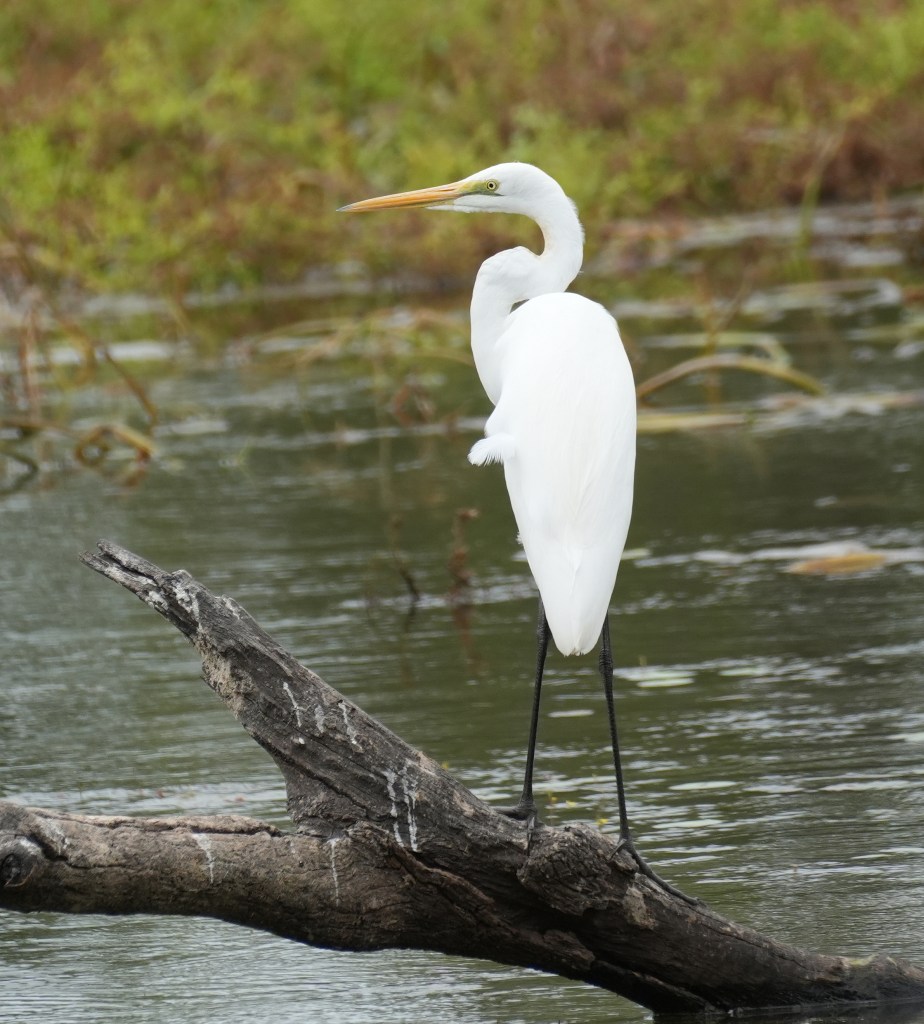
The two breeds of Egret were present, the Eastern Great Egret and Intermediate Egret.
Great EgretIntermediate Egret
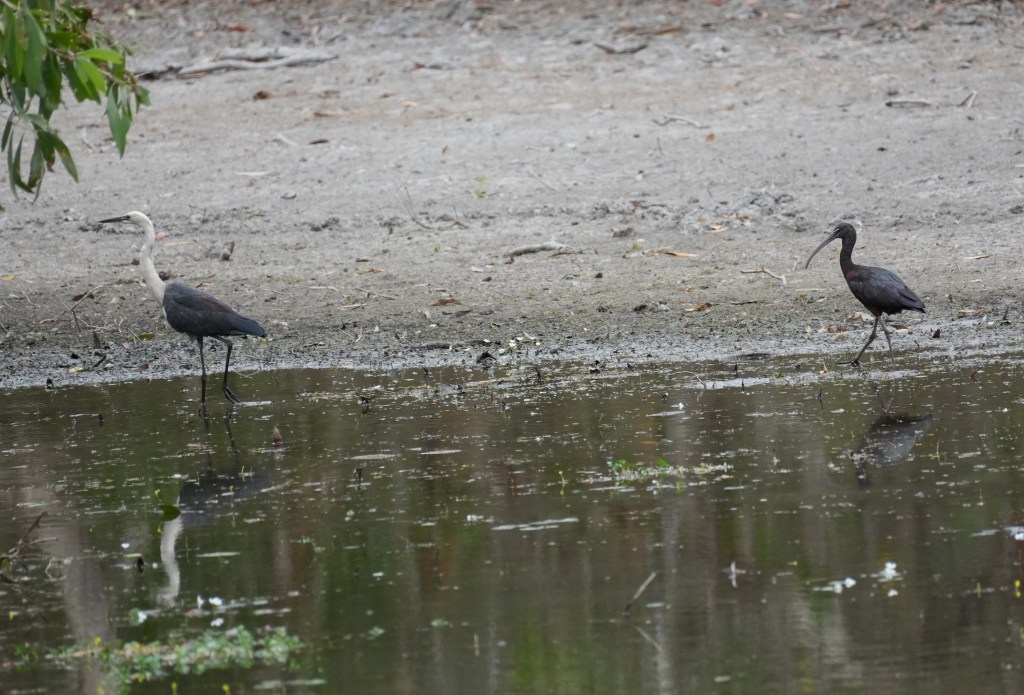
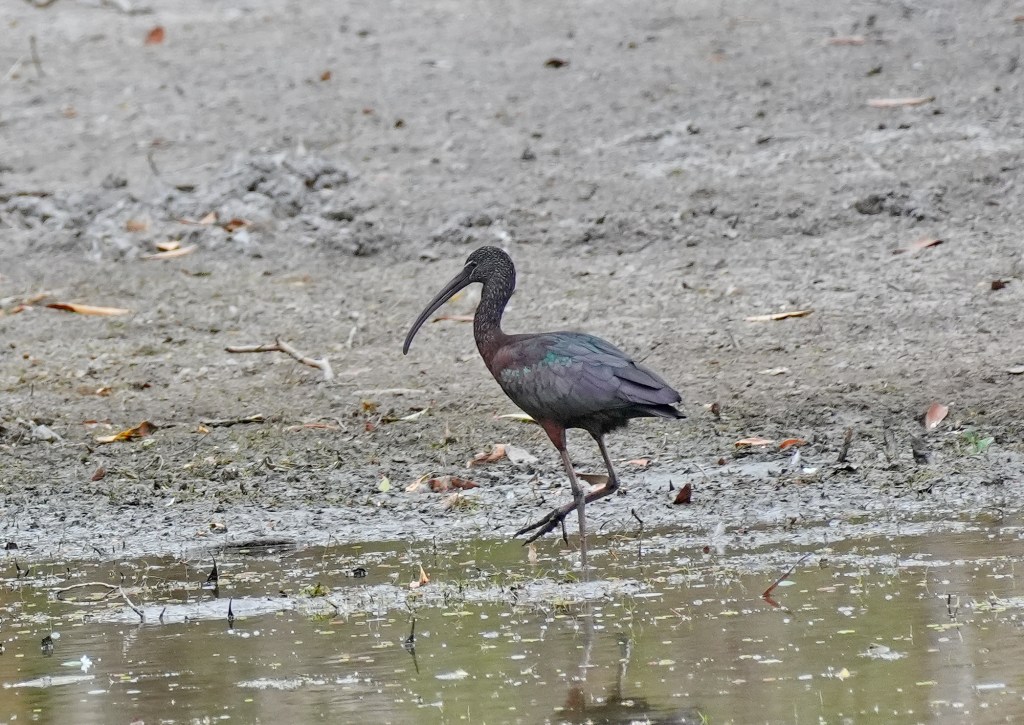
It was lovely to see this single Glossy Ibis follow this White-necked Heron around for company. They seem to have made friends and were both alone, making each other welcome company. It is another human-like trait of many birds finding peace and security together, despite species.
Glossy Ibis follows White-necked HeronGlossy Ibis a great find for us
We also had a small flock of Brolga land briefly at the rear of the billabong as they are quite shy of humans having a history of being hunted and killed when they existed in large number in our southern states as they inhabited the wetlands where orchards were planted. These graceful birds are featured in my previous post.
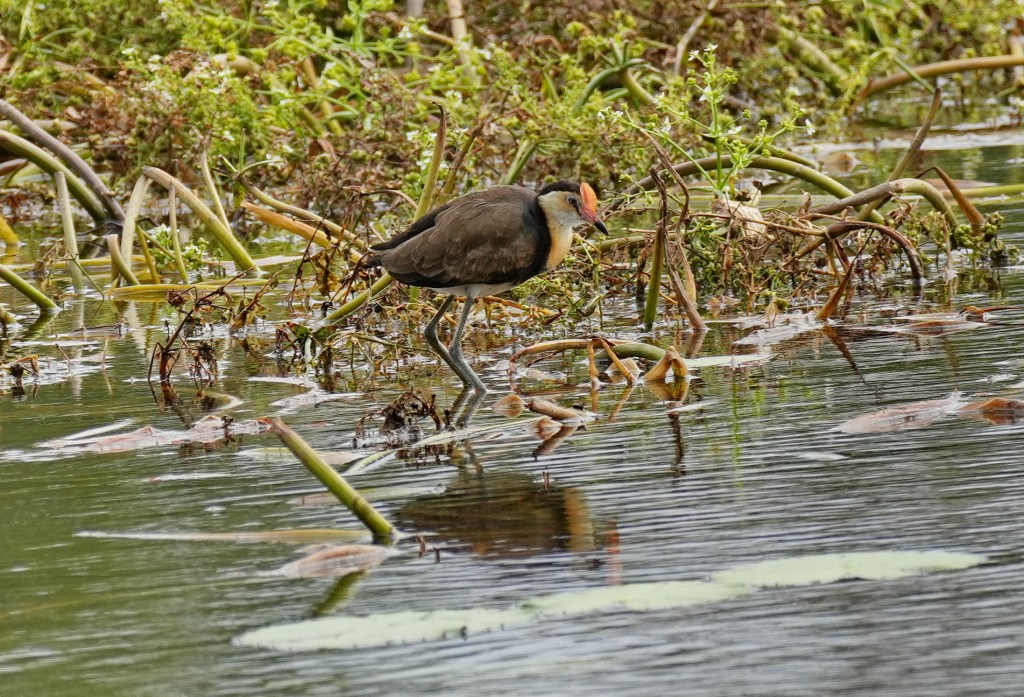
However, the feature bird being named in the lodge as Lotus Bird, is the name given to the Comb-crested Jacana which is found here in Australia and also in New Guinea. This is also known as the Jesus Bird because it appears to walk on water, but uses its very large long spindly feet to walk on water plants. We saw both juvenile and mature birds. The immature have less red in their combs.
Comb-crested Jacana
My book ‘What Birds Teach Us’ features this unique birdand its amazing ability to carry its young to safety when it nests during the wet season.Rare photos of this phenomenon are shown in my book which is available here online at my secure checkout. This unique and beautiful book is an excellent gift, especially for a youngster learning about Australian birds. It has an added bonus of teaching a life skill through each bird.Click on the image below to find out more and/or make your purchase, it will open on a new tab.
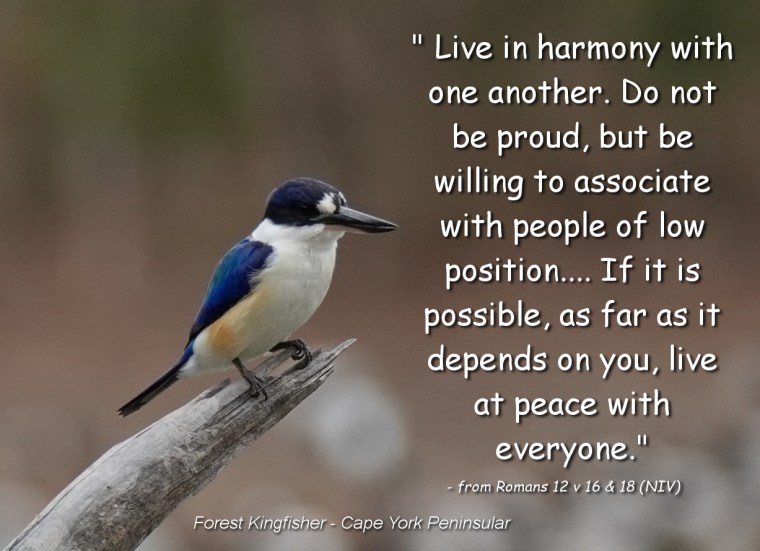
Lastly, have a wonderful week and may you enjoy the peace and harmony these birds experience in the billabong at Laura. This is our loving Heavenly Father’s desire for each of us, that we may enjoy him and the peace of his great love, mercy and forgiveness through honestly and deliberately believing in and receiving from the Lord Jesus Christ his son who gave his life to bring us true peace and true fulfilling purposeful life with him first and therefore with everyone especially ourselves.
“The thief [Satan] comes only to steal and kill and destroy; I [ Jesus] have come that they may havelife, and have it to the full.” – John 10:10
My wife and I share a love of bird observing and bird photography which takes us all over Australia. We love sharing our experiences. Birds live in the beautiful parts of our country. We always get blessed with beautiful gifts of new birds and unexpected experiences each time we go out birding or just walking in the parks and reserves in our wonderful land. We love Australia, and the variety that each state and region offers in its wildlife and nature aspects. Join us in sharing our love. We have always found other birders enthusiastic and friendly people who appreciate the good things in life.
Hello Ash,
We’re delighted to hear you could see more lifers. If we could converse with the birds, I’d love to hear the stories they would share – about their migratory trips, their observations of humans, and how we are affecting this world.
I chuckled at the name ‘Jesus bird’ – the Comb-crested Jacana has remarkable features, including those feet! Your documentary-style narration in the video was perfect. We hope you and your wife have a wonderful weekend ahead.
Thanks Takami, it was a big plus for us to see some of these birds that fly across from New Guinea and southern Asia, and yes they would be experiencing some stress where habitat has been taken over by the actions of humans. Every year thousands of birds die due to human exploits. One of the effects of generations of sin and selfishness is lack of awareness, wisdom and understanding regarding the world God gave us to care for and have rule over, but sadly sin has caused the exploitation of other life forms rather than caring for their existence. The Jacana is always a delight for us to see walking on lily pads, We hope you also enjoy your weekend and have some time out and about with creation.
Thanks Sue, yes it was amazing to see the wetlands from the air, especially such a significant national park as it is with such a diversity. The pilot took us all the way to the ocean where we could see the amazing long tides and how they spread over the coast. I could imaging the whole flat plain covered in water during summer wet. We did enjoy the trip seeing so much of a quite wild undeveloped part of our country mainly cattle and mining. The sad note was my wife not seeing the Palm Cockatoo. We did see many crocodiles and many other bird species we never see here. Enjoy your week my friend.
So glad you got to see some more lifers. What an amazing experience it would have been in that helicopter. Such a variety of birds to see there! Sounds like it was a great trip up north!
Introduce your child to our amazingand interesting birds.Over 100 beautiful photos with facts on how they do life, from which we learn helpful life skills.Click image above to Find out more and Buy the Beautiful Bird Book
Teens and Young Adults
Flight of a Fledgling similar to my first book uses the interesting lives of birds to teach valuable life skills.It is written expressly for teens and young adults as they prepare to leave the Nest. It helps them to better understand themselves and improve their personal relationships and better prepare for lifes challenges.Click on the above cover to find out more and purchase online.
Stay and Explore the Rainforest in Lamington N P – click
Visit Broome Bird Observatory
Include in your next visit to Broome WA a couple of days on bird tours in Australia's Shorebird Capital at Broome Bird Observatory (BBO) in conjunction with Birdlife Australia, it is well worth it. Enjoy a self guided tour through their new and beautiful interactive discovery centre. Accommodation is available. Tours to various bird habitats: mangroves; bush and shoreline. BBO Wardens Sebastian and Jamie will make you welcome. While you are there check out the Beautiful Bird Book 'What Birds Teach Us'.
Help Save Our Birds
See Tasmania’s Endemic Birds
Luxury Stay in the Capertee Valley: bellebois.com.au
Where Can I Buy The Beautiful Bird Books?
How Do Birds Keep Their Nests Clean ?
Birding Around the Sydney Region
If you are a birder visiting the Sydney region for the first time, check out the many National Parks (NP) that surround it for the great variety of birds found there. The Visitor Information centres at The Royal NP, Botany Bay NP, Fitzroy Falls and Minnamurra NPs have information and also sell my Beautiful Bird Books. If you follow this blog, make a date with Aussiebirder before you arrive for info tips or a visit.














 aussiebirder
Hello Ash,
We’re delighted to hear you could see more lifers. If we could converse with the birds, I’d love to hear the stories they would share – about their migratory trips, their observations of humans, and how we are affecting this world.
I chuckled at the name ‘Jesus bird’ – the Comb-crested Jacana has remarkable features, including those feet! Your documentary-style narration in the video was perfect. We hope you and your wife have a wonderful weekend ahead.
LikeLiked by 1 person
Thanks Takami, it was a big plus for us to see some of these birds that fly across from New Guinea and southern Asia, and yes they would be experiencing some stress where habitat has been taken over by the actions of humans. Every year thousands of birds die due to human exploits. One of the effects of generations of sin and selfishness is lack of awareness, wisdom and understanding regarding the world God gave us to care for and have rule over, but sadly sin has caused the exploitation of other life forms rather than caring for their existence. The Jacana is always a delight for us to see walking on lily pads, We hope you also enjoy your weekend and have some time out and about with creation.
LikeLiked by 1 person
Thanks Sue, yes it was amazing to see the wetlands from the air, especially such a significant national park as it is with such a diversity. The pilot took us all the way to the ocean where we could see the amazing long tides and how they spread over the coast. I could imaging the whole flat plain covered in water during summer wet. We did enjoy the trip seeing so much of a quite wild undeveloped part of our country mainly cattle and mining. The sad note was my wife not seeing the Palm Cockatoo. We did see many crocodiles and many other bird species we never see here. Enjoy your week my friend.
LikeLiked by 1 person
So glad you got to see some more lifers. What an amazing experience it would have been in that helicopter. Such a variety of birds to see there! Sounds like it was a great trip up north!
LikeLiked by 1 person